


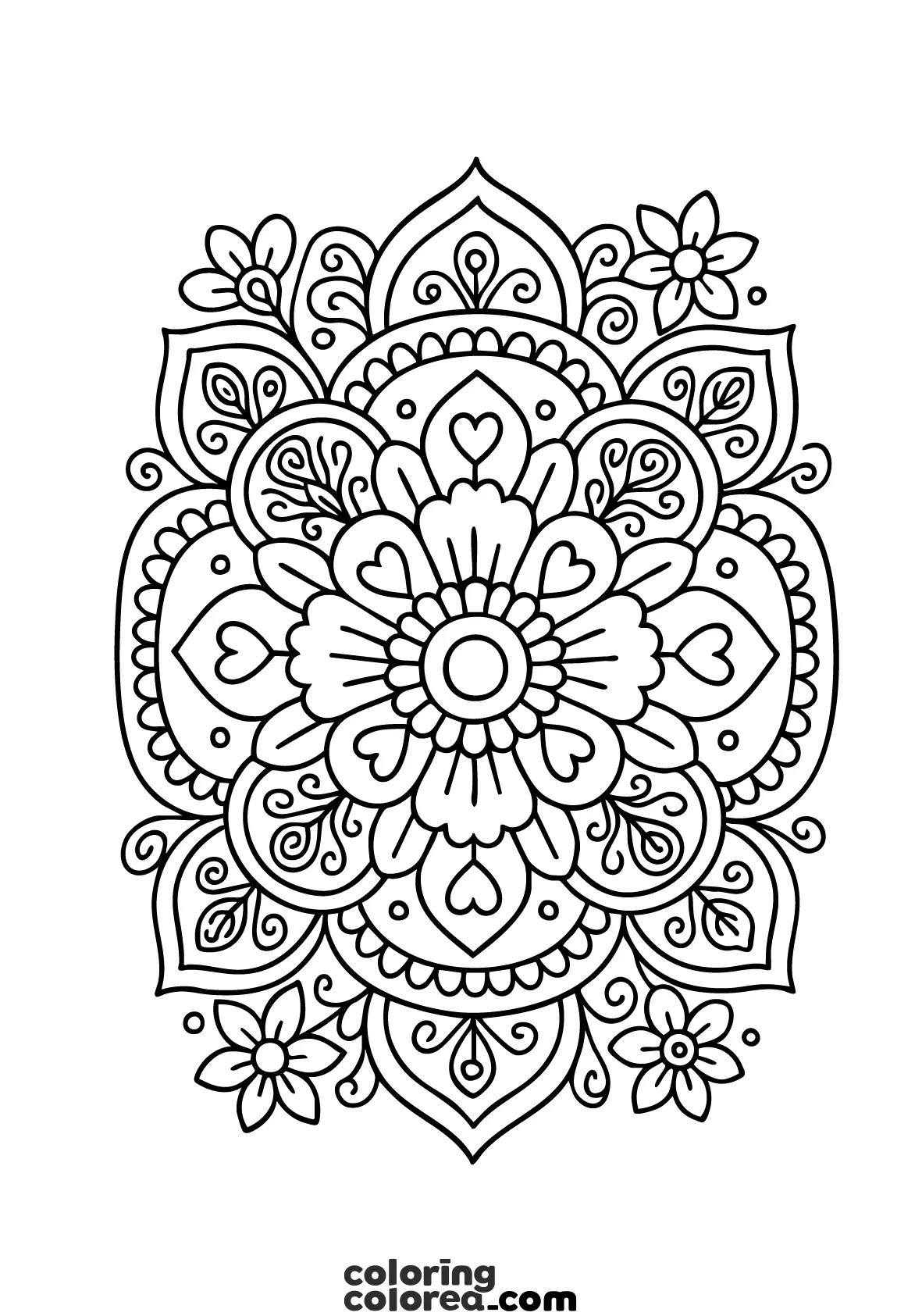
Free coloring pages of Lotus flower mandala
Find your emotional peace while fostering your creativity
Artificial Intelligence: Some images and texts have been created using Artificial Intelligence. However, all of them undergo a process of control and photographic retouching, vectorization and/or redrawing that makes them unique and safe.
Logos and Trademarks: Logos or company names are used for identification purposes only and may be trademarks of their respective owners
Licence: The generated images are in the Public Domain but are licensed under CC BY-NC-ND 4.0.
Description
The lotus flower is a significant symbol in yoga and meditation philosophy. This flower, which grows in muddy waters, represents purity, spiritual growth, and transcendence. In yoga, the lotus flower is associated with transforming the self; just as the lotus rises from the mud to bloom, yoga practitioners seek to elevate their consciousness and free themselves from mental and emotional limitations.
This lotus flower mandala symbolises inner blossoming and serves as a visual reminder of peace, calm, and balance—essential qualities cultivated in yoga practice.
Tips and tricks
The lotus mandala invites contemplation and introspection. The intricate and repetitive patterns within this design help to calm the mind, allowing those who color it to enter a meditative state. Coloring a mandala is itself a practice of mindfulness, an exercise that, like yoga, helps us stay present, enjoy the moment, and let go of the distractions of the outside world. Through this creative act, we can achieve a deeper connection with ourselves, which is the ultimate goal of yoga: the union of body, mind, and spirit.
How to color the Lotus flower mandala
To color this lotus flower mandala, you can use a combination of calming shades that reflect the serenity and peace the flower represents. Here are some tips to bring this mandala to life:
- Center of the Flower: Start by coloring the center with a warm, soft tone like yellow or gold, symbolizing inner light and spiritual growth.
- Inner Petals: Use pastel shades like pink, lavender, or light blue on the petals near the center, providing a smooth transition that represents the opening of consciousness.
- Outer Petals: For the larger, outer petals, choose deeper shades such as dark blue, violet, or green, creating an effect of expansion and depth in the mandala.
- Background Details: The small dots and lines around the flower can be colored with contrasting tones like gold or silver to highlight the design and add a mystical touch.
- Combination of Shadows and Highlights: Add shadows to some petals for a three-dimensional effect, suggesting that the flower is rising from the depths toward the light.
This coloring process, much like yoga, requires patience, mindfulness, and concentration. As you fill each space with color, you immerse yourself in a state of calm, exploring your creativity and connecting with the symbolism of the lotus—a flower that embodies the essence of yoga practice and philosophy.
More colouring pages in the Mandalas category




Ideas para colorear tu dibujo de Lotus flower mandala