


Free educational resources from Science
Discover the Solar System
Rate this resource:
Thanks for your feedback!
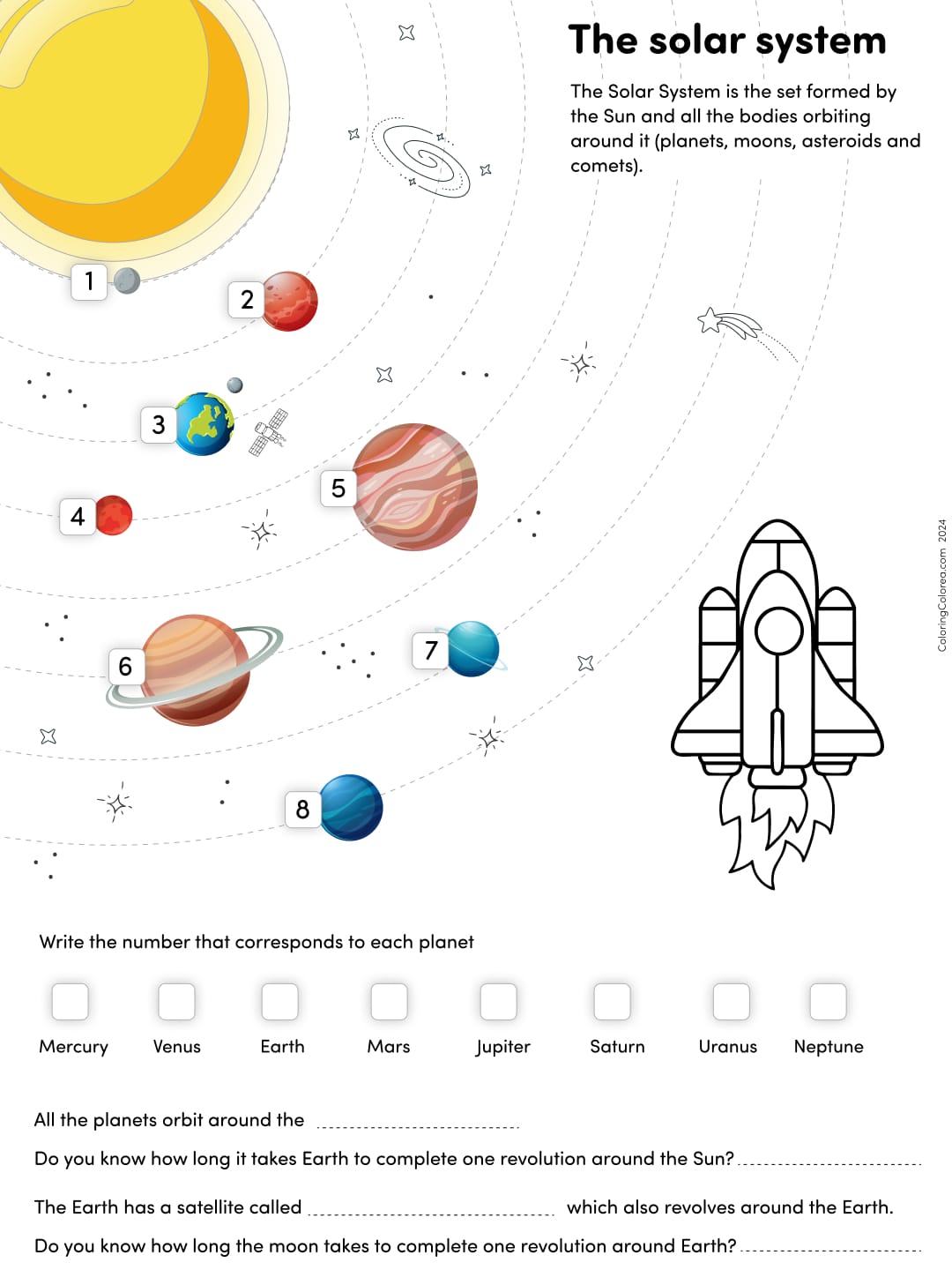
We have designed a simple and fun worksheet to introduce the Solar System educationally This resource is perfect for use both at home and in the classroom.
The idea is for boys and girls to see that each planet is different and has unique characteristics.
-
Format: A4 21x29,7 cm
-
Difficulty: Easy
-
Recommended age: 7 years
-
Skills: creativity, eye-hand coordination, spatial thinking
-
Categories: Science
-
Tags:
More Science educational resources
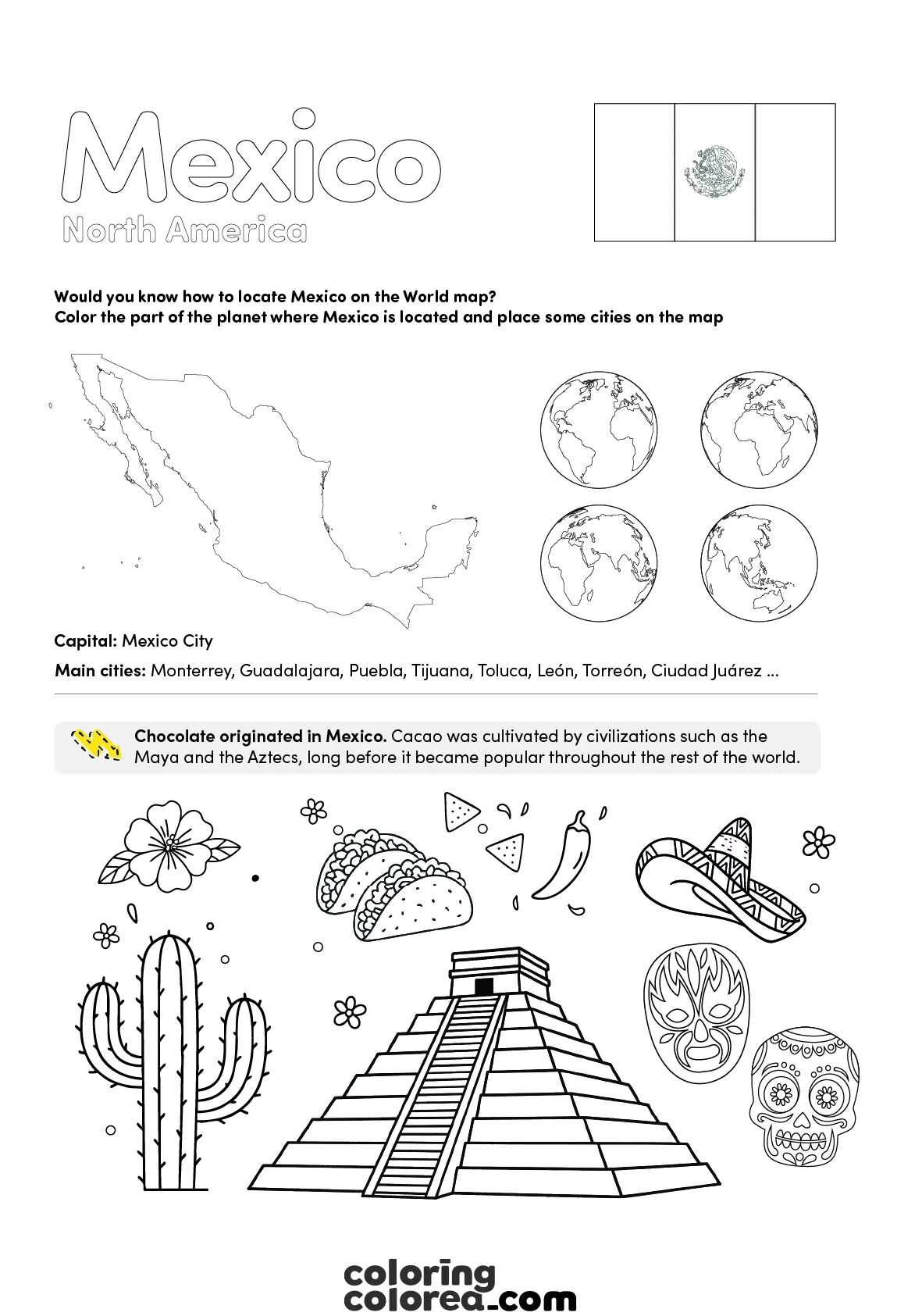
We travel to Mexico
This worksheet is a fun and educational way to learn about Mexico. Children will locate the…
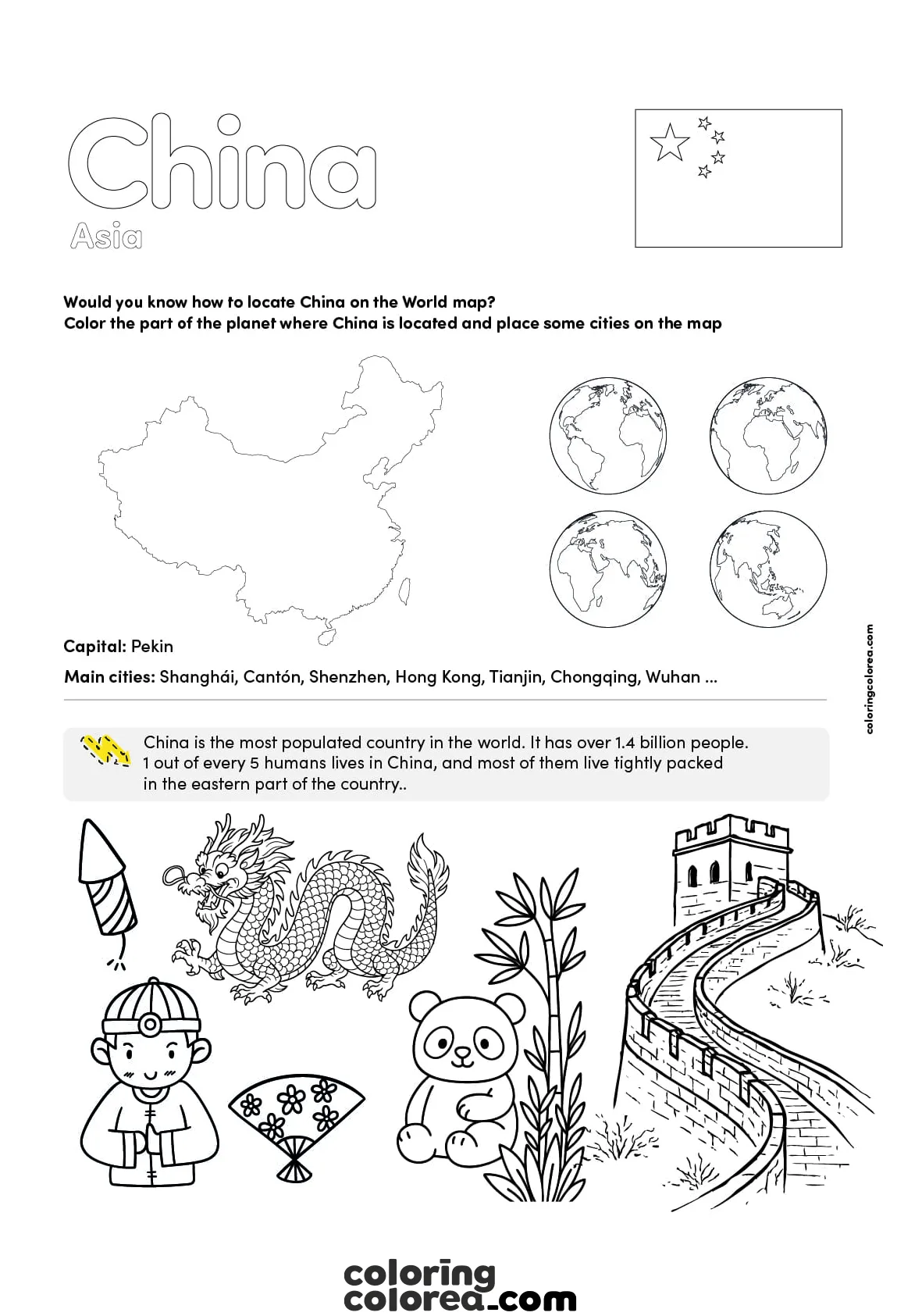
Travelling to China
This educational worksheet introduces children to China through geography, culture, and fun facts. It encourages them…
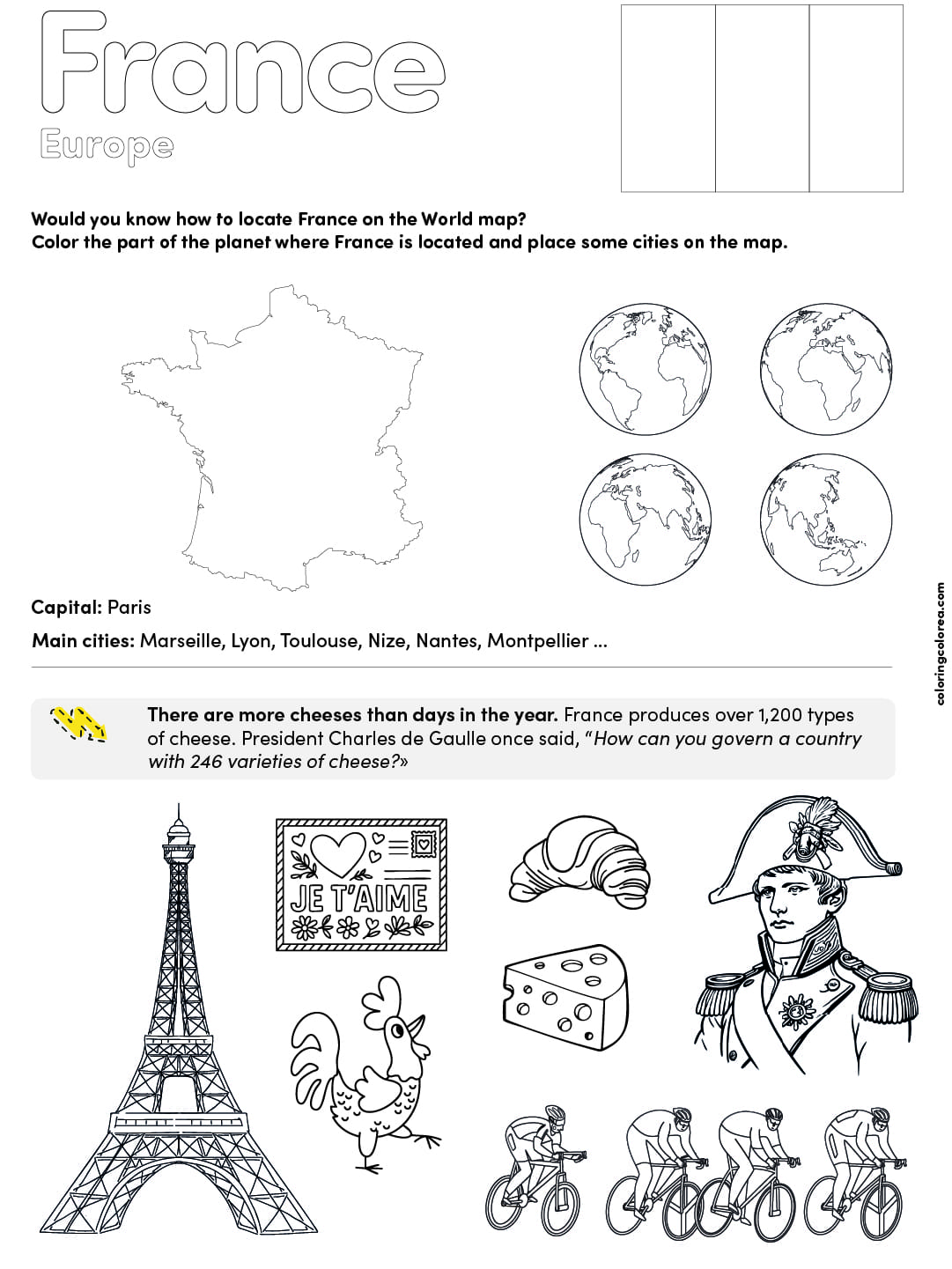
Travelling to France
Today we’re going on an imaginary trip to a very special country in Europe: France! Have…
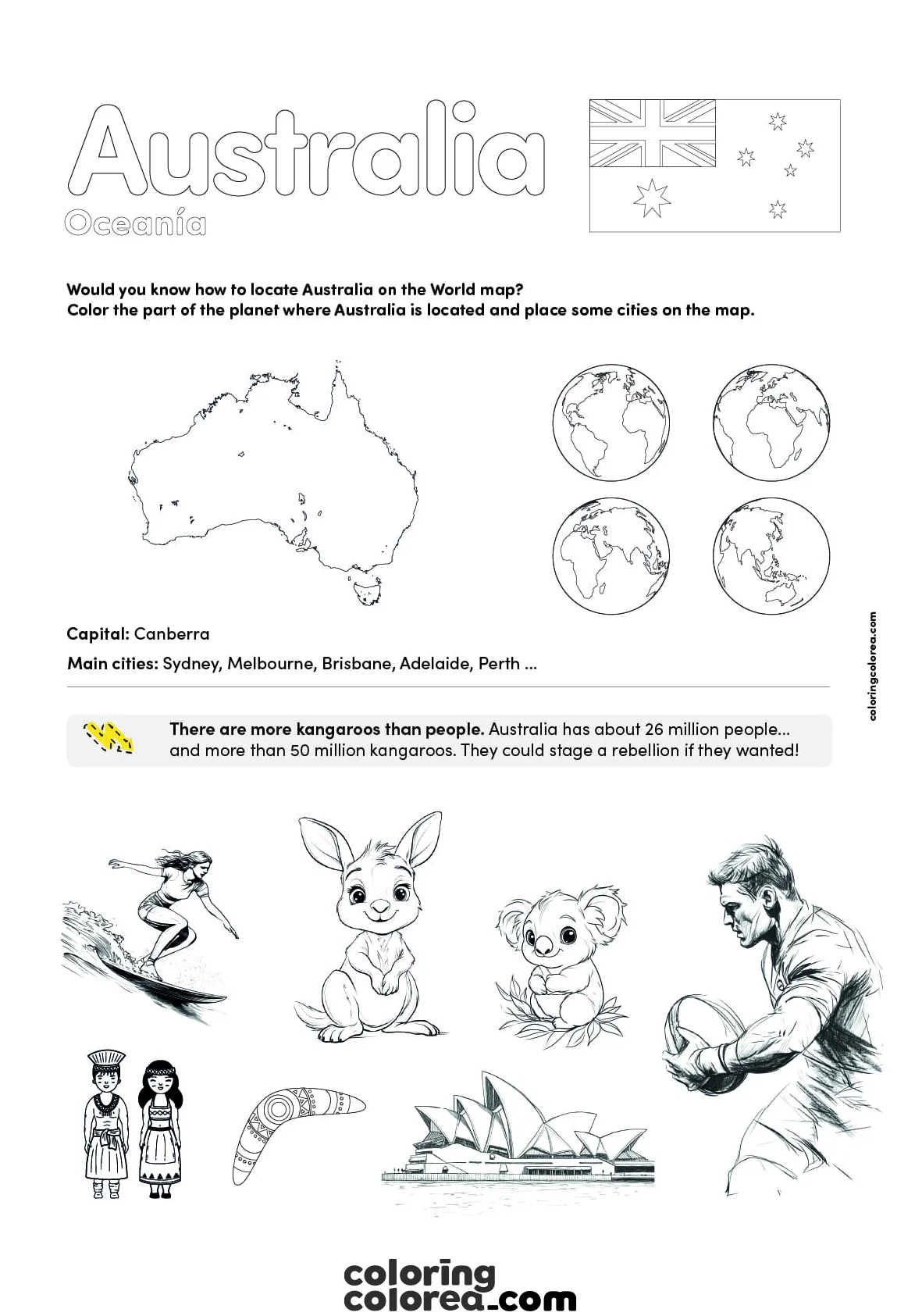
Travelling to Australia
Get ready for an amazing trip to a fascinating place! Today we will learn about Australia,…
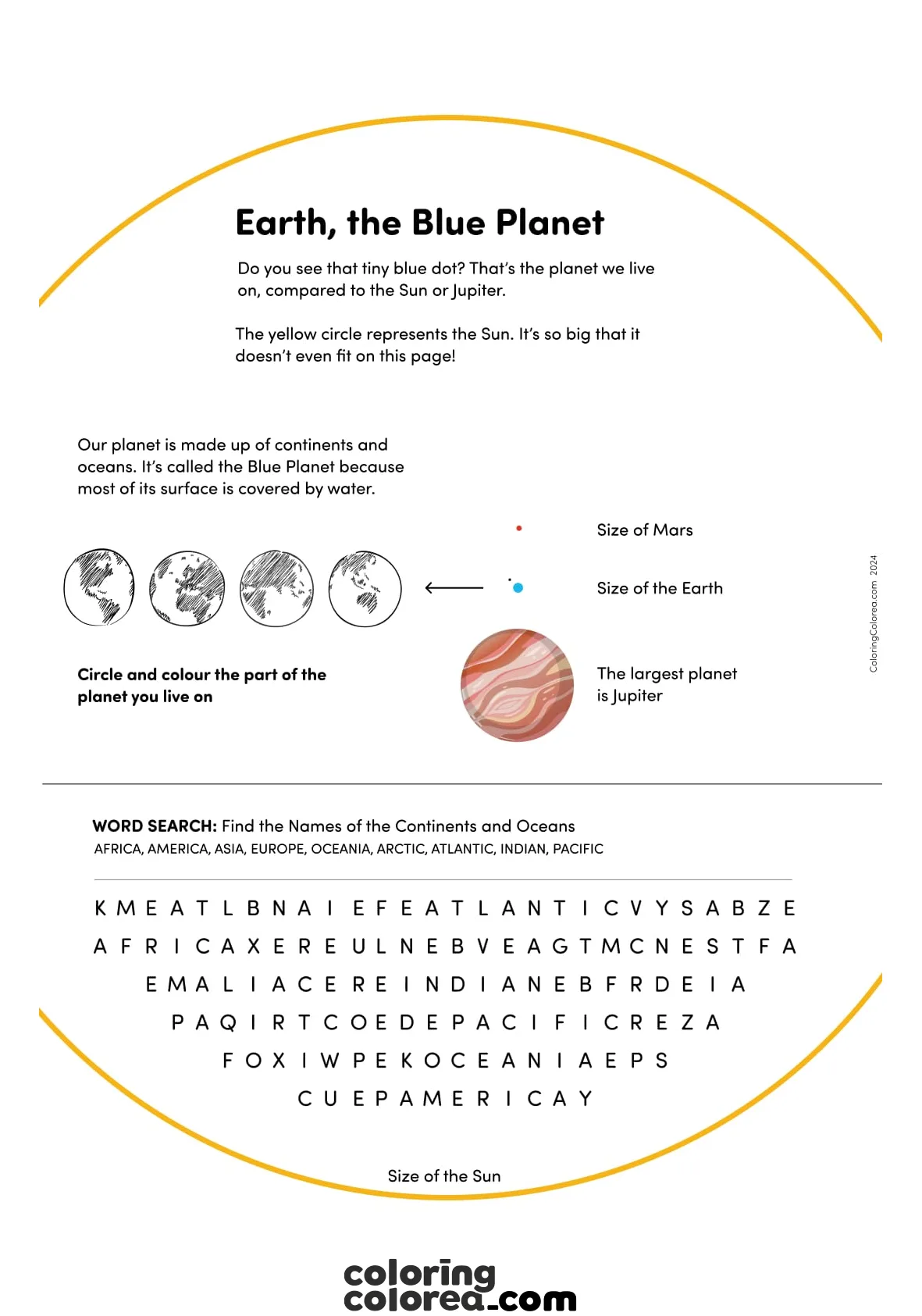
The Earth, Continents, and Oceans
Look at the drawing of the Sun and the Earth. Do you see that the Earth…
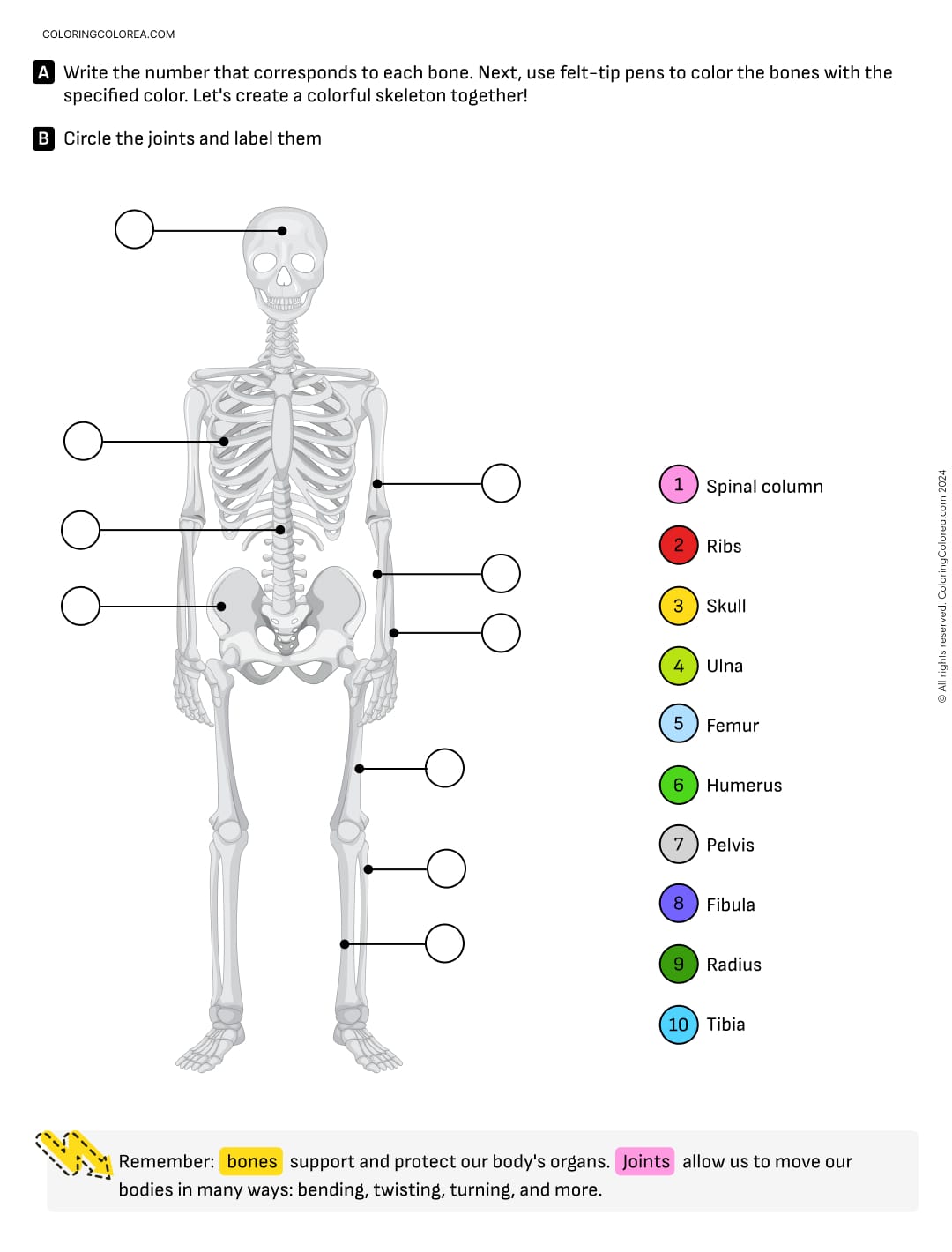
Skeleton in colours
Children need to learn about their bodies to understand how they work and how to take…
What is the Solar System?
The Solar System is our cosmic neighborhood. It is made up of the Sun and all the bodies that orbit around it: planets, moons, asteroids, and comets. It’s a place full of wonders and mysteries waiting to be discovered!
The Solar System has 8 main planets:
- Mercury: It is the smallest planet and the closest to the Sun. Its surface is covered with craters, and it experiences extreme temperatures ranging from -170°C to 350°C.
- Venus: It is the hottest planet, with temperatures exceeding 500°C. It’s so bright that you can see it early in the morning or at sunset. Its day is longer than its year!
- Earth: This is our home! It’s the only planet where we know life exists. It has vast oceans covering 70% of its surface and one satellite called the Moon.
- Mars: Known as the Red Planet because of the iron oxide on its surface. It has mountains, valleys, and the largest volcano in the Solar System, Olympus Mons. Mars has two small moons named Phobos and Deimos.
- Jupiter: The largest planet in the Solar System. It has a Great Red Spot, which is a massive storm that has lasted for hundreds of years. Jupiter has about 69 moons.
- Saturn: Famous for its beautiful rings made of particles orbiting around it. It’s mostly made of gases like nitrogen and helium. Saturn has more than 82 moons.
- Uranus: Its axis is so tilted that one pole always points toward the Sun. Its blue-green color comes from a gas called methane. Uranus has 27 moons and faint rings.
- Neptune: The farthest planet from the Sun. Its deep blue color comes from methane in its atmosphere. Neptune has 14 moons and a Great Dark Spot, which is another massive storm.
Questions to Reflect On
- Did you know that all planets orbit around the Sun? The Sun is at the center of our Solar System and our main source of energy!
- Earth has one satellite called the Moon. How long do you think it takes for the Moon to complete one orbit around Earth? Hint: About 27 days!
- What about Earth’s orbit around the Sun? How many days does it take to complete one orbit? Hint: 365 days!
Fun Facts
- Jupiter is the largest planet in our Solar System and has more than 75 moons.
- Venus and Mercury are closest to the Sun, but surprisingly, Venus is much hotter because of its dense atmosphere.
- Neptune is the farthest planet, and its blue color comes from methane in its atmosphere.

Educational resources and colouring pages for kids and adults
Did you like it?
Thank you for visiting ColoringColorea!
Share our site with your friends!