

Free coloring pages of Avocado
Grab the pencils: this avocado looks great with texture and shading. Make it unique.
Artificial Intelligence: Some images and texts have been created using Artificial Intelligence. However, all of them undergo a process of control and photographic retouching, vectorization and/or redrawing that makes them unique and safe.
Logos and Trademarks: Logos or company names are used for identification purposes only and may be trademarks of their respective owners
Licence: The generated images are in the Public Domain but are licensed under CC BY-NC-ND 4.0.
Description
Coloring requires making conscious visual decisions. This exercise, with an avocado as the central figure, allows you to work with a simple yet nuanced shape. The surface of its skin, the volume of the seed, and the relationship between the inside and outside create an interesting play of tones, lights, and shadows. The illustration includes plant elements that allow you to explore variations of green, as well as flowers that provide a chromatic counterpoint. Additionally, the word “avocado” traced with dots adds another dimension: working on hand-eye coordination through tracing. It’s not just about filling in an outline, but about composing, balancing, and applying technique.
Tips and tricks
How to color this avocado
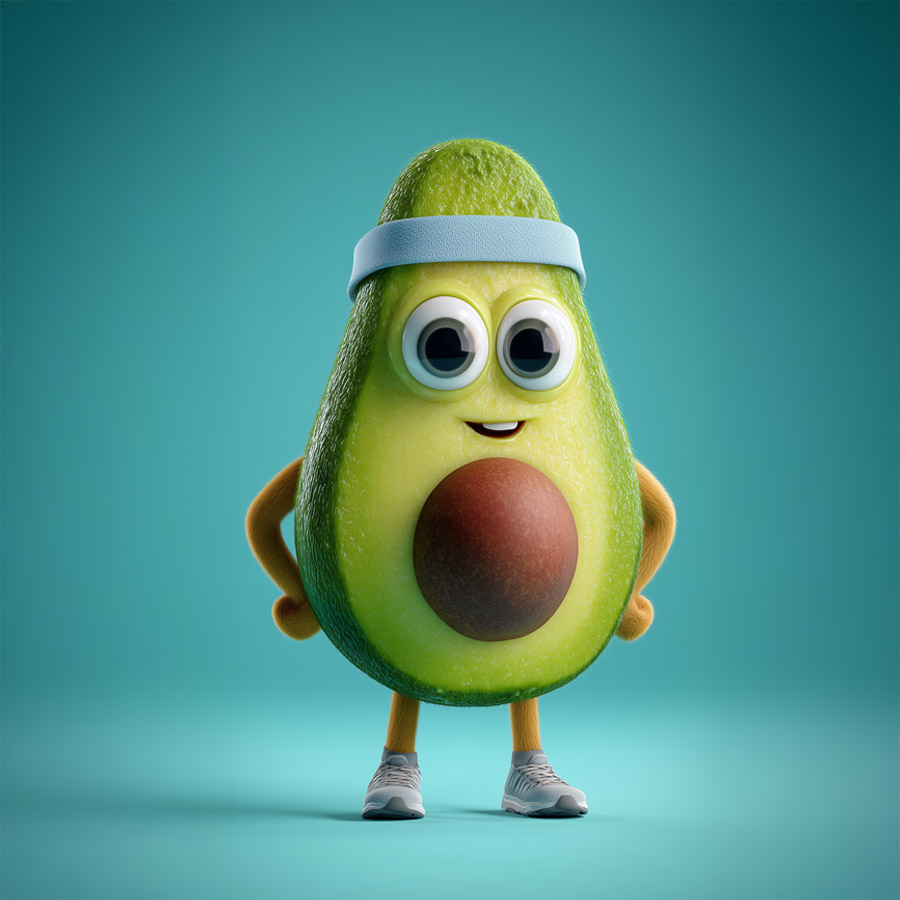
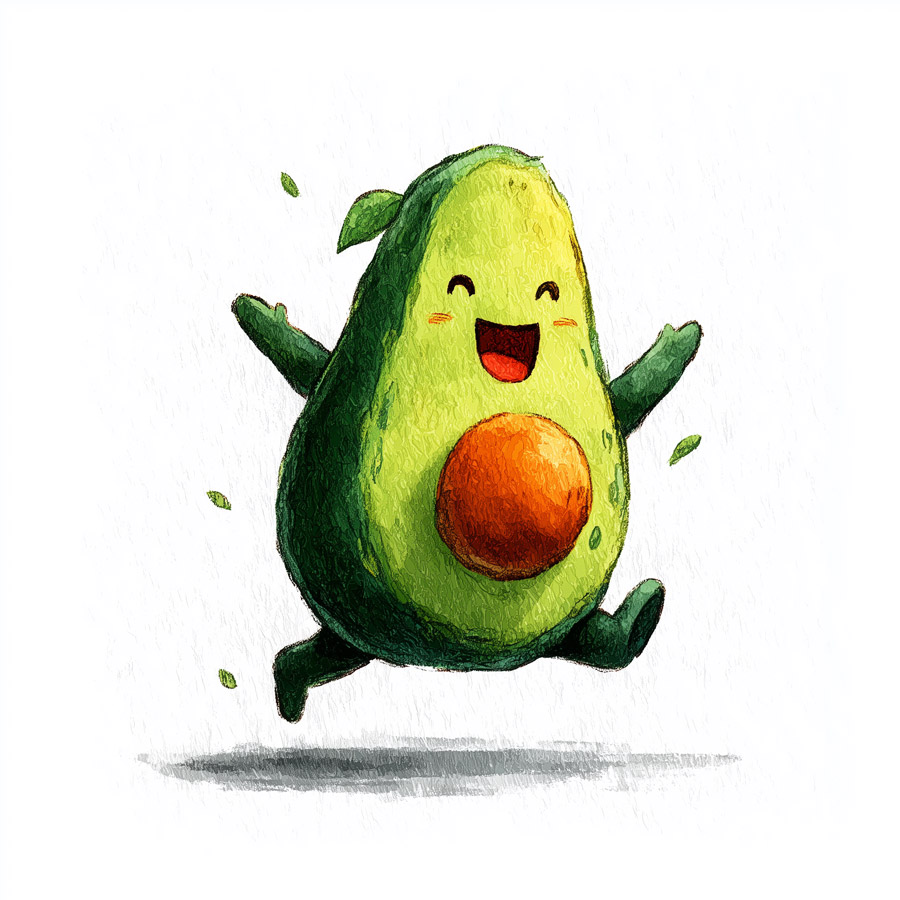
This drawing of an avocado with a friendly expression, framed by flowers and leaves, offers many opportunities to practice different coloring techniques. Let’s break down the work by areas and apply useful suggestions for colored pencils, crayons, markers, or a combination of materials. Avocado skin: The skin of an avocado is usually very dark green. If you’re working with pencils, use an olive green as a base. To add depth, layer softly with brown or even a touch of purple. The key is not to press too hard at first. Start with light layers and gradually intensify. With crayons, you can achieve a grainy texture that nicely simulates the roughness. If you use markers, choose a dark one and add some details with a white pencil or gel pen to create highlights. Inner pulp: The avocado’s flesh has a greenish tone with a yellowish tendency. Use a very light green as the background and blend with pale yellow toward the center. To create volume, apply a soft shadow on the edges. You can do this with a darker green, gently blended with your finger or a blending stump. The goal is for the center to look more raised than the outline. Seed: The seed is round and shiny. Start with a medium brown base and darken toward one side. Add a touch of shadow with a very dark brown or a very soft black pencil. To represent the shine, leave an area uncolored or use a white pencil at the end. If working with watercolor pencils, you can create a smoother transition between shadow and light. Eyes, cheeks, and facial expression: The eyes are colored completely black, leaving a small white circle to simulate the shine. If it’s not drawn, you can create that space with correction fluid or a white pencil. Cheeks work well with light pink or peach tones. Instead of coloring evenly, apply the color in soft circular motions, more intense toward the center and fading outward. Stem: The avocado stem is a simple but important part for the coherence of the whole. Dark brown or very dark green work well. Add a small lighter line on one edge if you want to suggest light. Leaves and flowers: The leaves can be worked with different greens to avoid monotony. Alternate emerald green, leaf green, and lime green. Some leaves can have a darker stroke on the central vein to add contrast. The flowers allow for chromatic variety: use yellows, lilacs, pinks, or even soft red. Remember that each petal can be slightly darker at its base to give more volume. If you use crayons, take advantage of their texture to create vibrant petals, and with pencils you can achieve more subtle gradients. Background and space between elements: You can leave the background white to highlight the central figure, or apply a very soft pastel color (sky blue, beige, mint green) to unify. Use broad, even strokes if using pencil or crayon. With markers, go in one direction to avoid visible lines. Word “avocado”: Before coloring, trace the outline with a pencil to go over the direction of each letter. Then choose a color that contrasts with the rest of the drawing. You can alternate letters in various colors or create a gradient. The goal is to practice coordination while associating the image with the written word. General tip: Maintain chromatic coherence. If you use a specific green for the inside of the avocado, reuse it in some detail of the leaves. This helps the whole piece feel harmonious.Fun facts and trivia
- The avocado was domesticated over 5,000 years ago in Mesoamerica.
- Its name in Nahuatl is ahuacatl, which also means “testicle,” due to its shape.
- Mexico is the world’s largest producer of avocados.
- Although it’s usually used in savory dishes, it is a fruit.
- In some countries, it’s mixed with milk and sugar for desserts.
More colouring pages in the Food category
Ideas para colorear tu dibujo de Avocado