Yuri Gagarin became the first human in space in 1961.
About this coloring page
What if one day we had to live on another planet because we destroyed Earth? This drawing invites us to imagine what it would be like to colonize a new world in space: making it livable, learning to breathe and grow food, starting over. But it also asks a powerful question: do we really have the right to leave behind a damaged planet and start fresh somewhere else? Here, you can imagine strange skies and glowing rocks. But you can also think about what we’re doing to our own world. Does it seem fair to you?
The Scene and Its Symbolism
In this image, there is no destruction, no wars, no pollution. Everything is silent and clean, but that silence can be deceptive. Why are we here, on another planet? Did we come out of curiosity, or because we could no longer live on Earth? This is an image about the future, but also about the past and the present.
Artistic Difficulty and Composition
This drawing may seem simple, but it presents many interesting challenges when coloring. The lunar or planetary environment is monochromatic—gray, pale tones, without many bright colors. That’s why the artist has the chance to invent new atmospheres: a greenish sky, purple sand, blue lights reflected by a different sun. On the other hand, the spacesuits are full of folds, buttons, tubes, and technical details. Here, you can work on texture and volume, using soft shadows to create a sense of depth. The helmet, for example, reflects the surroundings: what would you see in that reflection? Would the person coloring dare to draw their own distant, miniature Earth? The flag is a blank space. You can leave it white to show neutrality, or you can draw a symbol—a peace sign, a plant, a heart, a broken Earth. This isn’t just for coloring; it’s for thinking. What would you put on a flag if you had to represent humanity?
Ethics and Responsibility
Colonizing another planet sounds exciting, but it can also hide a dangerous idea: that we have the right to use what doesn’t belong to us. Who decides we can plant a flag on another world? And what if other beings—living or not—are already there? This drawing invites a conversation about care. If we’re here because we destroyed our own planet, have we learned anything? Are we going to repeat the same mistakes, only now on Mars or beyond? The word “colonize” has a painful history. It also speaks of conquest, invasion, and not asking permission. Are we dreaming of space as a chance for redemption, or as a selfish act?
Debate: Explore or Care?
In the end, this scene leaves us with a question that has no single answer: is it fair to go to another planet if we haven’t learned how to care for our own? Is space colonization a solution, or an escape? We might imagine that we do need another home, because climate change, pollution, or wars have damaged Earth. But we can also imagine a future where we manage to care for what we have, and explore space not to escape, but to discover and learn.


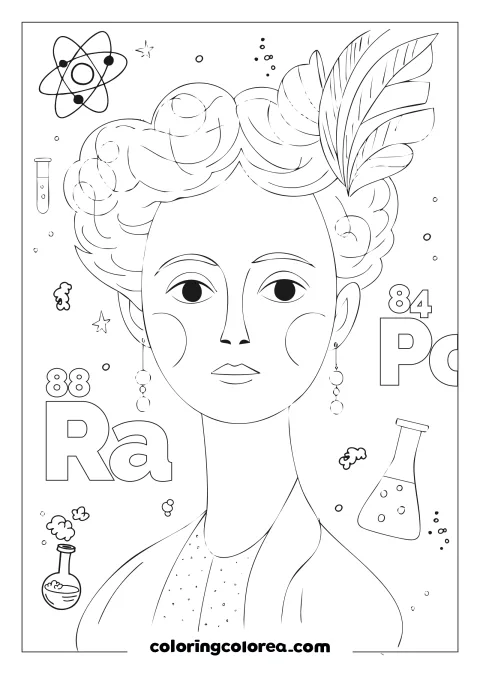 Marie CurieEducational · Hard
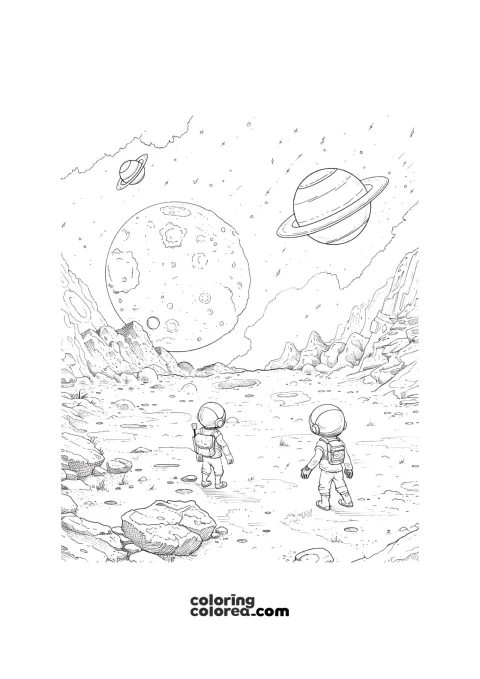 Spatial landscapeEnvironment and Nature · Easy
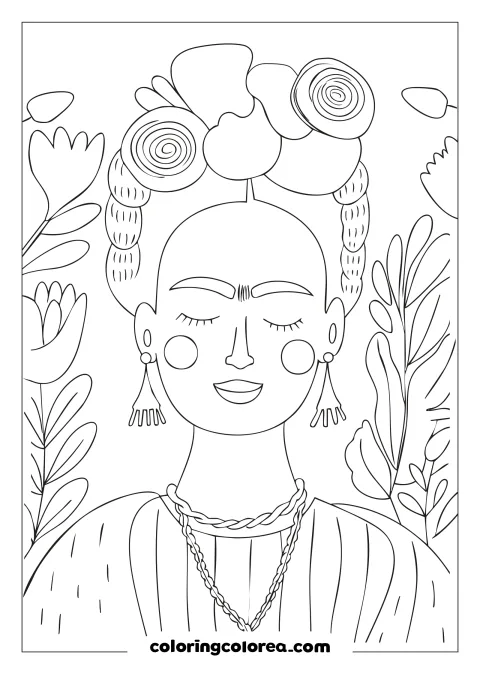 Frida Kahlo with flowersEducational · Medium
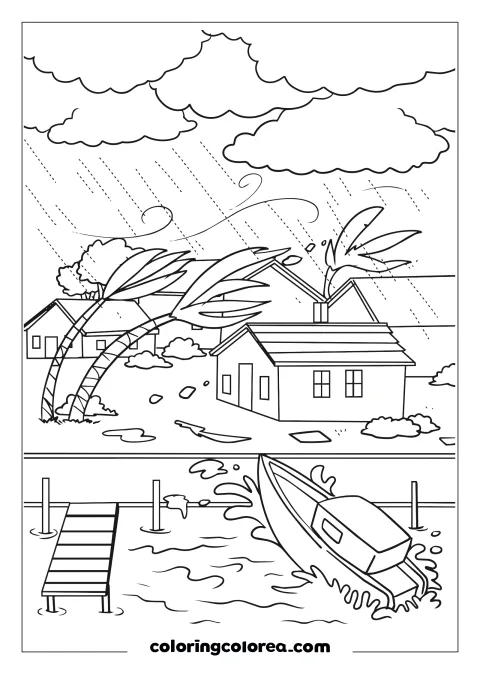 Hurricane at the HarborEducational · Medium
 Twister in the SkyEducational · Medium
 Twister Takes the RoofEducational · Easy
 Storm Over the FarmEducational · Hard
 Earthquake Damage in a Small TownEducational · Hard