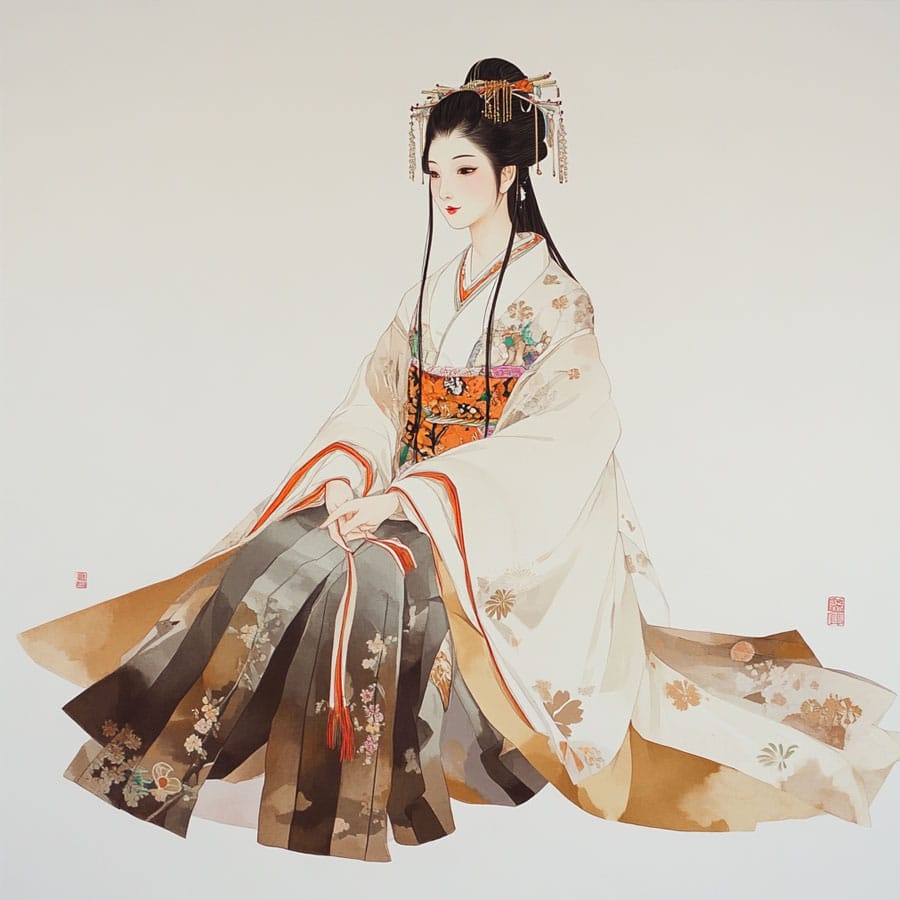


Free coloring pages of Japanese princess
Discover the ancient traditions and culture of Japan's empire.
Artificial Intelligence: Some images and texts have been created using Artificial Intelligence. However, all of them undergo a process of control and photographic retouching, vectorization and/or redrawing that makes them unique and safe.
Logos and Trademarks: Logos or company names are used for identification purposes only and may be trademarks of their respective owners
Licence: The generated images are in the Public Domain but are licensed under CC BY-NC-ND 4.0.
Description
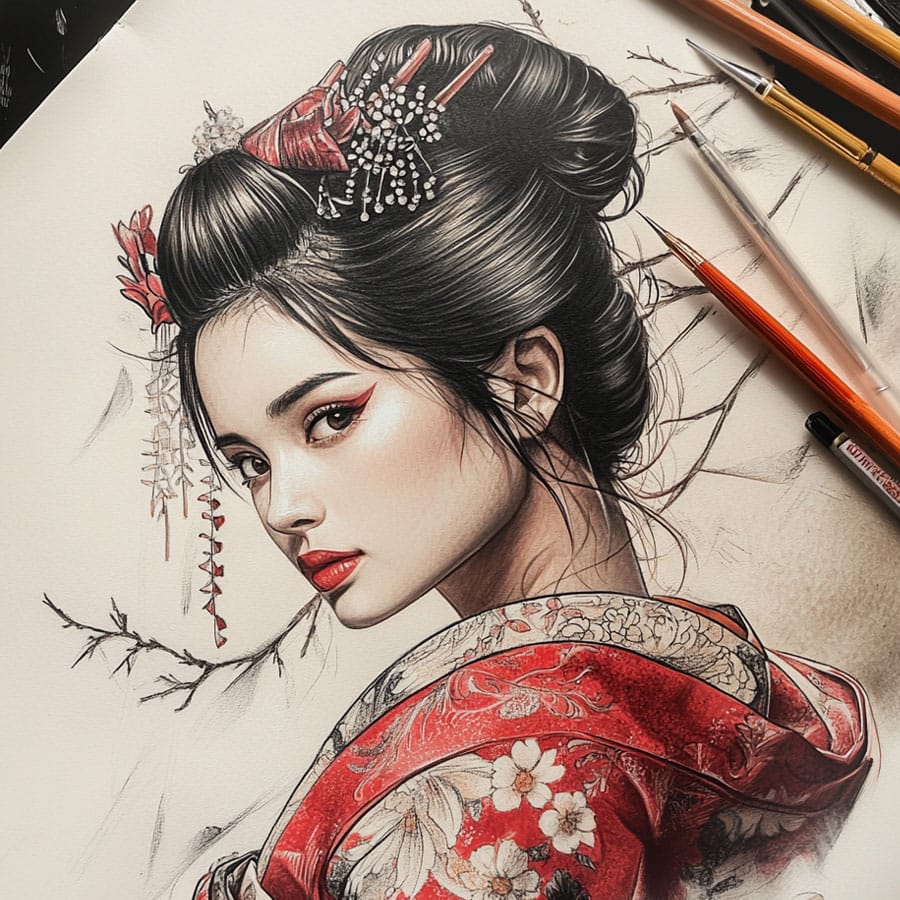
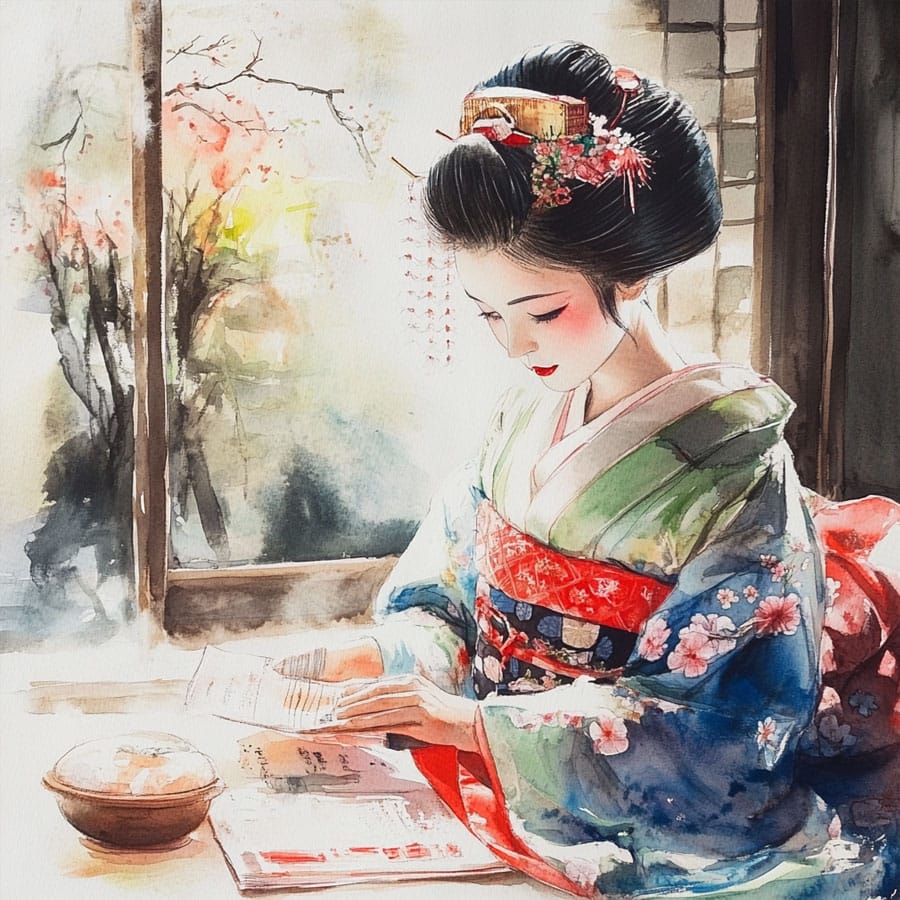
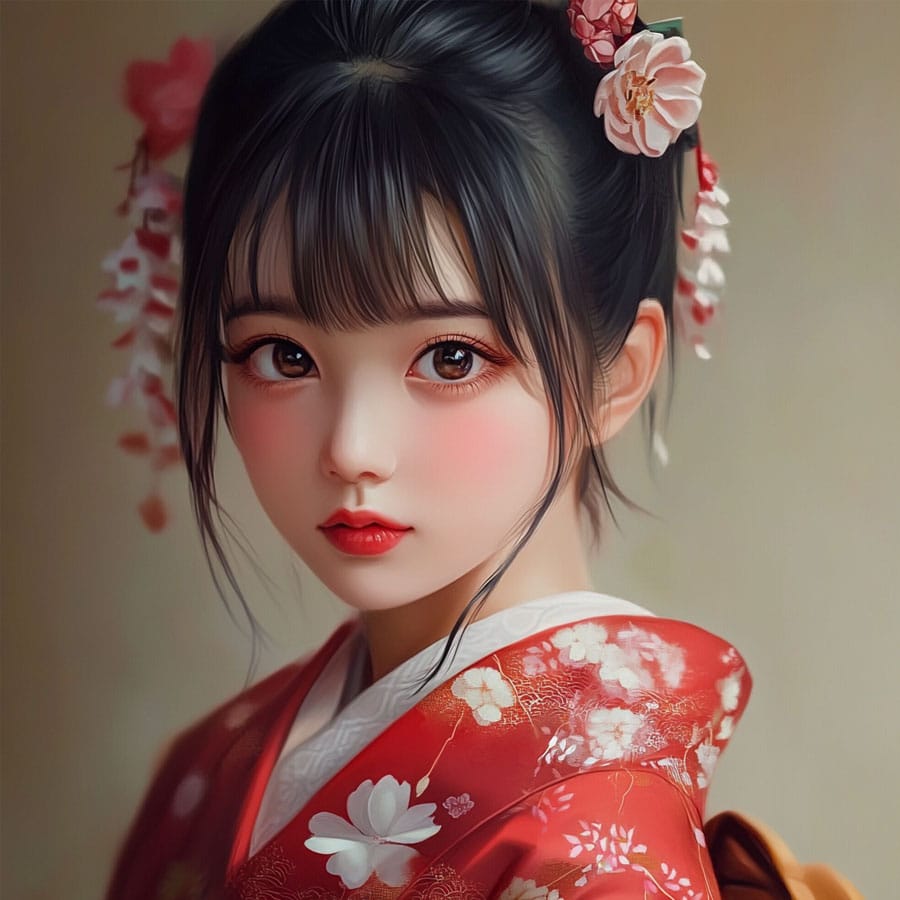
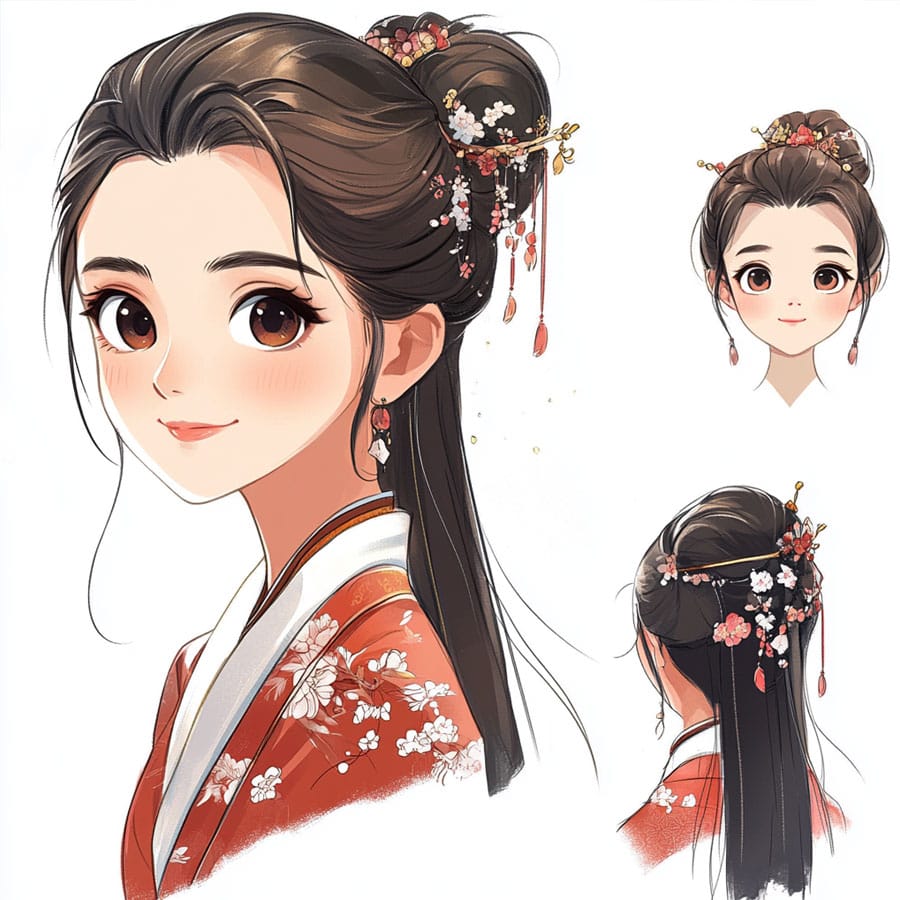
This drawing represents a young Asian princess from Japan. She has an elaborate hairstyle and wears a traditional kimono adorned with floral details. Her serene and elegant expression reflects the beauty and grace expected of a member of the Japanese royal family.
Tips and tricks
Ideas and tips for colouring the Princess of Japan
For the princess's skin, use a white or very light ivory tone to highlight the paleness of her face, which was considered a symbol of status and refinement in ancient times. Traditional Japanese makeup, especially that of geishas and members of the imperial court, emphasized white skin as a sign of purity and elegance. To replicate this aesthetic, use an opaque white for the face and blend in soft pink blush on the cheeks for warmth. The lips should be colored a vibrant red or carmine tone, and the eyes can be enhanced with a touch of gray or light brown shadow. The kimono can be colored in a combination of soft and rich colors, such as pink, lilac, or blue, with details in gold or silver for the flowers and borders. The sash (obi) can be painted contrasting colours, like red or green, to make it stand out. The hair flowers and accessories can be colored in shades that complement the kimono. Use a deep jet black with hints of gray or dark blue for the hair to create a shiny and voluminous effect. Add subtle highlights for a realistic touch to the hairstyle.The royalty in Japan
Royalty in Japan has played a crucial role in the country's history and culture. The figure of the emperor and the members of the imperial family represent continuity and traditions that have endured for centuries. In the past, the imperial court was known for its elaborate rituals, clothing, and aesthetics, of which white skin was an essential component. This aesthetic value stemmed from the belief that pale skin reflected purity, nobility, and a life free from outdoor labor, symbolizing a high social standing. Want to know more about royalty in Japan? Click hereMore colouring pages in the TV & cartoons category



Ideas para colorear tu dibujo de Japanese princess