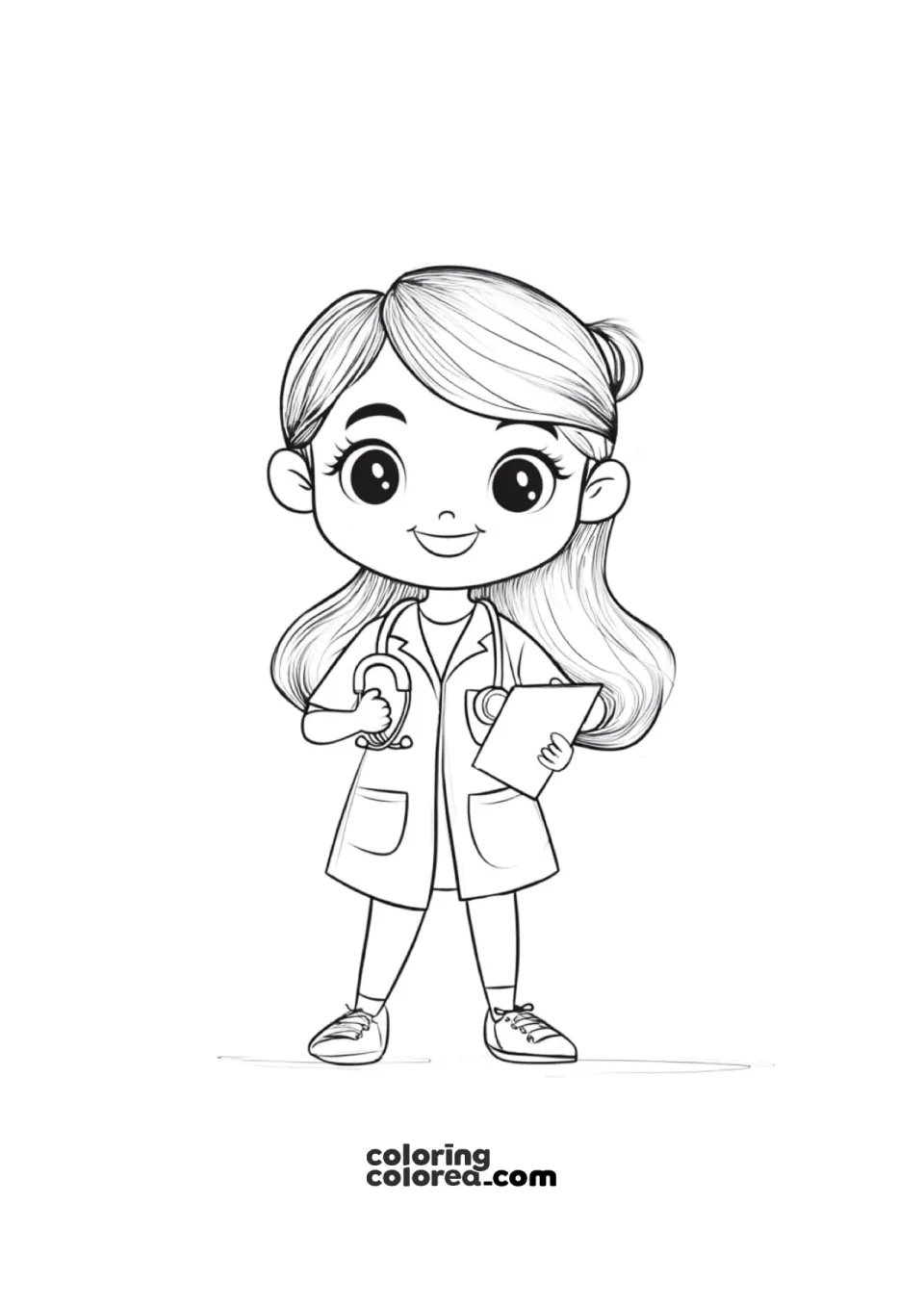
ince she was little, this doctor dreamed of helping others. With her stethoscope and notebook in hand, she is prepared to listen, learn, and care. How do you imagine her uniform? It doesn’t have to be white—it can reflect her personality with vibrant colors or soft, calming tones. Every stroke you make builds her story, every shadow adds depth to her world
How to Color with Realism and Creativity
To achieve a more expressive and detailed look, try different coloring techniques:
Doctor’s coat: Though traditionally white, you can experiment with pastels like blue, green, or lavender. For depth, shade the folds with darker tones and highlight areas of light with white.
Hair: Blend different shades for a realistic effect. If it’s brown, mix dark brown with hints of yellow or orange. For black hair, combine dark gray and navy blue for highlights.
Clothes and shoes: Play with contrasts. If the coat is light, choose bold colors for her clothing. Shade the edges and add highlights with a white pencil or eraser for a luminous effect.
Stethoscope and accessories: For a metallic effect, use grays with touches of blue or silver. The notebook can be brown leather or a bright color like red or green.
Beyond Color: Details That Bring Life
Coloring is not just filling in spaces—it’s telling a story. You can add a background to place the doctor in a hospital, a consultation room, or even a park helping an imaginary patient. Adding textures with small strokes on her clothing or reflections in her eyes will give your drawing more life.
Fun Facts About Doctors and Medicine
In ancient Greece, doctors wore different colored robes depending on their speciality.
The stethoscope was invented because a doctor was too embarrassed to place his ear directly on patients.
A great doctor doesn’t just heal with medicine but with words, gestures, and empathy.

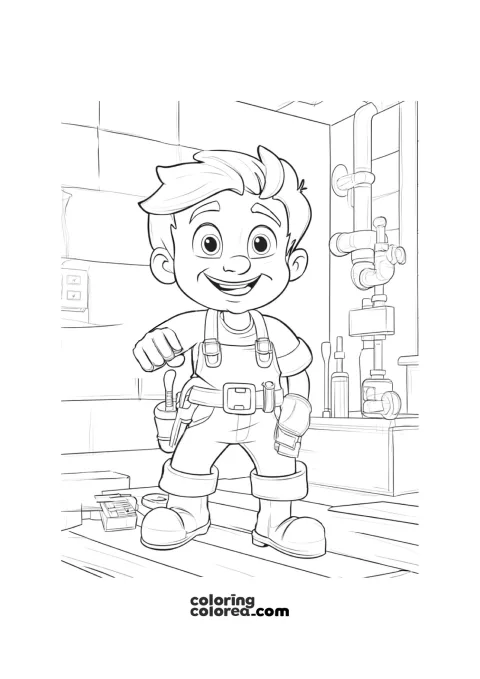 when I grow up I want to be a plumberProfessions · Easy
 when I grow up I want to be a singerProfessions · Easy
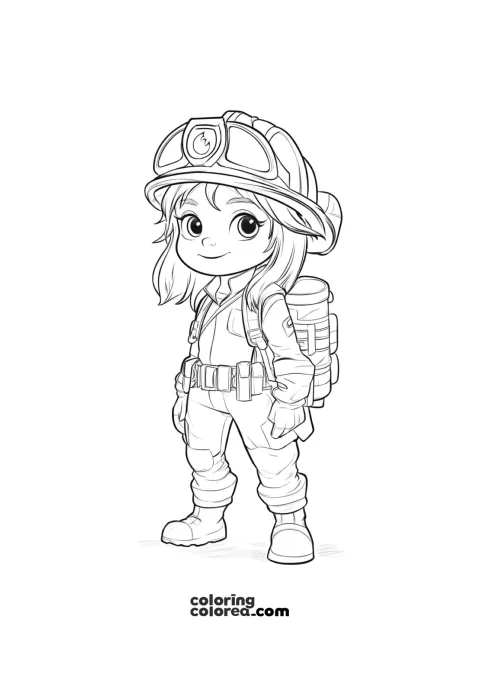 when I grow up I want to be a firefighterProfessions · Easy
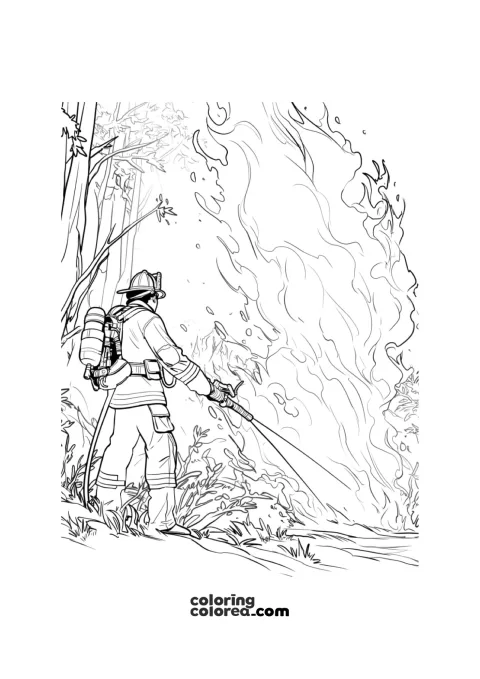 When I Grow Up, I Want to Be: A FirefighterEducational · Easy
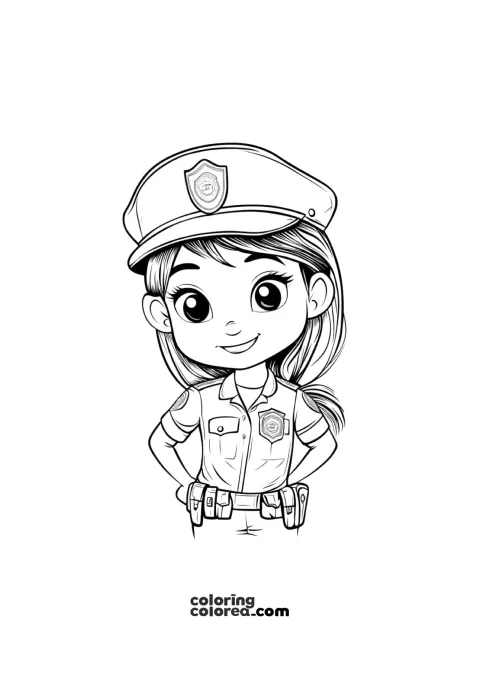 when I grow up I want to be a policemanProfessions · Easy
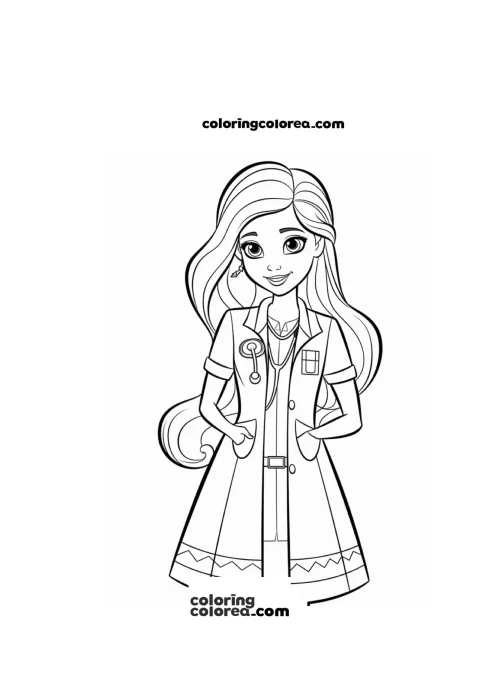 Barbie the doctorProfessions · Easy
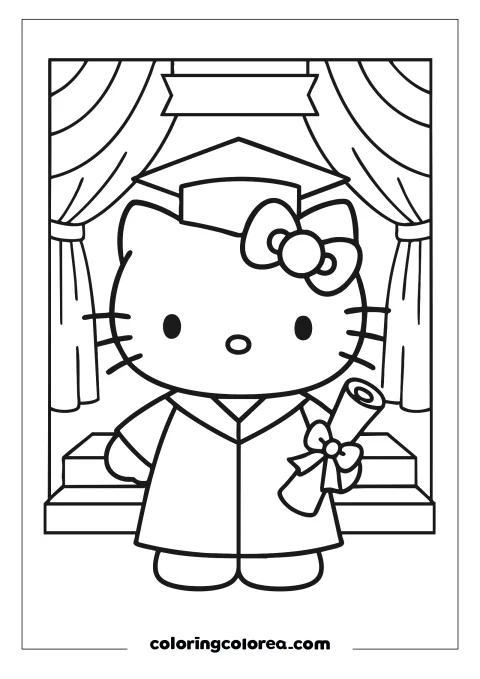 Cute graduate cat with diploma coloring pageEducational · Easy
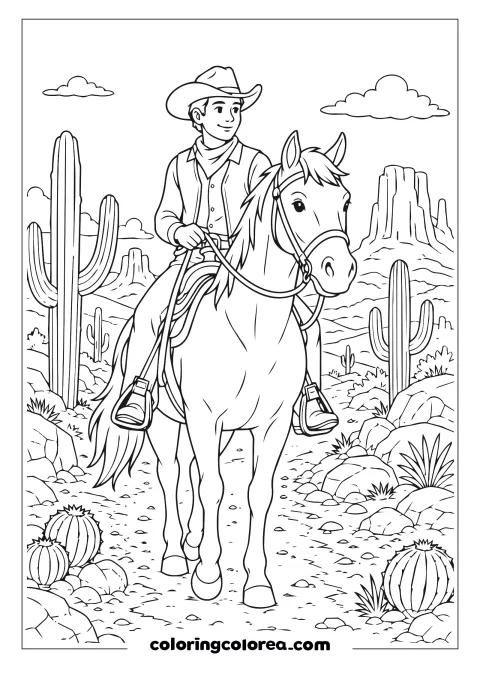 Cowboy Riding Through the DesertProfessions · Medium