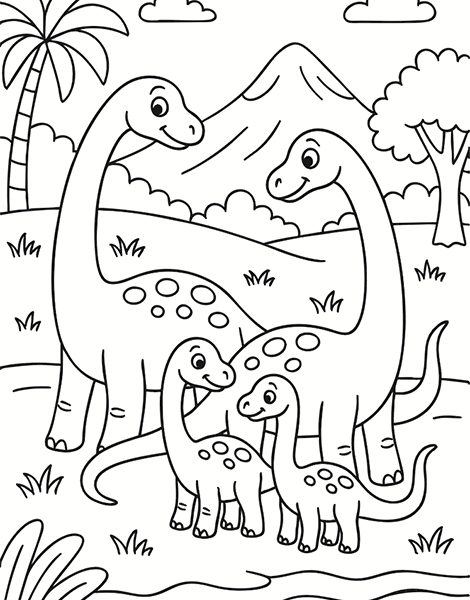


Free coloring pages of Stegosaurus
Artificial Intelligence: Some images and texts have been created using Artificial Intelligence. However, all of them undergo a process of control and photographic retouching, vectorization and/or redrawing that makes them unique and safe.
Logos and Trademarks: Logos or company names are used for identification purposes only and may be trademarks of their respective owners
Licence: The generated images are in the Public Domain but are licensed under CC BY-NC-ND 4.0.
Description
Into dinosaurs? The Stegosaurus is one of the most iconic of them all, and this page shows it in full profile: a solid, heavy body with those famous dorsal plates running all along its back, a spiked tail ready for defense, and four sturdy legs planted firmly on the ground.
The dinosaur fills most of the page and has a lot of texture going on: raised circular bumps on the skin, lines suggesting scales and folds. That means you’ll need to decide early on whether you’re going with flat, solid tones or using those lines to build shadow and volume. The dorsal plates are the most dramatic feature and where you can take the biggest risks with color — it doesn’t all have to be brown. The tail and legs need a steadier hand because of their jagged edges. The background is simple enough to knock out quickly so it doesn’t compete with the main subject. Overall, a mid-difficulty page with plenty of room to experiment.
Color palette
Tips and tricks
Frequently asked questions
What were those plates on its back actually for?
Scientists are still debating it. The leading theories include temperature regulation, species recognition, and display for attracting mates. What’s clear is that the plates were packed with blood vessels, so they weren’t just decoration.
Was Stegosaurus dangerous?
Not to other animals it hunted — because it didn’t hunt. It was a plant eater. But its tail had four spikes up to a meter long, nicknamed the “thagomizer,” which made it a serious threat to any predator brave enough to get too close.
When and where did it live?
During the Late Jurassic period, about 155 to 150 million years ago. Most fossils have been found in what is now the western United States and Portugal.
More colouring pages in the Dinosaurs category