


Free coloring pages of Baby Diplodocus
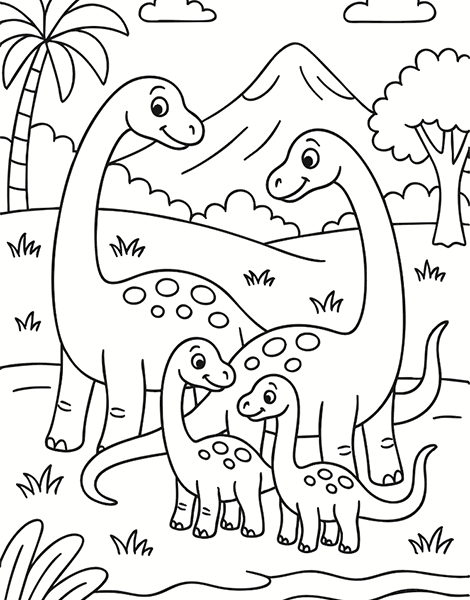
Venture into the Jurassic world with an adorable baby Diplodocus!
Artificial Intelligence: Some images and texts have been created using Artificial Intelligence. However, all of them undergo a process of control and photographic retouching, vectorization and/or redrawing that makes them unique and safe.
Logos and Trademarks: Logos or company names are used for identification purposes only and may be trademarks of their respective owners
Licence: The generated images are in the Public Domain but are licensed under CC BY-NC-ND 4.0.
Description
Imagine a little giant taking its first steps into the prehistoric world. Its long neck wobbles awkwardly, its tail swings with glee, and its big, curious eyes explore a new world. This is a baby Diplodocus, a colossal dinosaur that roamed the Earth millions of years ago.
Tips and tricks
A Prehistoric Blank Canvas:
Before you begin coloring, imagine what a baby dinosaur might have looked like. Its skin was scaly, like a modern reptile, but softer and more flexible because it was so young. It had different types of scales: larger, thicker ones on its back, and smaller, more flexible ones on its belly. Although its coloration was a mystery for a long time, we now know that baby dinosaurs weren't just grey or brown. Baby Diplodocus could have been as colorful as today's parrots!Jurassic Color Palette:
To color the baby Diplodocus, choose a palette of vibrant and cheerful colors. Study the colors of baby animals that live in forests and savannas, as these environments were similar to those inhabited by the dinosaur. Some examples include:- Greens: to blend the small dinosaur into the foliage around it.
- Yellows and oranges: for the belly, details like crests on the head or tail, and to highlight its adorable clumsiness.
- Blues and purples: for patterns on the skin, like stripes or spots, which might have been used for camouflage or recognition among dinosaurs.
- Pastel tones: soften the colors and give the baby Diplodocus a tender look.
Master Techniques:
It's not just about the colors; technique matters too. Try different tools:- Colored pencils: ideal for details and precision, especially for highlighting the scales and eyes.
- Crayons: to quickly cover large areas and achieve vibrant colors, perfect for the body and tail.
- Watercolors: for a soft, translucent effect, ideal for simulating the texture of the scales and creating a misty background.
- Tempera: for more opaque colors and thicker textures, perfect for highlighting details like the legs and claws.
A Journey to the Jurassic:
Now that your baby Diplodocus is ready, let's imagine its world. It lived during the Jurassic period, about 150 million years ago. Lush forests and savannas were its home, where it shared space with other herbivorous dinosaurs like Brachiosaurus and Apatosaurus.Dangers in the Savannah:
Although it was a miniature giant, the baby Diplodocus had enemies. Carnivorous dinosaurs like Tyrannosaurus Rex and Allosaurus lurked in the shadows, waiting for a chance to strike. To protect itself, the baby Diplodocus would huddle next to its mother, who shielded it with her massive size and powerful tail.Fun Facts about the Dinosaur:
- bout the size of a large dog.
- They grew very quickly, reaching over 20 meters (65 feet) long in just a few years.
- It's believed they were playful and curious, much like baby elephants today.
- Their long necks allowed them to reach the highest leaves in the trees.
More colouring pages in the Dinosaurs category


Ideas para colorear tu dibujo de Baby Diplodocus