
Printable coloring page
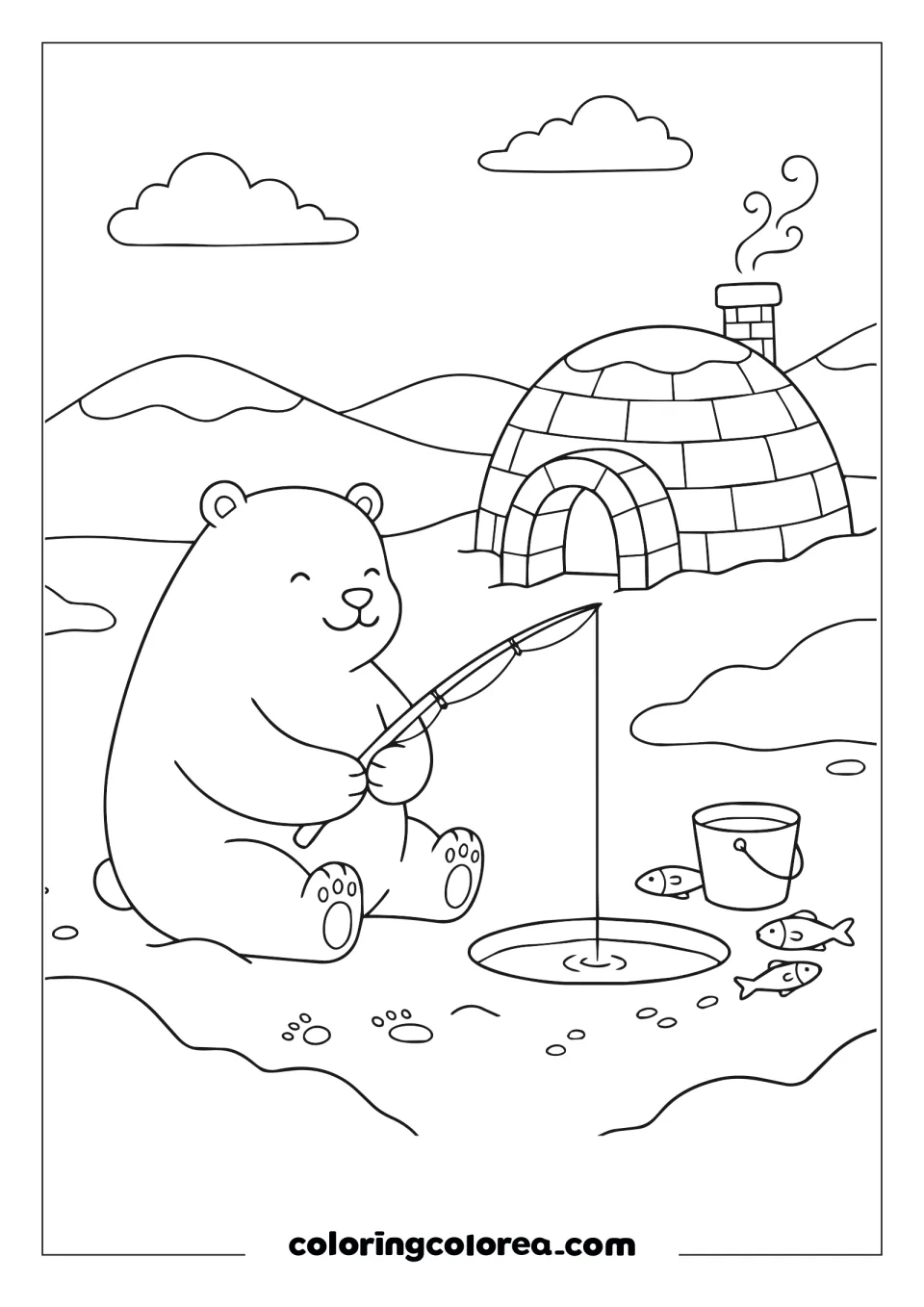
Polar bear ice fishing with a rod beside a cozy igloo with a chimney, a bucket and fresh fish. Download the free PDF and enjoy a cute winter page.
Printable coloring page
Free for personal and educational use
Download coloring page (PDF)PrintColor it in your browser, no sign-up needed. Your progress is saved on this device.
Also in the pack: Winter coloring pack: polar animals and snow (16 drawings)
A polar bear sitting with a fishing rod over an ice hole, an igloo with a chimney, a bucket, three fish and clouds.
Color the fish in bright shades so they pop against the white ice.
Count the fish on the page and draw the next ones the bear might catch.
A polar bear can smell a seal from a long way off, even under a layer of snow.
A polar bear ice fishing with a rod is make-believe, but the idea behind it is real. These bears do hunt through holes in the ice, though their target is usually seals rather than fish.
Seals live beneath the sea ice and must come up for air, so they keep small breathing holes open. A polar bear sniffs out those holes with its remarkable nose, then waits beside one, silent and still, sometimes for hours. When a seal surfaces, the bear grabs it with powerful paws.
Seal meat, and especially seal blubber, is packed with the energy a bear needs to handle the cold. That is why polar bears spend so much of their lives out on the ice. When food is scarce, they can live off their own fat reserves for quite a while.
In summer, when the ice melts in many areas, hunting gets harder. Some bears then eat whatever they can find, from bird eggs to leftovers and even seaweed. Still, their survival depends on seals and on having enough sea ice to hunt from. Scientists track how much time bears spend on the ice each year to understand how they are coping with a changing Arctic.
 Polar Bear Building a SnowmanWild · Easy
 Baby Polar Bear Sitting in the SnowWild · Easy
 Polar Bear Walking Across the ArcticWild · Easy
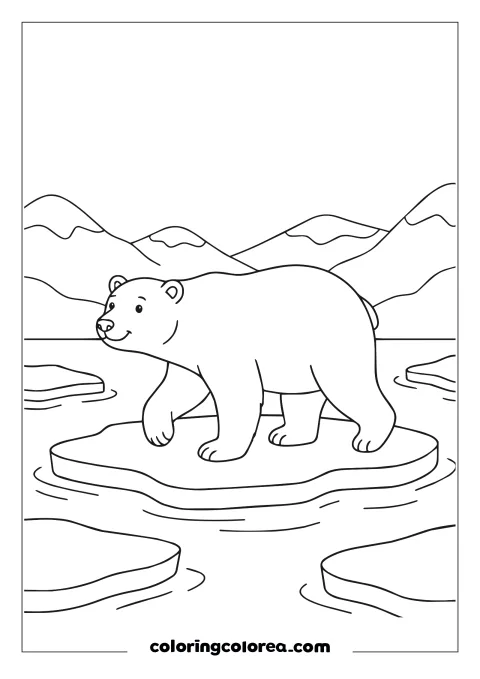 Polar Bear on a Floating Ice FloeWild · Easy
 Polar Bear Baking Cookies in an IglooChristmas · Medium
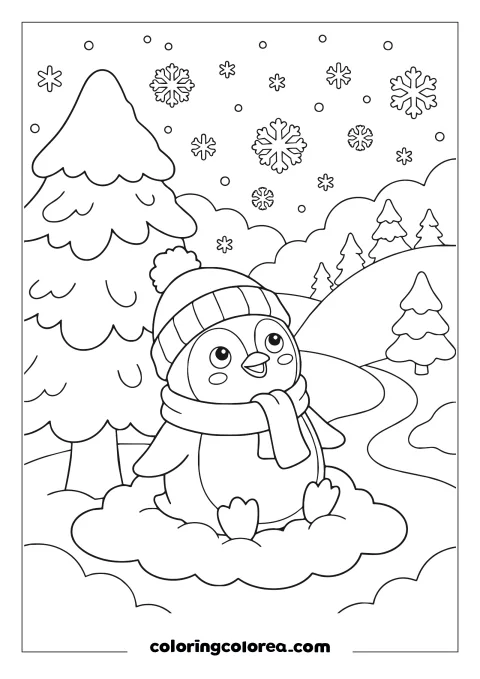 Bundled-Up Penguin Sitting in the SnowBirds · Easy
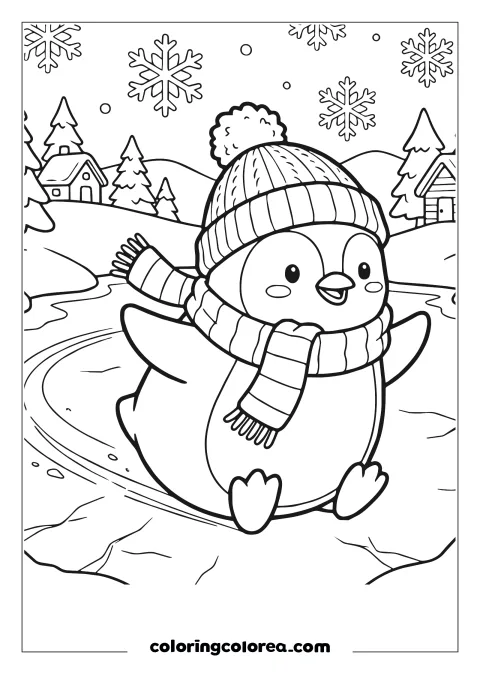 Penguin Sliding on a Frozen PondBirds · Easy
 Happy Penguin With SnowballsBirds · Easy