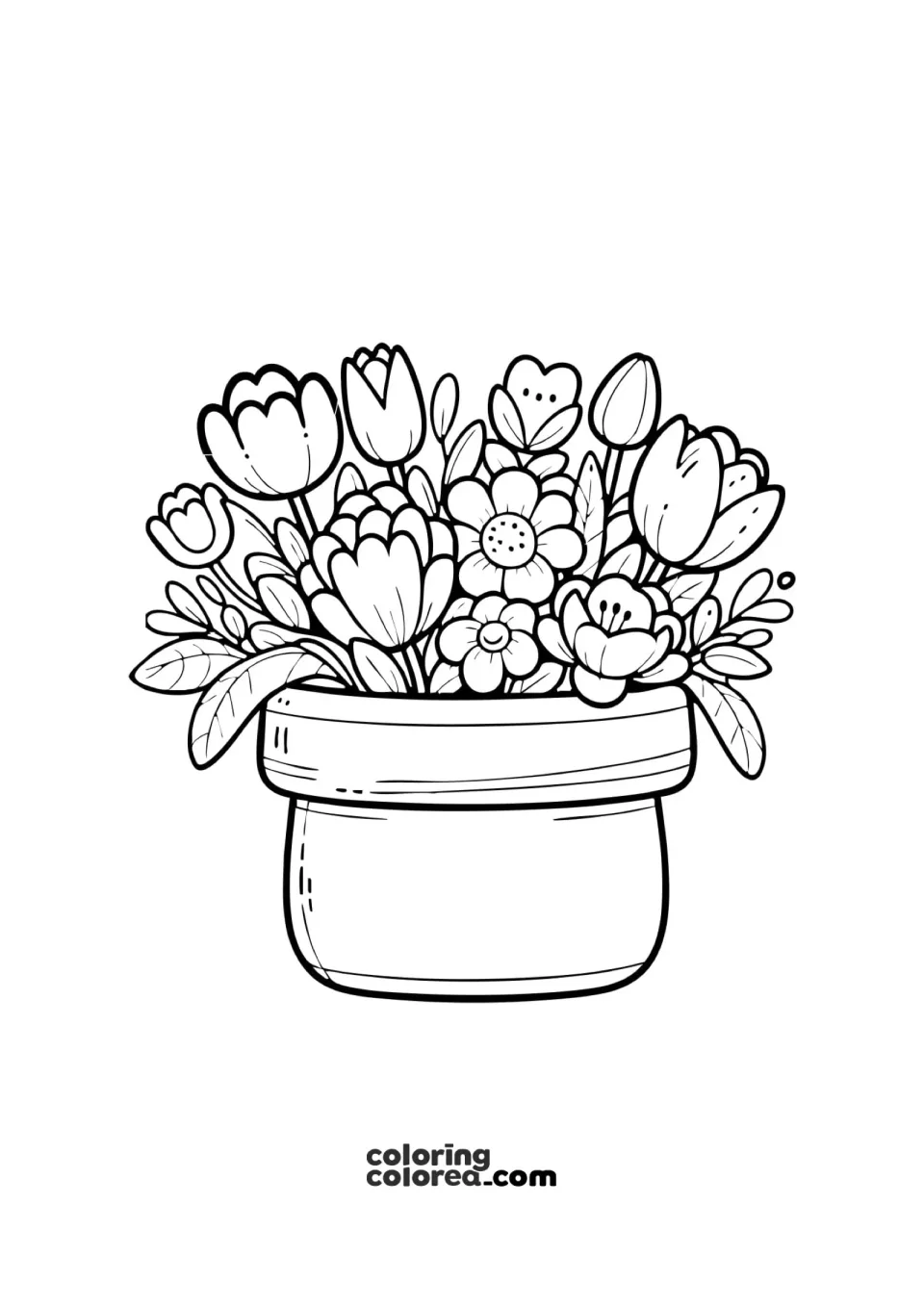
Explore creativity by bringing this potted flower drawing to life. Perfect for building artistic and reflective skills. An educational and fun activity.
About this coloring page
A large bouquet of flowers in a pot represents life, care, and our connection to nature. Through this drawing, we can reflect on the effort and dedication required for something to grow and bloom.
By observing the different flowers, we can think about how each one has unique characteristics, yet together they create something beautiful and harmonious. This drawing invites you to take a moment to consider how small actions, like watering a plant, can transform the world around us.
Ideas and Tips for Coloring the Flower Pot
This drawing offers multiple challenges and opportunities. The shapes of the flowers are varied: some have large, rounded petals, while others show sharper lines or delicate curves. The leaves and stems complement the composition with soft lines that guide the eye to the center of the drawing. To color this design, think about how you want to convey the life of the flowers. You can use warm tones like yellow, orange, and red to give them energy and vitality. If you prefer a more calming effect, choose cool tones like blue or purple. Adding shadows with a slightly darker tone of the base color can add depth and make the flowers appear more realistic. The flowerpot is also an important part of the composition. You can opt for neutral colors to highlight the flowers or decorate it with patterns that add a personal touch to the design. The soft lines of the pot allow you to play with textures and effects to make it more interesting. The main challenge in this drawing lies in the amount of detail and the limited space in some areas. The small petals, leaves, and stems may require precision to keep colors from blending. Using fine-tipped colored pencils or markers can help you maintain sharpness in the smallest details. Another complication might be balancing the colors of the bouquet. If all the colors are too vibrant, the result could look chaotic. That’s why it’s important to plan before starting: choose a color scheme that allows you to highlight some flowers while letting others recede into the background. Think about how the colors interact and what emotions you want to convey with your choices. Finally, pay attention to the overall composition. While each flower is important, the bouquet should look cohesive. One way to achieve this is by using similar tones or repeating certain colors throughout the drawing. This will create a sense of unity and make the bouquet feel more harmonious. Balance in Nature
Nature teaches us about patience and balance. When we care for a plant, we learn that every element in its growth is essential: sunlight, water, soil nutrients, and even the space where it grows. Flowers in a pot are a reminder that life, even in the smallest spaces, can thrive if given proper attention. Each flower contributes something unique to the arrangement, but it’s their diversity that makes the bouquet so special. Invite children—or take a moment yourself—to reflect on how, just like in nature, collaboration and diversity within a community create beauty and balance. What would happen if there were only one type of flower in the pot? Would it be as interesting or harmonious? Think about the ethics of care: plants depend on us to survive. This relationship makes us responsible for protecting them—not just for their beauty but because they are part of an ecosystem we also belong to. What can we learn from this commitment? How can we apply that same dedication to our relationships with others and with the planet?
 Cowgirl Braiding Flowers into a ManeFarm · Hard
 Floral Horse PortraitFarm · Hard
 Friends gathering flowers coloring pageEnvironment and Nature · Easy
 MandalaMandalas · Easy
 Rapunzel With Flowers in Her BraidPrincesses and Princes · Medium
 Horse Leaping a Country FenceFarm · Medium
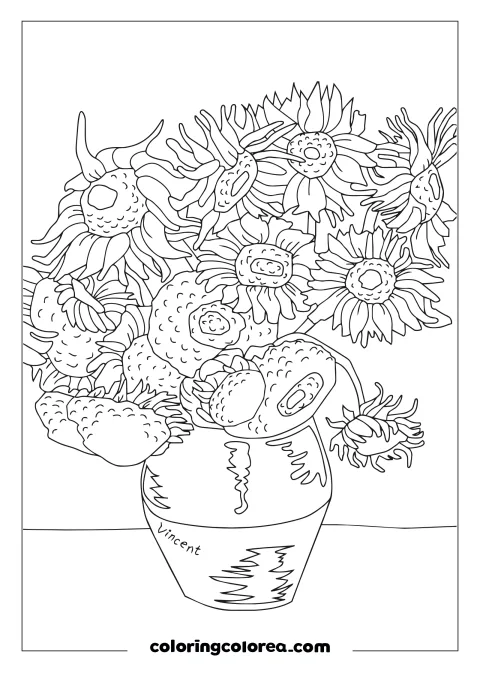 A Vase Full of SunflowersArt · Medium
 Princess Peach Waters Her GardenVideo games · Medium