
Emotions
Activities to Build Self-Esteem in Early Years and Primary Education
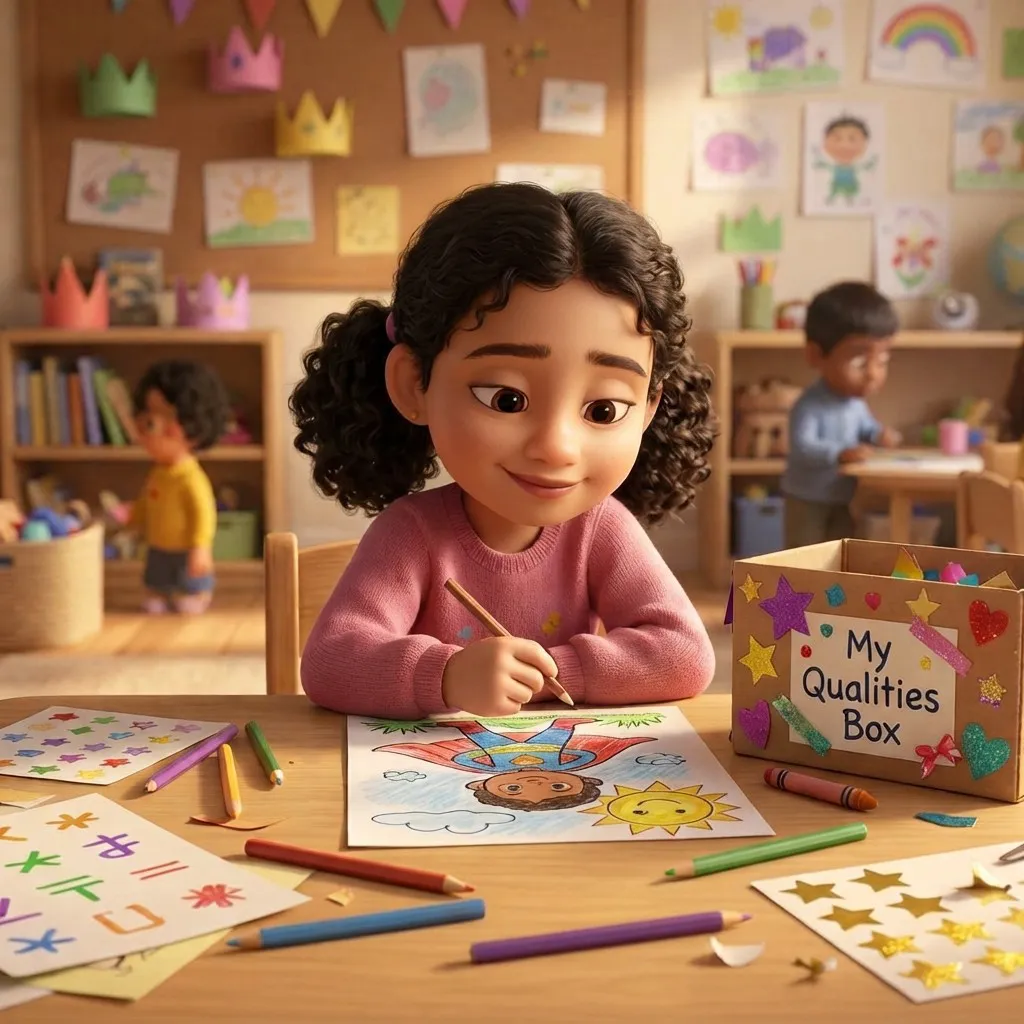
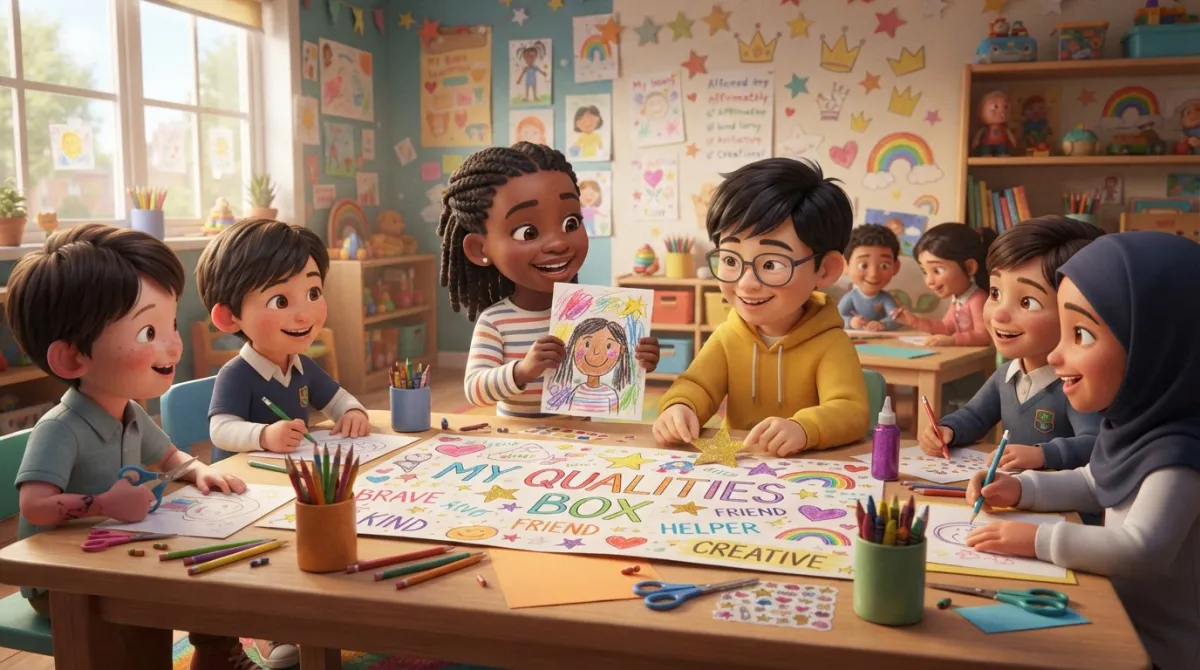
Self-esteem is not built by telling a child they are “the best” or praising everything they do. It grows when children recognise what they can do, accept what they find difficult, try new things, and discover that they can learn, make mistakes and try again. These activities combine coloring pages, affirmations and games to identify personal strengths, helping to build confidence and a healthy sense of identity in early years and primary education.
Selected coloring pages
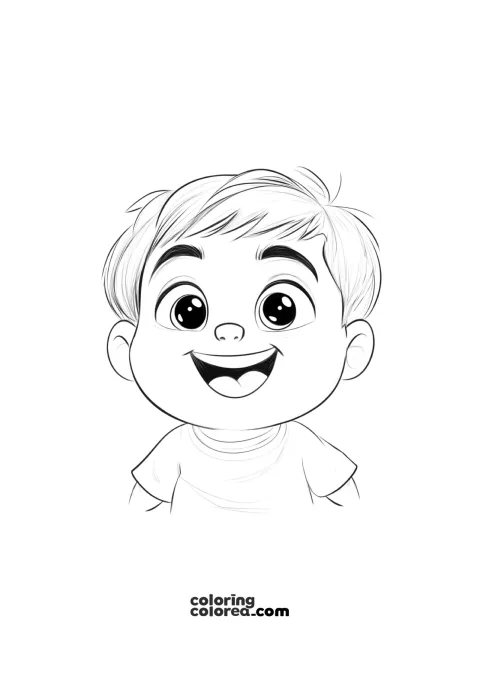
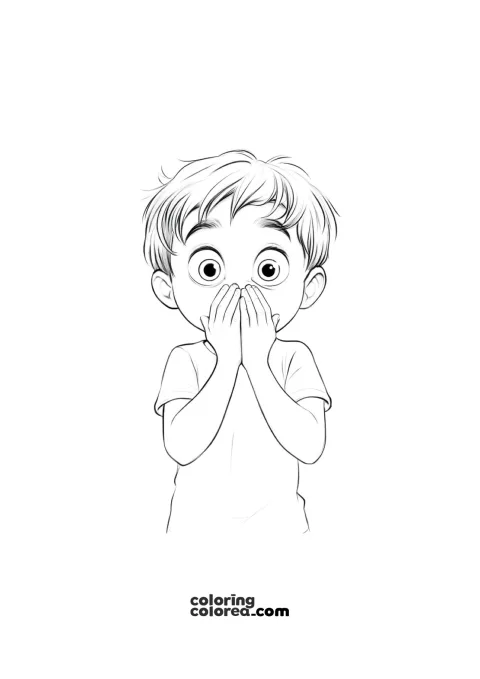
These six coloring pages can be used as starting points to talk about emotions, identity, effort, care and confidence. Each one supports a different activity and can be downloaded as an A4 PDF from the ColoringColorea library.

What self-esteem means in childhood
Self-esteem is the way a child sees themselves: their abilities, emotions, limits and value as a person. It does not mean believing you are perfect or winning every time. It means knowing that you can make mistakes, ask for help and keep learning.
In early years and primary school, self-esteem develops through everyday experiences: specific recognition, simple opportunities to make decisions, seeing that effort matters, and understanding that mistakes do not define who you are. A coloring page can be a useful tool because it creates a relaxed way to talk about emotions and identity without turning the conversation into an interrogation.
Before you begin
Prepare a calm space, coloring materials and a sheet titled “My Qualities Box.” The activity does not need to be long: 15 to 30 minutes is enough.
Avoid phrases such as “You are not shy” or “Don’t cry, it’s nothing.” Instead, try: “I can see that speaking in front of everyone makes you feel nervous. We can practise together before you try.” The goal is not to remove the emotion, but to acknowledge it and teach ways to cope with it.
Activity 1: My qualities box
Recommended age: 4 to 10 years.
Materials: happiness coloring page, colored pencils, a box or envelope, paper and scissors.
Print the Emotions: Happiness coloring page and explain that happiness can also appear when we achieve something that once felt difficult. Each child colors the page and then writes or dictates three personal qualities: “I am curious,” “I am a good friend,” “I like helping,” “I can draw,” or “I am brave when I try something new.”
Keep the qualities in a box, envelope or folder called “My Qualities Box.” When a child has a difficult day, they can open the box and remember strengths they already recognise in themselves.
Questions to discuss:
- What is something you have learned to do that once felt difficult?
- Which of your qualities helps someone in your family or class?
- What would you like to practise more?
- What would you do if a friend said they could not do something?
- What would you like to say to yourself when something goes wrong?
Goal: help children identify real strengths and build a positive reference point for themselves.
Activity 2: The mistakes traffic light
Recommended age: 5 to 10 years.
Materials: “Robot and Nature” coloring page, three colored cards and pencils.
Use the Robot and Nature coloring page to talk about growth. A robot watering a plant can represent a simple idea: to grow, we need care, time and repetition. In the same way, learning a skill takes attempts, mistakes and practice.
Create three cards:
- Green: “I can do this.”
- Yellow: “I am learning.”
- Red: “I still find this difficult, but I can try.”
Each child colors the page and places skills in each category: tying shoelaces, writing their name, riding a bike, drawing, sharing, reading or solving a problem. The red card is not a negative label. It is an invitation to practise.
Questions to discuss:
- Which skill used to be red for you and is now yellow or green?
- What helped you improve?
- What can you do when something does not work the first time?
- Who can you ask for help without feeling bad?
- What mistake has taught you something important?
Goal: normalise mistakes as part of learning and reduce the fear of getting things wrong.
Activity 3: The affirmation mirror
Recommended age: 4 to 12 years.
Materials: “Emotions: Surprise” coloring page, a mirror, card and markers.
Print the Emotions: Surprise coloring page and use it to talk about noticing what we feel. Surprise can appear when we discover something new about ourselves: “I did not know I could do that,” “I like how I solved this,” or “I had never tried this activity before.”
Create an affirmation mirror. Each child writes, draws or sticks affirmations around a small mirror, a piece of card or their bedroom door. The phrases should be realistic and specific:
- “I can learn new things.”
- “My ideas matter.”
- “I can ask for help.”
- “I do not have to be perfect to try.”
- “I learn something new about myself every day.”
- “My emotions are valid.”
- “I can make mistakes and try again.”
Before leaving home or starting the school day, the child can choose one phrase and repeat it out loud. This is not about forcing positive thinking. It is about building a kinder and more realistic inner voice.
Questions to discuss:
- Which affirmation feels easiest to believe today?
- What would you like to hear when you feel scared?
- What would you say to a friend who thinks they cannot do something?
- Which quality of yours is not obvious, but is important?
- What small thing have you done well this week?
Goal: build a respectful and realistic inner dialogue.
Activity 4: The differences mural
Recommended age: 5 to 12 years.
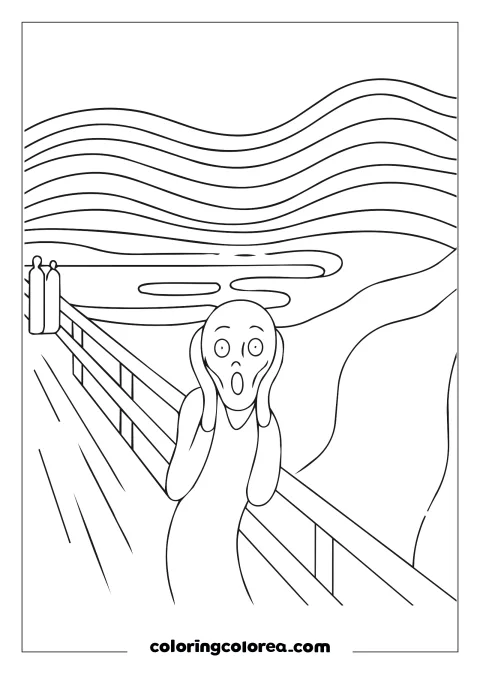
Materials: “The Scream by Munch” coloring page, large paper, pencils, magazines or cut-outs.
The Scream by Munch coloring page can be used to talk about intense emotions and the fact that everyone experiences them in different ways. The page itself suggests drawing another emotion, such as happiness or surprise, in the same landscape. This idea can be adapted to create a mural about emotional and personal diversity.
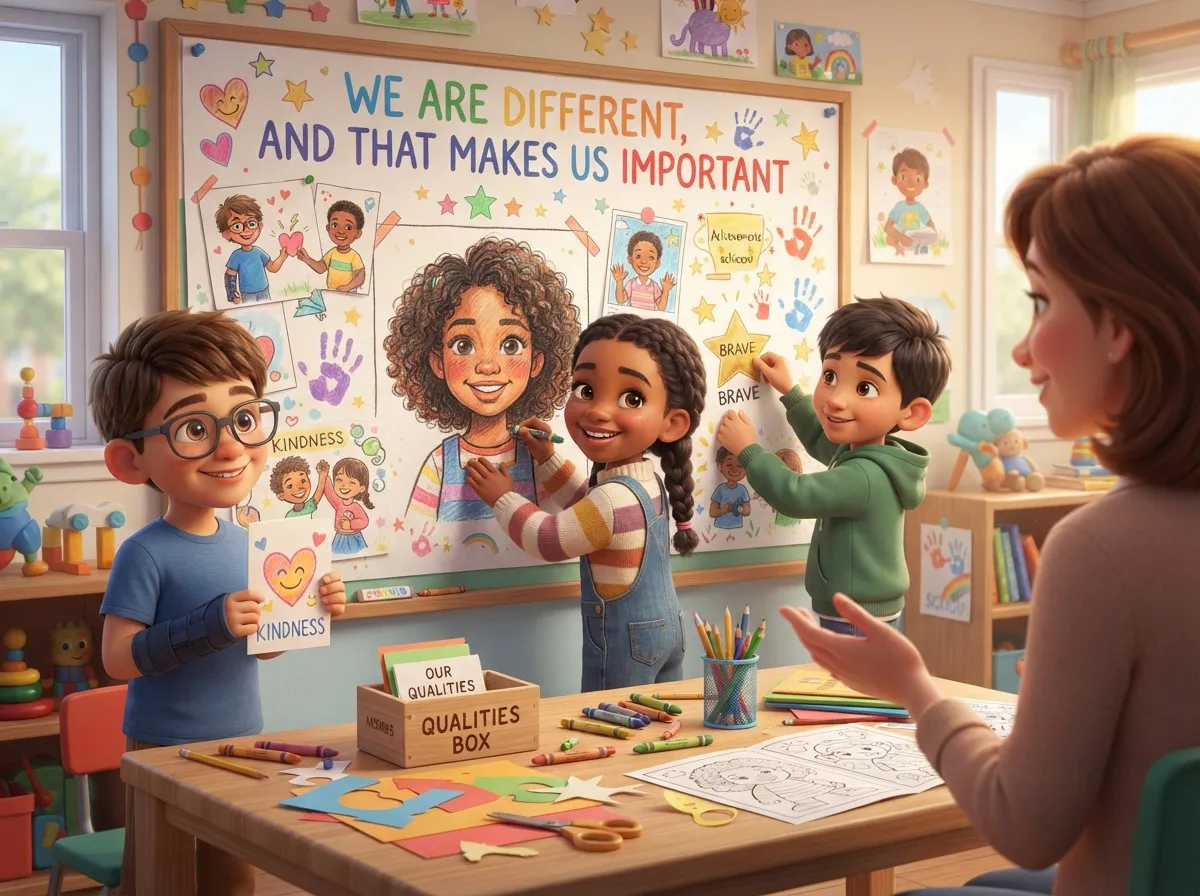
Each child creates a self-portrait or a representation of themselves in the centre of a sheet. Around it, they add words, symbols or drawings about their likes, dreams, fears, abilities and the things that make them unique.
Then, bring all the work together in a mural titled “We are different, and that makes us important.” It is essential that the adult highlights diversity without turning differences into comparisons.
Questions to discuss:
- What makes you unique?
- What do you like learning from other people?
- Which emotion is hardest for you to express?
- What can you do when someone feels differently from you?
- How can we respect differences in class?
Goal: strengthen personal identity and acceptance of diversity.
Activity 5: My achievements throne
Recommended age: 5 to 10 years.
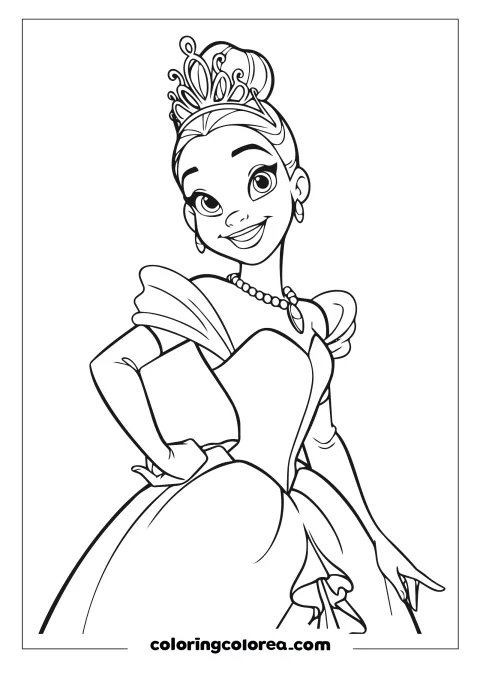
Materials: “Tiana with a Tiara” coloring page, card, glue and markers.
The Tiana with a Tiara coloring page shows a confident, smiling character standing with a strong posture. It can be used to talk about confidence without linking it to being “the best” or always winning. The activity is to create an “achievements throne”: a space where each child adds small crowns, stars or medals with personal achievements.
Achievements do not need to be big. They can include “I helped tidy the table,” “I read a new book,” “I spoke in class,” “I asked for help,” “I waited for my turn,” or “I tried a new food.” Each achievement is written on a star and added to the throne.
Questions to discuss:
- Which achievement from this week makes you feel proud?
- What effort did you make to achieve it?
- Which skill would you like to practise next week?
- What advice would you give someone who thinks they cannot do it?
- What does feeling capable mean to you?
Goal: recognise effort, not only results.
Activity 6: The story of my everyday superpowers
Recommended age: 6 to 12 years.
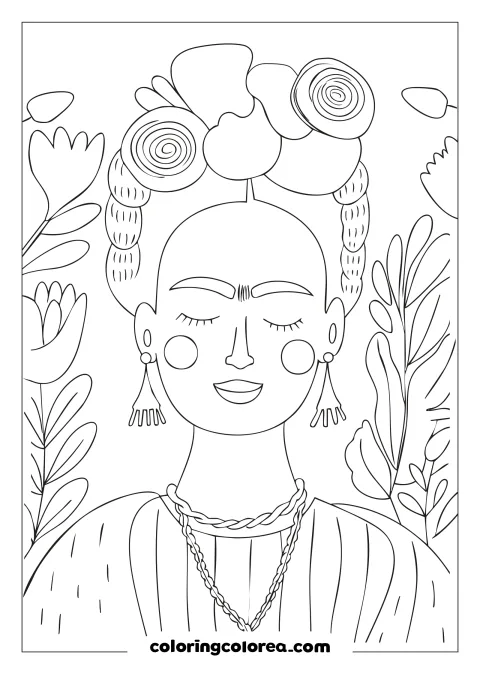
Materials: “Frida Kahlo with Flowers” coloring page, paper, pencils and scissors.
The Frida Kahlo with Flowers coloring page can be used to talk about identity, creativity and the courage to be yourself. Frida can be a reference point for discussing how everyone has a unique way of seeing and expressing the world.
Each child invents an “everyday superpower”: listening carefully, making people laugh, caring for animals, solving problems, drawing, encouraging others, telling stories or helping at home. Then, they create a short comic or story in which their character uses that power to help someone.
Questions to discuss:
- What is your everyday superpower?
- When did you use it this week?
- Which power would you like to develop?
- How can a superpower help other people?
- What makes your way of being special?
Goal: turn personal strengths into a story of identity and confidence.
Affirmations to print
You can cut out these affirmations and place them in a jar, in a box or on a wall:
- “I can learn at my own pace.”
- “My ideas matter.”
- “I can ask for help.”
- “I do not have to be perfect.”
- “Every attempt teaches me something.”
- “I am able to try new things.”
- “My emotions are valid.”
- “I can be kind to myself.”
- “My differences are part of me.”
- “I can try again.”
- “I do not need to be like everyone else.”
- “My small achievements count too.”
How to use it in the classroom
In class, these activities can be used during a tutor-group session, at the beginning of the school year, or as part of an emotions project. It is helpful if the teacher participates too: sharing a personal strength, a mistake they learned from, or a positive affirmation helps create a trusting atmosphere.
Do not ask any child to speak in front of the whole group. Some children may prefer to write, draw or share in pairs. Participation should always be voluntary and respectful.
How to use it at home
At home, choose a regular day —for example, Sunday afternoon— for a short activity. You can create a shared “qualities box” and add a new card every week. The most important thing is not to create a perfect activity, but to repeat the message that every person has value, strengths and room to grow.
FAQs
What should I do if my child says, “I am not good at anything”?
Do not try to convince them immediately with general praise. You can respond: “I understand that you feel that way today. Let’s find three small things you have done this week.” Then, help them identify concrete examples: helping at home, finishing a task, comforting someone or learning something new. The key is to move from a global idea —“I am not good at anything”— to real, specific facts.
Can I use these activities if my child is very shy?
Yes. In fact, they can be especially useful when adapted to their pace. Do not ask them to speak in front of the whole group; allow them to write, draw, choose cards or share only with you. Self-esteem does not require being outgoing. It means feeling safe enough to be yourself, even when speaking in public feels difficult.
What is the difference between praising a child and building self-esteem?
Generic praise —“You are amazing”— can create pressure to repeat the result. Useful encouragement recognises the process: “I saw that you tried again even though it was difficult at first.” This helps the child connect their value with effort, perseverance and the ability to learn, rather than only with being the best.
What should I do if my child constantly compares themselves to other children?
Avoid joining the comparison. You can say: “Everyone learns things at different times. What are you learning now?” Then, help them identify a personal and achievable goal. Comparison can decrease when a child has personal goals, recognises progress and receives recognition for their effort.
Do these activities work in the classroom when children have different needs?
Yes, as long as they are adapted. Allow responses through drawing, dictation, visual cards, pair work or voluntary participation. The goal is not for everyone to produce the same result, but for each child to recognise a strength, achievement or emotion in their own way. Diversity in participation is part of the learning process.
The most important part of these activities is not creating a perfect coloring page. It is creating a space where a child can say: “This is difficult for me, but I can learn; this is who I am, and that has value.”
 BehaviourNobody wants to play with me
 GeneralSupporting reading comprehension in mathematics
 BehaviourManaging Fear During Childhood