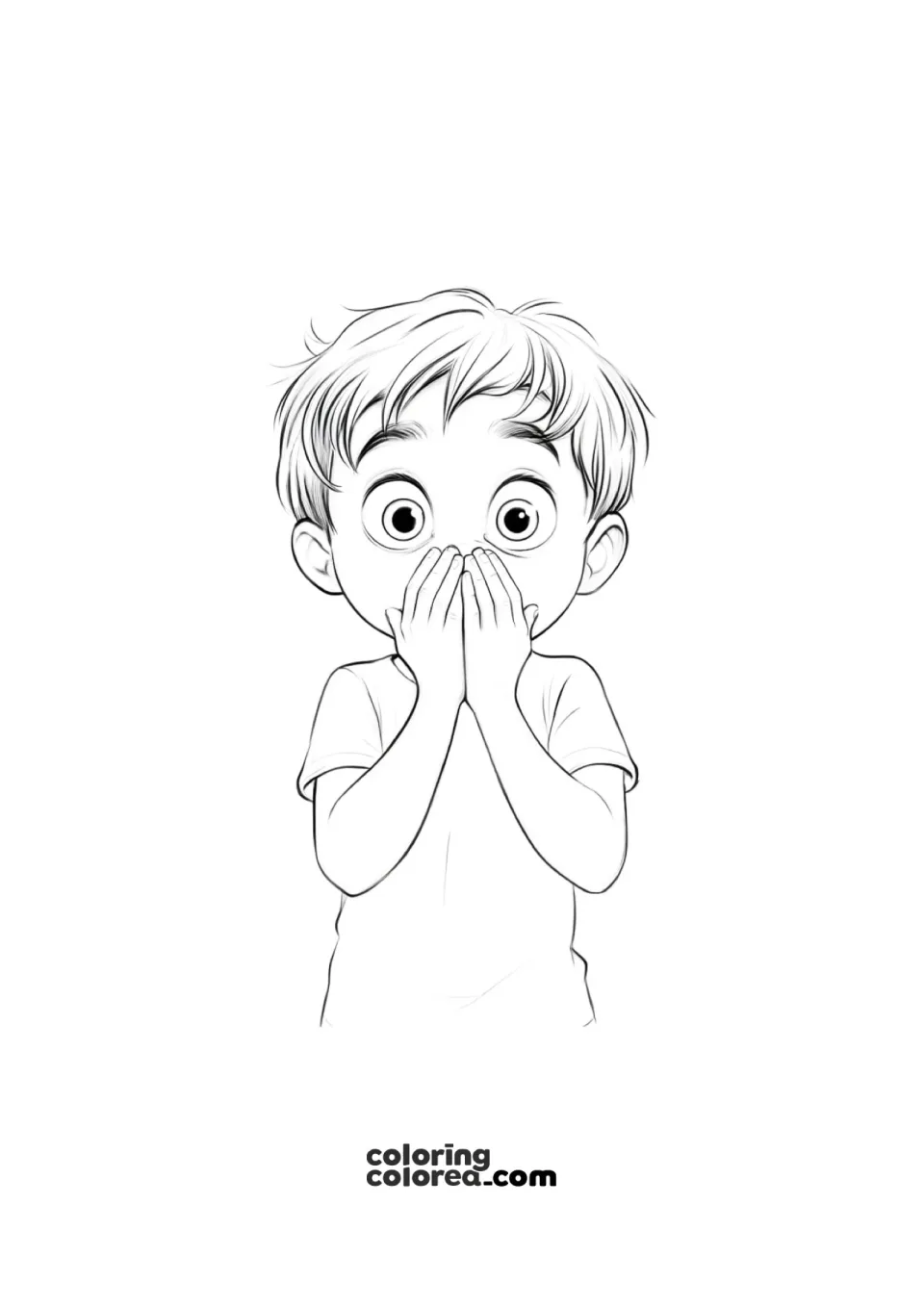
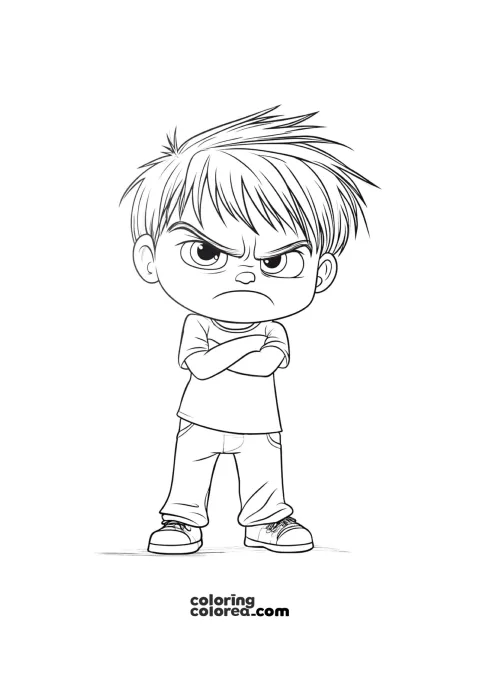
Today we focus on emotion recognition using a drawing that illustrates surprise or amazement. Children must learn how to identify and express their feelings, and drawing can be an excellent tool in this process. In the case of surprise, facial features such as wide-open eyes and hands covering the mouth are clear indicators of this emotion.
How to work on them:
Teachers and parents need to guide children in observing how their bodies react to surprise: eyes widening, hearts racing, and sometimes a change in breathing. From these observations, we can help them verbalize their emotions and explain that all emotions, including surprise, are valid. Moreover, teaching them to manage these feelings, such as taking a deep breath or pausing to process the unexpected, is an essential skill.
Using the drawing:
Once children have colored the picture, it’s helpful to discuss moments in their lives when they felt surprised. Asking them what they think surprised the boy in the drawing, or encouraging them to share a similar experience, can enhance their emotional understanding. Art, combined with open dialogue, is a powerful tool to foster empathy and self-reflection in young learners.