Printable coloring page
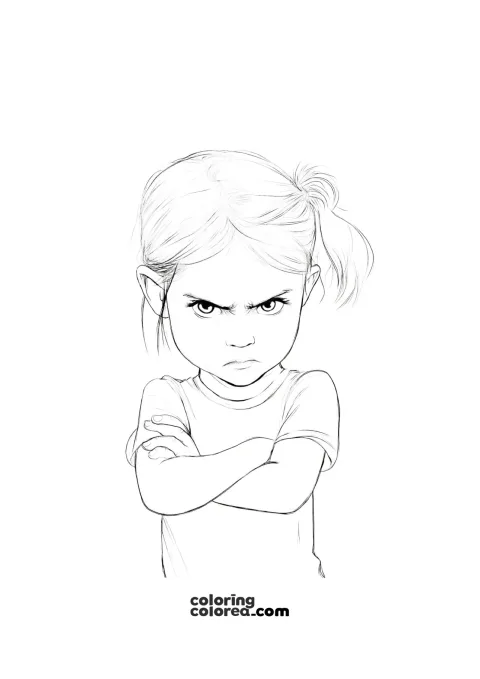
Drawing of an angry child to work on children's emotions. Step by step guide to coloring drawings of anger and talk about it.
Printable coloring page
Free for personal and educational use
Download coloring page (PDF)PrintColor it in your browser, no sign-up needed. Your progress is saved on this device.
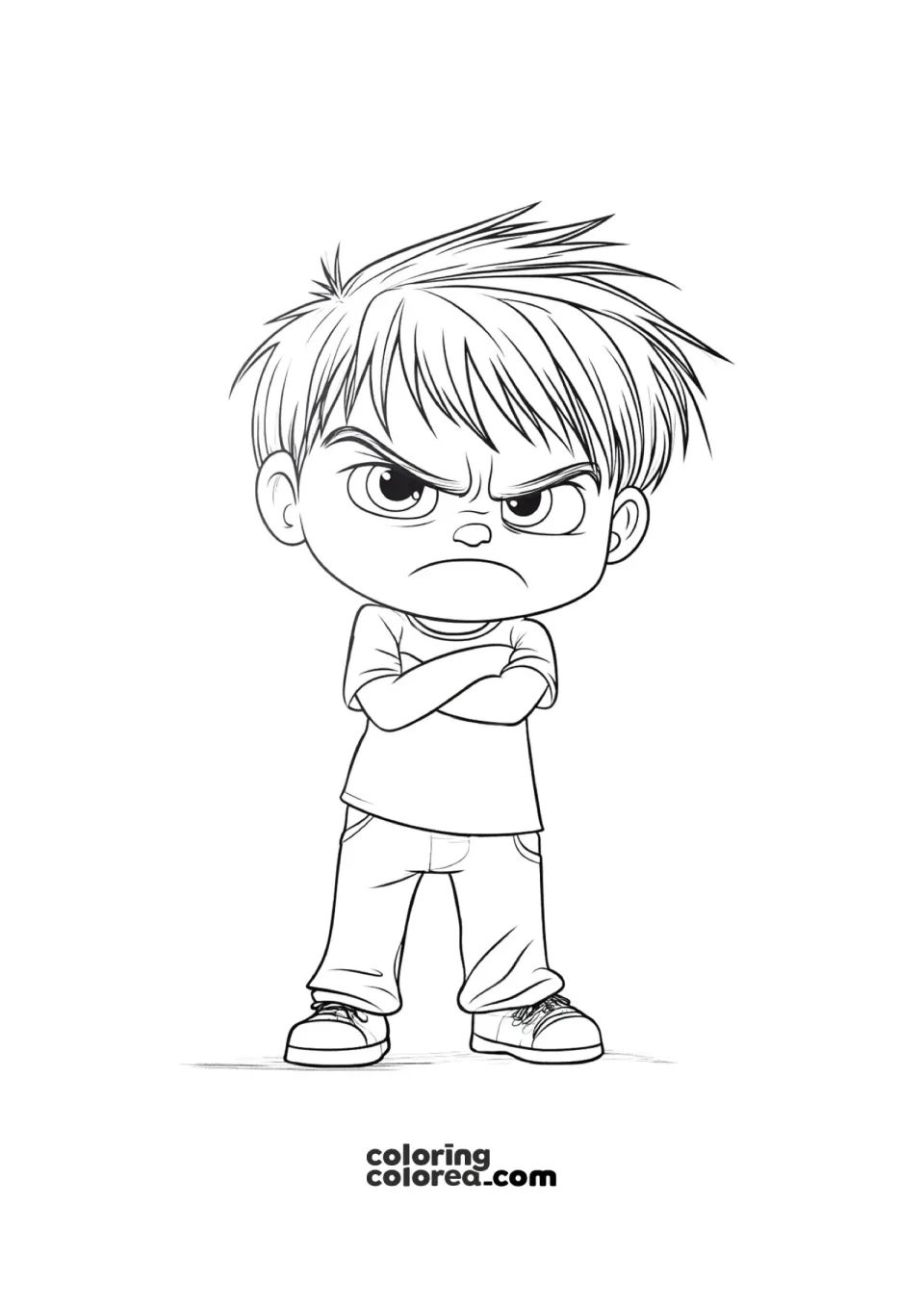
A boy with crossed arms looking angry.
Use red in the background and neutral clothes.
Take three deep breaths and draw how you feel.
Slow breathing helps calm the body.
This drawing is full of emotion! The boy stands with arms crossed and a clearly angry face. Did you know that coloring emotions like this can actually help us understand and express our own? Let's explore how to color him in detail — and while we do, we’ll also talk about what anger feels like and how we can manage it.
Anger is a normal and natural emotion. We all feel it — when something isn’t fair, when someone ignores us, or when things don’t go our way. This boy might be feeling exactly that. And it’s okay to feel angry.
What’s important is how we handle it:
Take deep breaths or count to 10.
Talk to someone you trust.
Draw or color to express what you feel.
Coloring a character who looks angry can actually help us let go of our own frustration. When we give color to their emotions, we connect with our own in a safe and creative way.
Emotional recognition:
Learn to identify visible signs of anger (facial expressions, posture, clenched fists).
Projection and empathy:
Through color choices, the child reflects their inner state: intense red might mean strong anger; dark blue could show hidden sadness.
Emotional vocabulary development:
After coloring, encourage the child to name the emotion they see, feel, or think the character is feeling.
Emotional regulation:
Coloring activates a calming effect in the nervous system. The child shifts from emotional reactivity to reflection.
Creative resolution:
Ask follow-up questions:
– What do you think happened to him?
– What could help him calm down?
– What helps you when you feel angry?
Self-awareness:
Children might recognize themselves in the character and normalize their emotional experiences.