
Printable coloring page
Discover what Diplodocus hatchlings were like and their rapid development. Learn about their early life, their camouflage and how they adapted to survive.
Printable coloring page
Free for personal and educational use
Download coloring page (PDF)PrintColor it in your browser, no sign-up needed. Your progress is saved on this device.
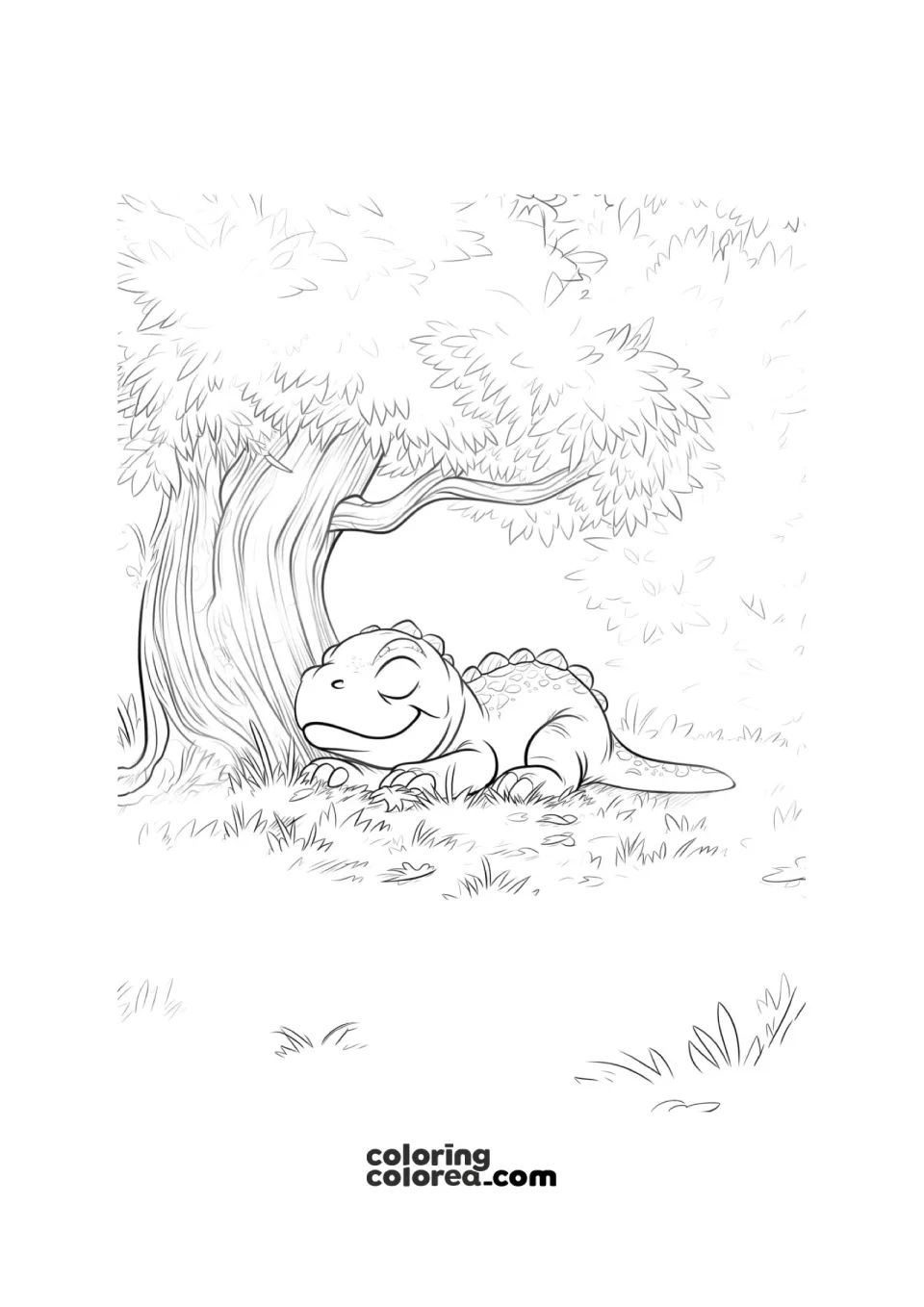
A baby diplodocus asleep in the grass.
Use soft tones and a pale sky.
Invent a lullaby for the dinosaur.
An adult Diplodocus could exceed 25 meters in length.
Diplodocus hatchlings, like many other herbivorous dinosaurs, were born from eggs. These eggs were relatively small compared to the size they would reach as adults, which could measure up to 25 meters in length. At birth, young diplodocus were very vulnerable and relied on blending into their environment and their speed to escape potential predators, as they did not have direct protection from their parents. It is believed that, like the hatchlings of some modern reptiles, these newborn dinosaurs grew quickly, developing rapidly to increase their chances of survival.
The young likely lived in groups with other young diplodocus for greater protection and spent their early years searching for areas with low vegetation, where they could feed on tender plants. Over time, they ventured to find food in higher places, using their long necks to reach leaves and branches in tall trees, a characteristic that developed as they grew. Baby TyrannosaurusDinosaurs · Easy
 Hello, World! I Just HatchedDinosaurs · Easy
 Way Smaller Than You ThinkDinosaurs · Easy
 A Yummy Leaf for BreakfastDinosaurs · Easy
 The T-Rex Who Was Still GrowingDinosaurs · Easy
 A Sunny Day With a GiantDinosaurs · Easy
 A T-Rex Who Loves to SmileDinosaurs · Easy
 A Tiny Dino With Big EyesDinosaurs · Easy