
Printable sheet
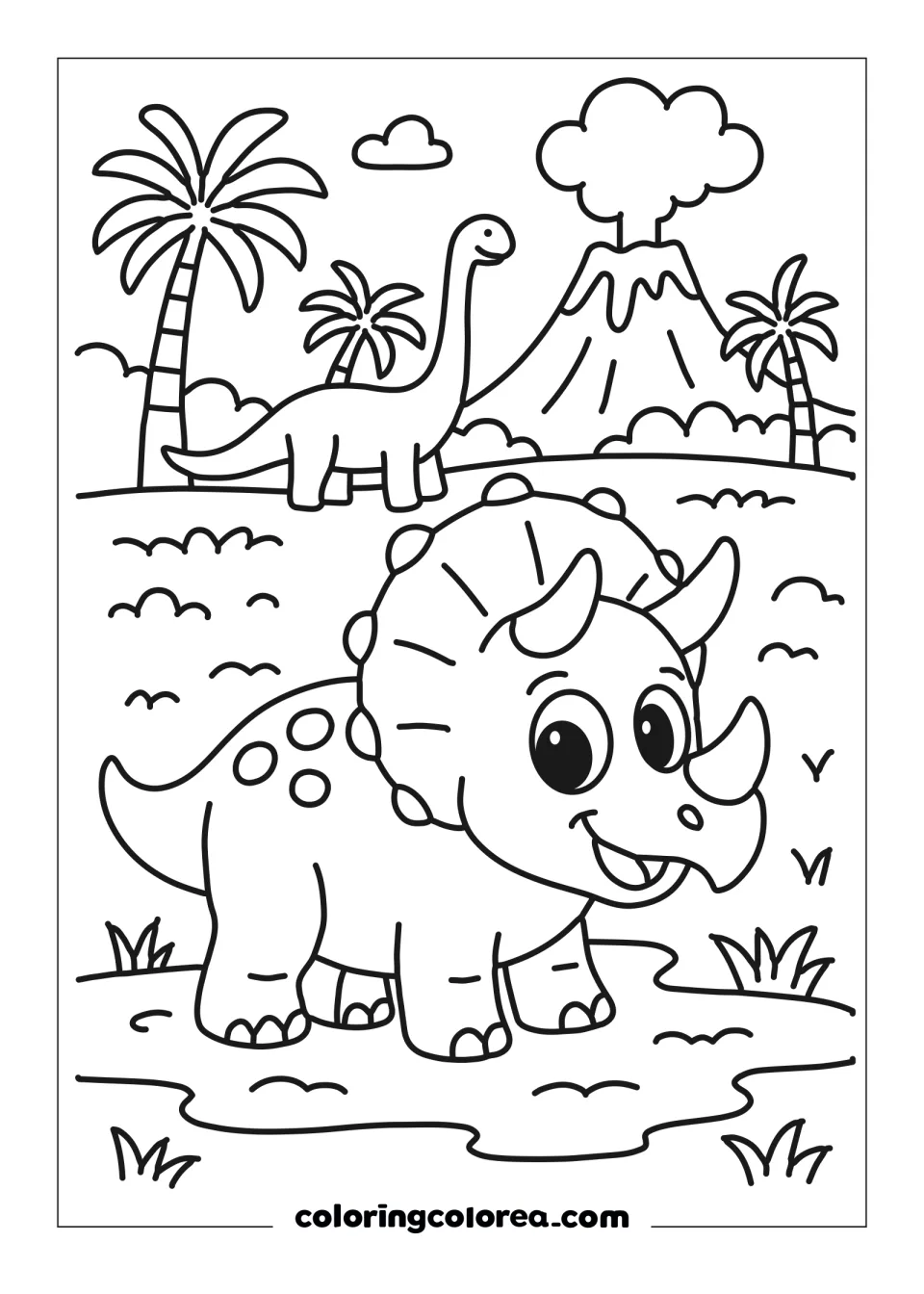
This baby triceratops grins by a puddle with a volcano and a big dinosaur behind it. Get the free PDF and enjoy this adorable page with your little one.
Printable sheet
Free for personal and educational use
Download PDFPrintSmall triceratops with huge eyes by a puddle, with palm trees, a smoking volcano and a long-necked dinosaur behind.
Try cream on the horns and blue on the puddle with white highlights.
Draw a mommy triceratops standing next to this little one.
Some baby triceratops skulls found by scientists were barely bigger than a football.
A baby triceratops did not look much like its parents! When it hatched from an egg, it was very small, and it didn't have long horns yet. It just had little bumps on its head. Those bumps grew and grew over time.
Here's the wild part: the horns changed direction. On young ones, they curved backward like little hooks. As the dinosaur got older, they slowly straightened out and then pointed forward. This helps scientists figure out whether a fossil came from a kid or a grown-up.
The big bony frill behind its head changed, too. Babies had a small frill with tiny points around the edge. As the years went by, it got bigger and smoother. Maybe the frill helped other triceratops tell who was young and who was old, a bit like how you can tell a kid from an adult.
Triceratops ate plants, and the babies probably learned to find food early on. Being small in a land of giants could be scary, so growing fast mattered. Lots of fossils have been found in Montana and the Dakotas. In time, that tiny baby could grow as heavy as an elephant, with one of the biggest heads of any land animal ever.
 The Fossil Lost in the WarDinosaurs · Hard
 A Rare and Elegant Plant EaterDinosaurs · Medium
 Myths and Facts About a Crested DinosaurDinosaurs · Medium
 Why Sauropods Grew So HugeDinosaurs · Medium
 A Prehistoric Trumpet by the WaterDinosaurs · Medium
 Two Hunters on the RunDinosaurs · Medium
 A Hunter in the Dense LeavesDinosaurs · Hard
 King of the Tyrant LizardsDinosaurs · Medium