
Printable sheet
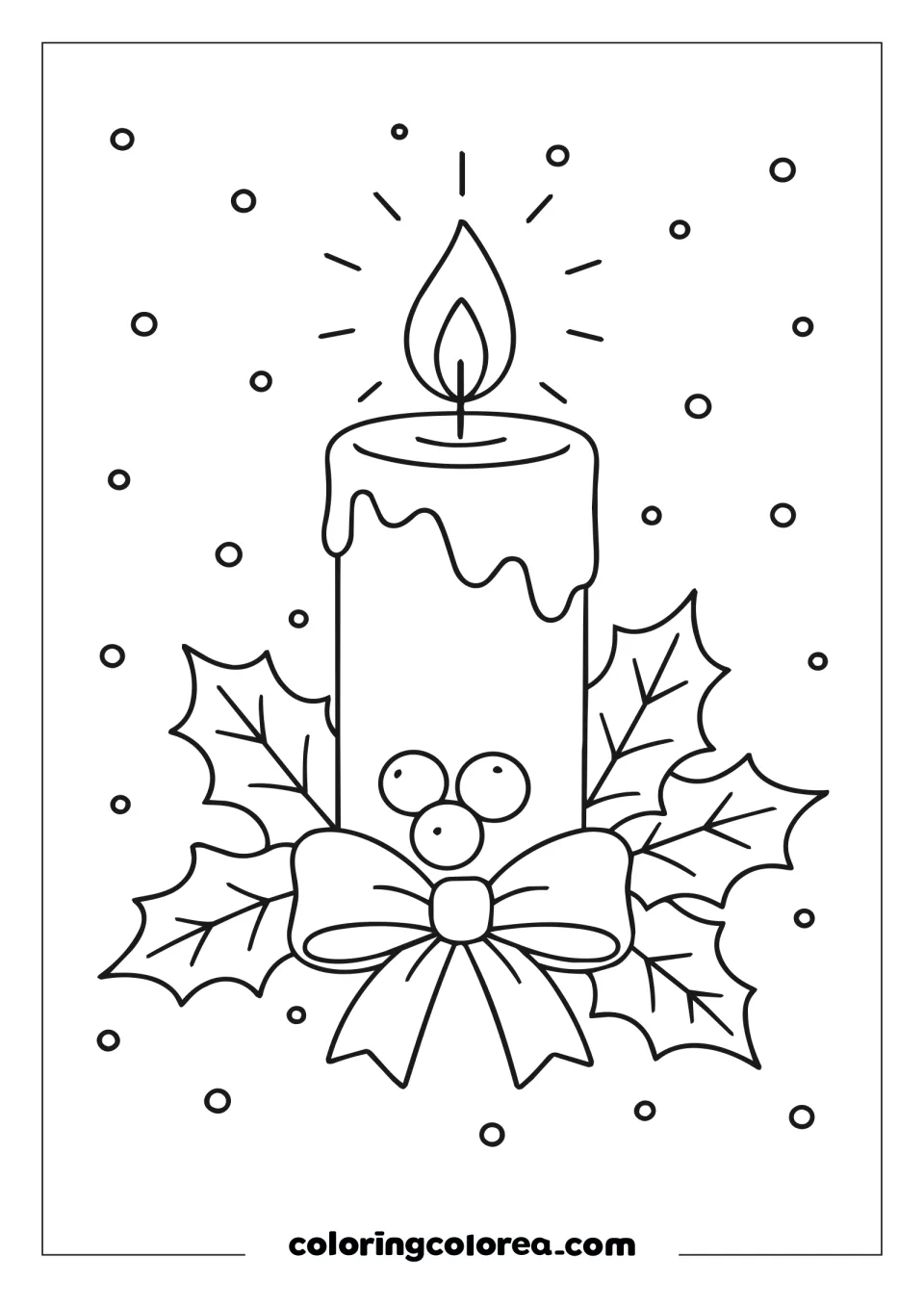
This candle with holly and bow glows among berries and snowy dots. Download the free PDF and print a festive page for your holiday table.
Printable sheet
Free for personal and educational use
Download PDFPrintCandle with flame and dripping wax, berries, holly leaves, wide bow and dots of snow.
Use deep red on the berries and leave a tiny white shine on each.
Look up which plants stay green through the winter near you.
Birds such as robins eat holly berries, though they are poisonous to people.
A candle with holly and bow is a classic Christmas centerpiece, and holly has earned its place. This plant can grow as a shrub or as a tree, and it keeps its glossy, prickly leaves all year. When the rest of the forest looks bare, holly stands out, so many cultures treated it as a sign of life in the dead of winter.
Romans exchanged holly during Saturnalia, their December festival honoring Saturn. Celtic peoples are said to have hung it in their homes for luck. Christians later found their own meaning in it, seeing the spiny leaves as the crown of thorns and the red berries as drops of blood. The English carol "The Holly and the Ivy" keeps that tradition alive.
Botanically, holly has a neat trick. Plants are either male or female, and only females produce berries, so a lone shrub in a yard may never bear fruit. Those berries are toxic to people and pets, even though birds rely on them when food runs low. The United States has its own species, American holly, native to the eastern states and a common landscape plant. It was so popular for holiday decorating that it was once overharvested in some areas. Home gardeners today plant it for winter color, and most keep at least one male nearby.
 Geometric Patchwork TreeChristmas · Easy
 Town of Bethlehem Under the StarChristmas · Medium
 Nativity with Angel on the RoofChristmas · Medium
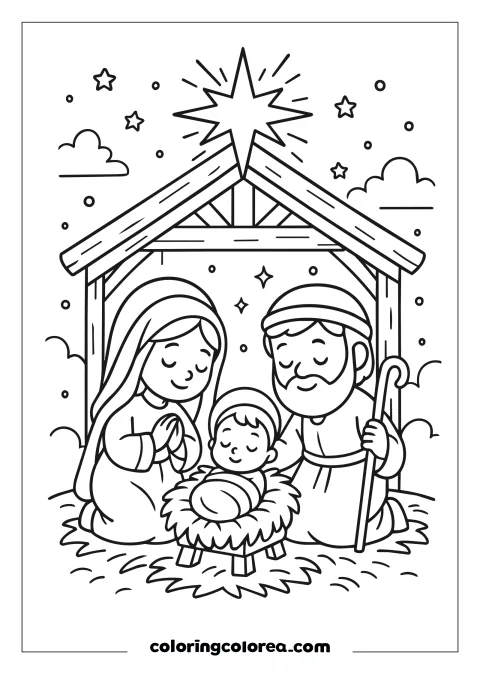 Nativity Under a Shining StarChristmas · Medium
 Nativity Inside a Christmas TreeChristmas · Hard
 Angel Holding a Big StarChristmas · Easy
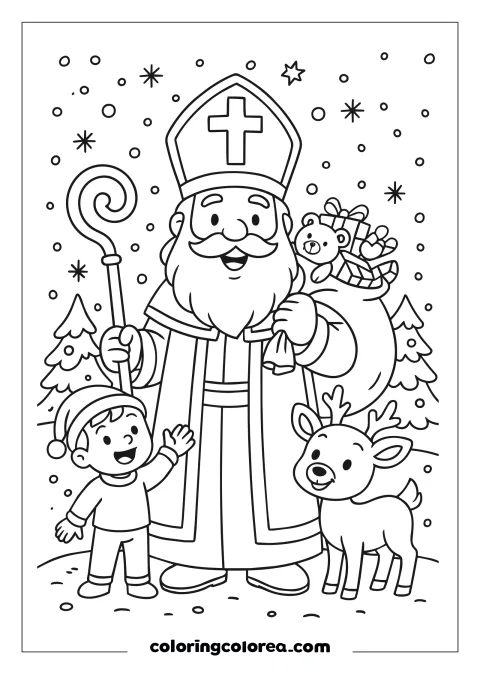 Saint Nicholas with Miter and StaffChristmas · Medium
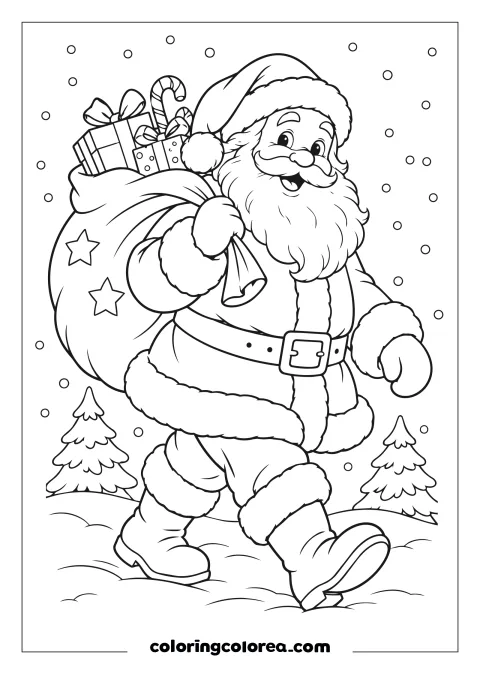 Santa Hauling His Sack Through the SnowChristmas · Medium