
Printable coloring page
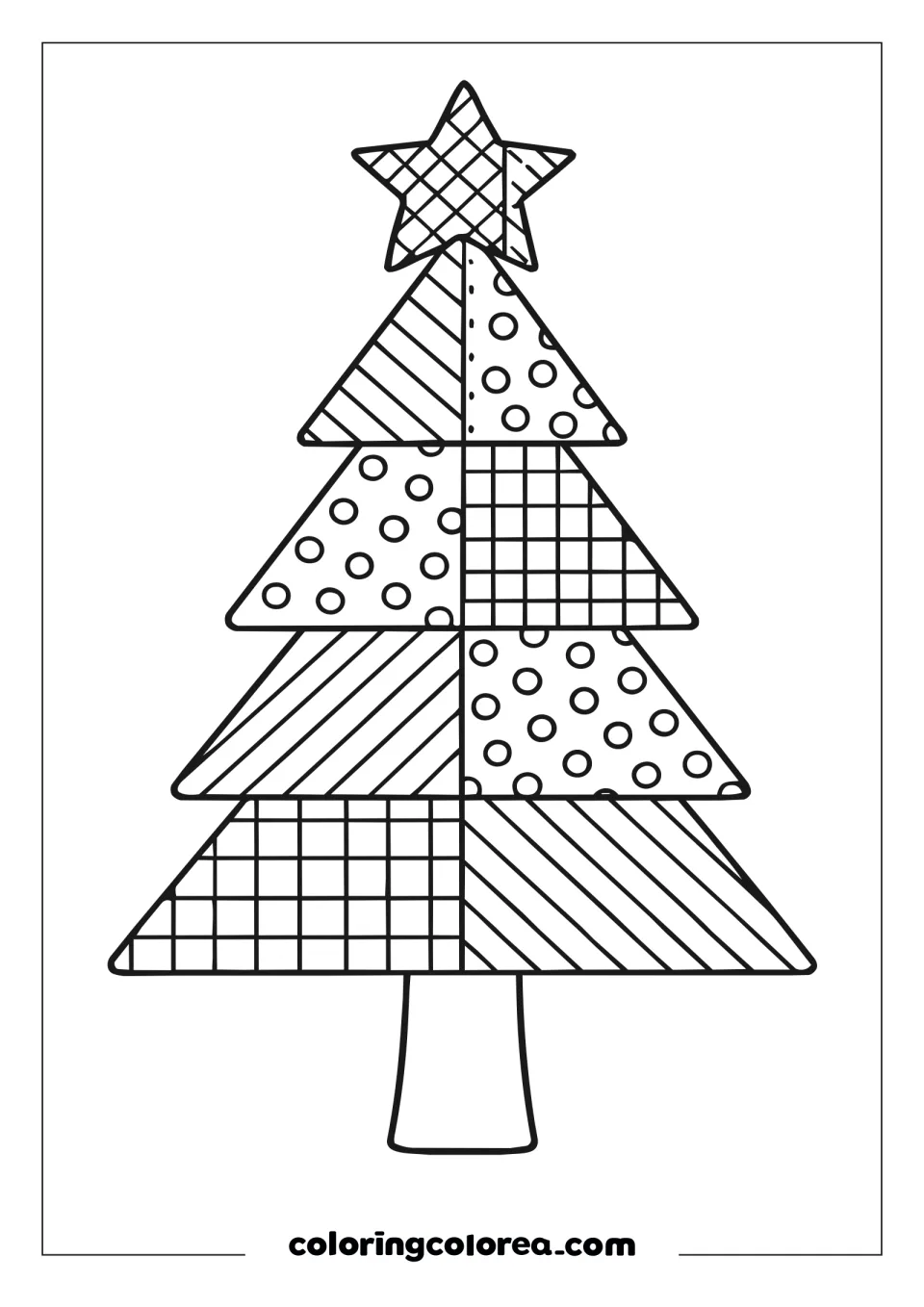
This patchwork Christmas tree mixes stripes, dots and plaid. Download the free PDF and print a simple page where kids invent their own patterns.
Printable coloring page
Free for personal and educational use
Download coloring page (PDF)PrintColor it in your browser, no sign-up needed. Your progress is saved on this device.
Three-tiered tree with stripes, dots and plaid, plain trunk and a checkered star.
Give every section its own pattern and avoid repeating a color next to itself.
Find the triangles and squares on the page and count them.
The oldest known non-clonal tree is a bristlecone pine in California, nearly 5,000 years old.
A patchwork Christmas tree plays with the triangle shape of conifers, and that shape is no accident. Pines, firs, and spruces are among the best-adapted plants for cold climates. Their needle leaves are coated in wax, which reduces water loss during winter when the ground is frozen and roots can't draw up much moisture.
The cone-like outline helps as well. Sloping branches let heavy snow slide off before it can snap them. That explains why conifers dominate the boreal forest, a huge belt of trees that stretches across Canada, Alaska, Russia, and Scandinavia. Their cones protect the seeds, and squirrels and birds depend on them for winter meals.
American Christmas trees rarely come from wild forests. They grow on farms in states such as Oregon and North Carolina, and a typical tree needs several years to reach full height. Fraser fir, native to the southern Appalachians, is a top seller because it holds its needles and has a pleasant scent. Douglas fir, despite the name, isn't a true fir at all. Real trees can be recycled after the holidays, and plenty of towns chip them into mulch or use them to build fish habitat. A wild tree may only be cut with a permit, which the US Forest Service sells in many national forests.
 Christmas tree with a star, ornaments and giftsChristmas · Medium
 Santa and a reindeer by the tree under the moonChristmas · Easy
 Sack of presents by the Christmas treeChristmas · Easy
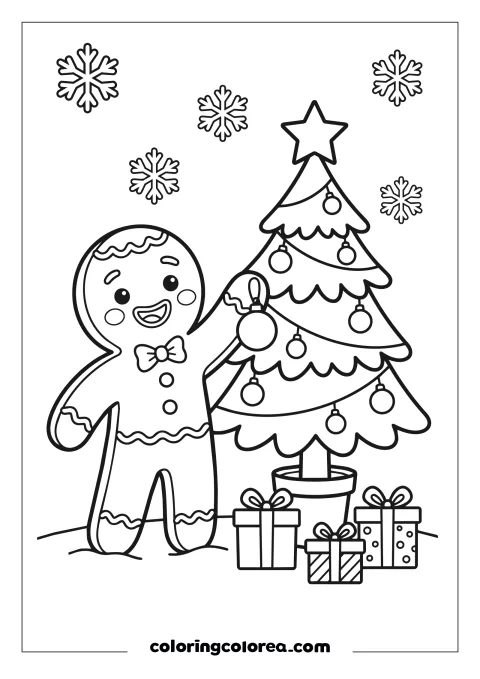 Gingerbread Man Trimming the TreeChristmas · Easy
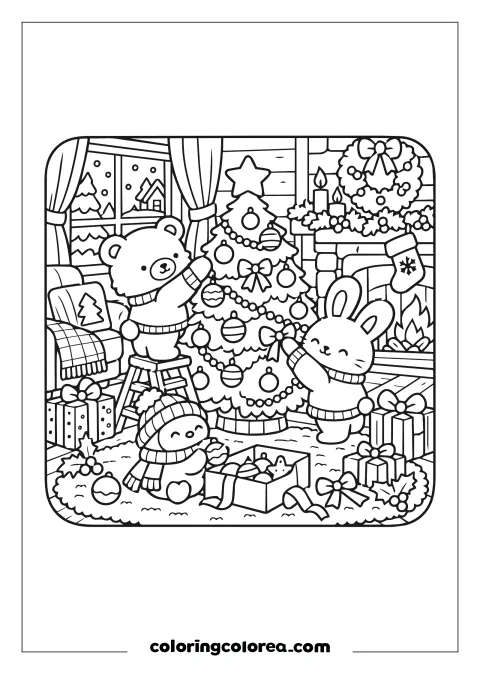 Bear and Bunny Decorating the Christmas TreeChristmas · Medium
 Kids decorating the town Christmas treeChristmas · Medium
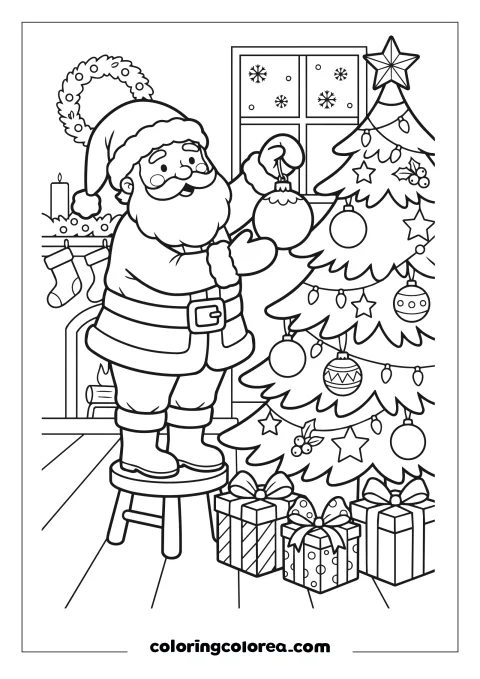 Santa Trimming the Christmas TreeChristmas · Medium
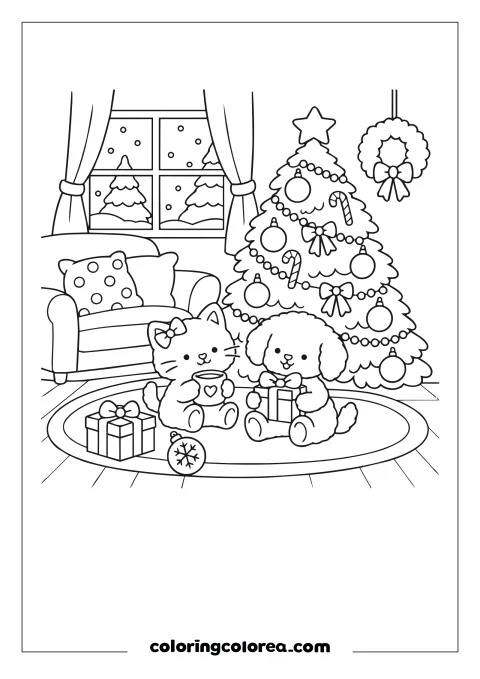 Kitten and Puppy by the Christmas TreeChristmas · Easy