
Printable sheet
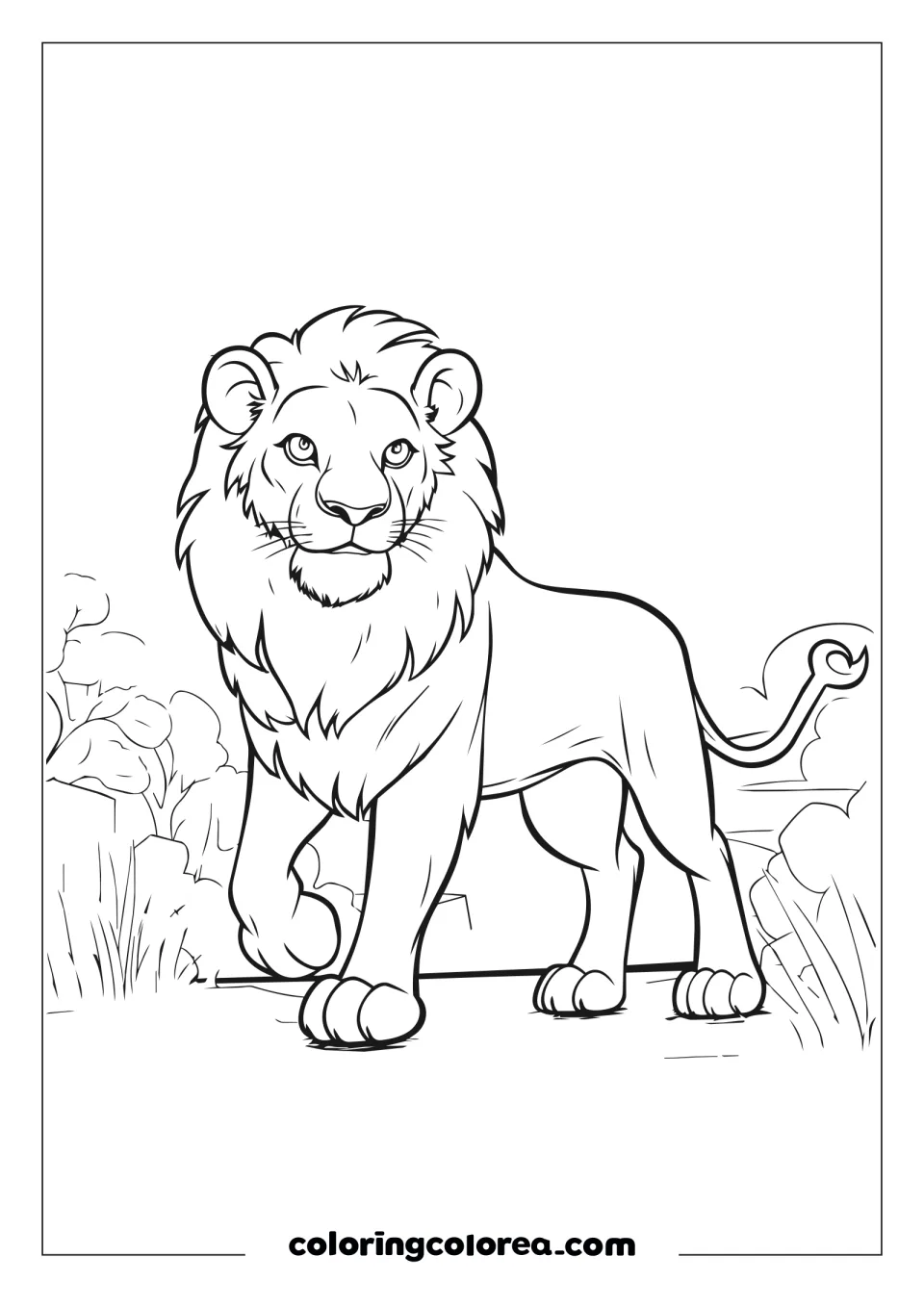
This walking lion strides forward with one paw raised and its eyes fixed ahead. Download the free PDF and fill in the mane, the brush and tall grass.
Printable sheet
Free for personal and educational use
Download PDFPrintA full-grown lion with a thick mane striding forward with one paw lifted, with bushes, tall grass and rocks on both sides.
Blend yellow and tan on the body, then go darker on the mane and tail tip.
Sketch a map of the lion's territory and label its favorite spots.
Nearly all wild lions live in Africa, apart from a small population in a forest in India.
A walking lion is often a lion at work. Each pride holds its own patch of land, and males cover that ground regularly to make sure no rivals have moved in. Patrols can be long, and they tend to happen at night, when temperatures drop.
How much land a pride needs comes down to food. If prey is plentiful, a fairly small area will do. If it's scarce, lions may have to roam across a far bigger range. Along the way they leave messages for anyone passing through. They spray urine on bushes and rocks and scrape the ground with their paws. That scent keeps doing its job long after the lion has moved on.
Not every male gets a territory of his own. Young males leave the pride they were born into as they approach adulthood and drift for a while as nomads, sometimes alongside brothers or cousins. They slip through land held by others, steering clear of resident males while they grow bigger. Once they are strong enough, they may challenge a pride's males and try to take over.
Teamwork often decides these contests. Males that form a coalition, frequently with their brothers, usually hold a territory longer than a lion going it alone. Their bodies suit the job as well. Lions walk on their toes rather than on the whole foot, and thick pads soften each step, so even a big male can move through the brush almost silently.
 Friendly Lion in the WoodsWild · Easy
 Lioness with Three Cubs in a DenWild · Medium
 Lioness Carrying Her CubWild · Medium
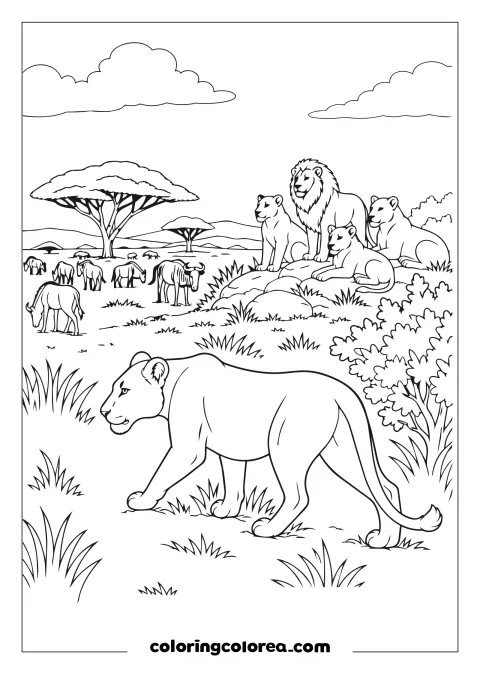 Stalking Lioness on the SavannaWild · Hard
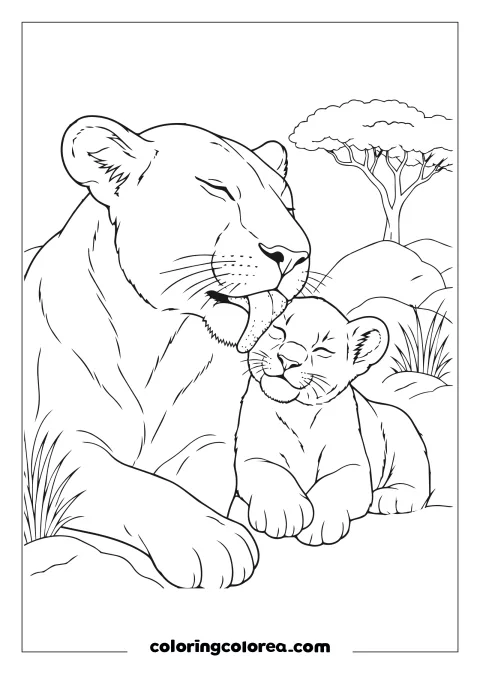 Lioness Licking Her CubWild · Medium
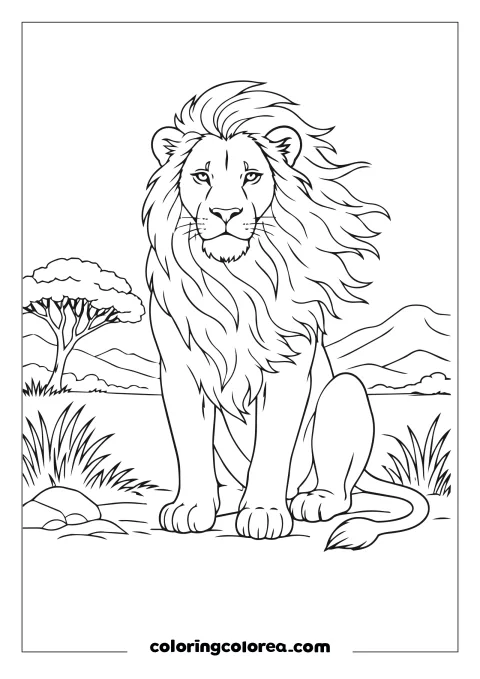 Lion with Flowing ManeWild · Medium
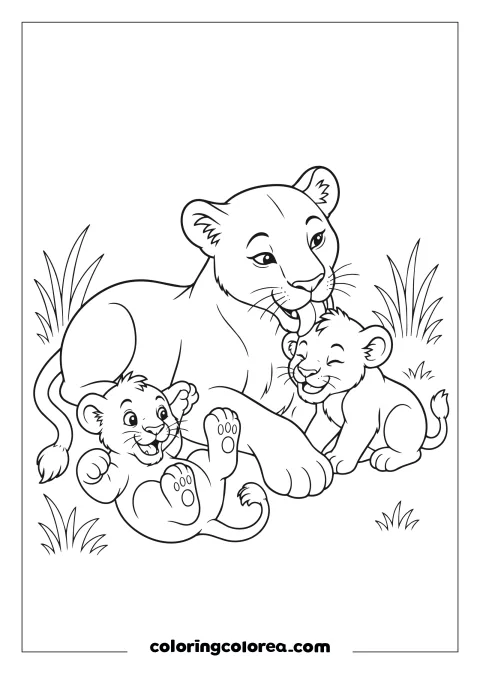 Lioness Playing with CubsWild · Easy
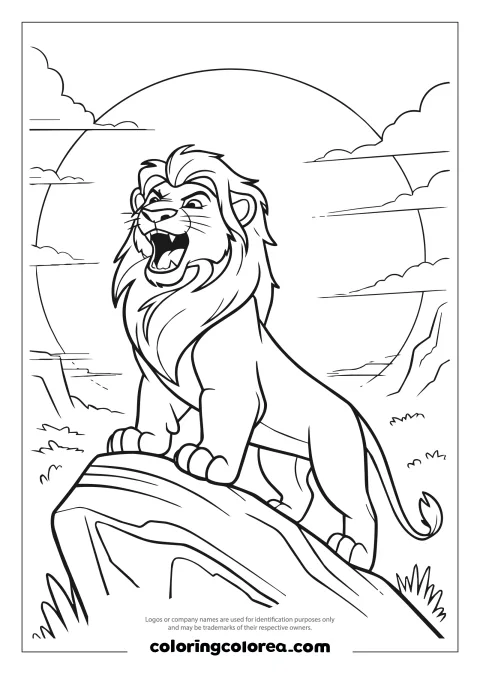 Roaring Lion Against the SunWild · Medium