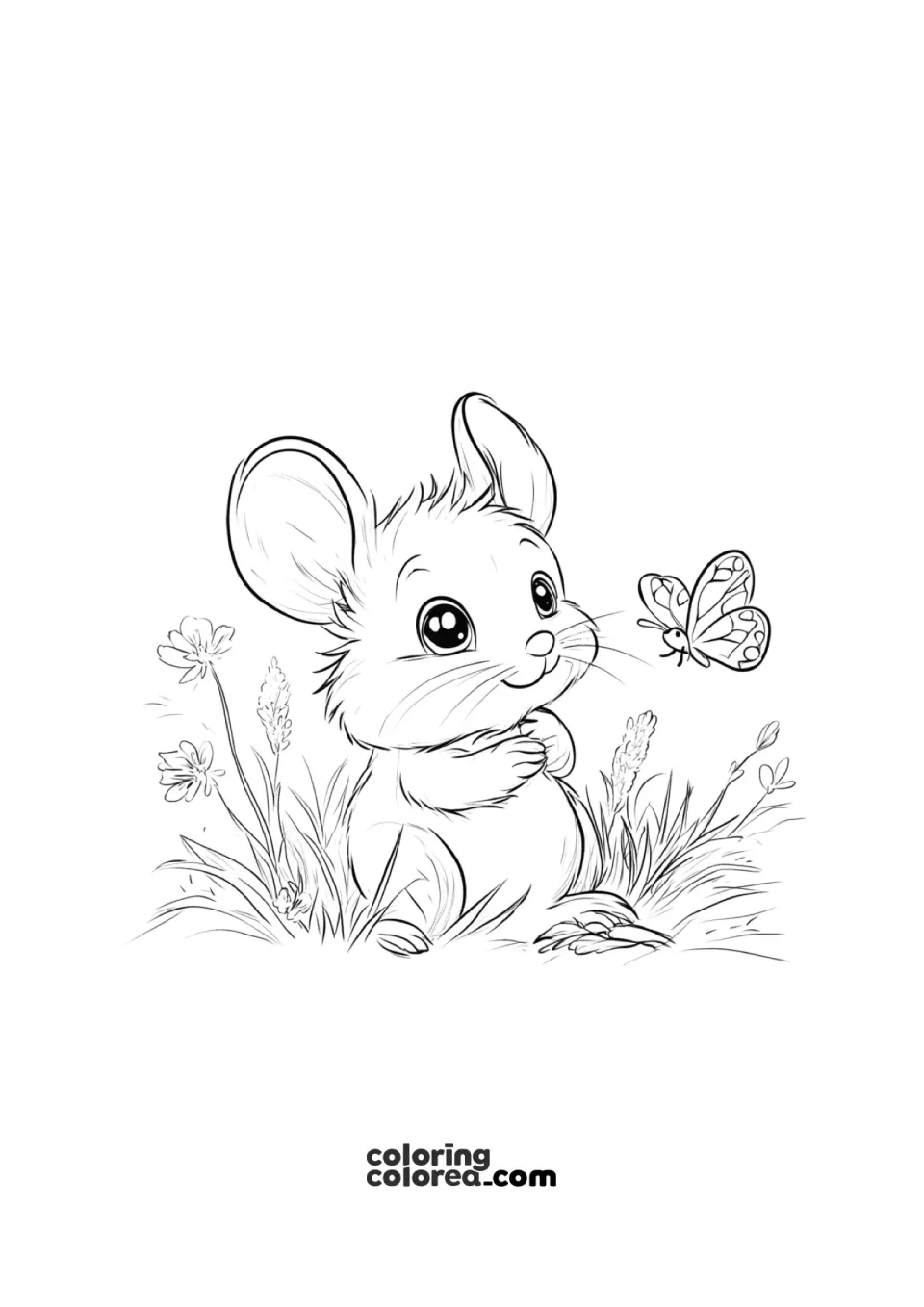
Make up a short story about the mouse and butterfly.
Did you know?
Mice communicate with sounds humans cannot hear.
About this coloring page
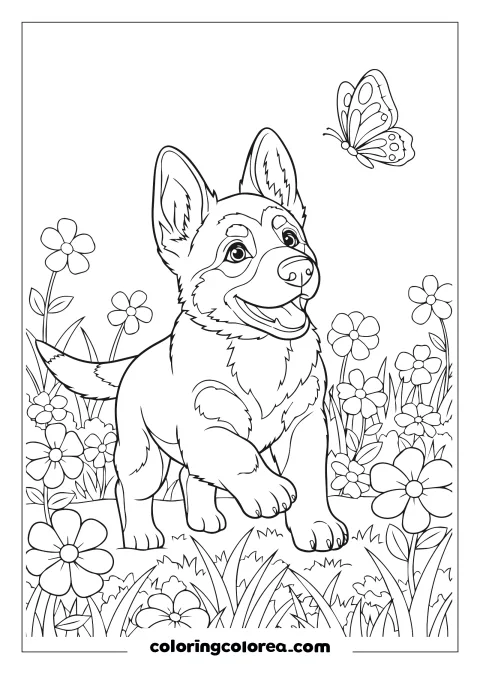
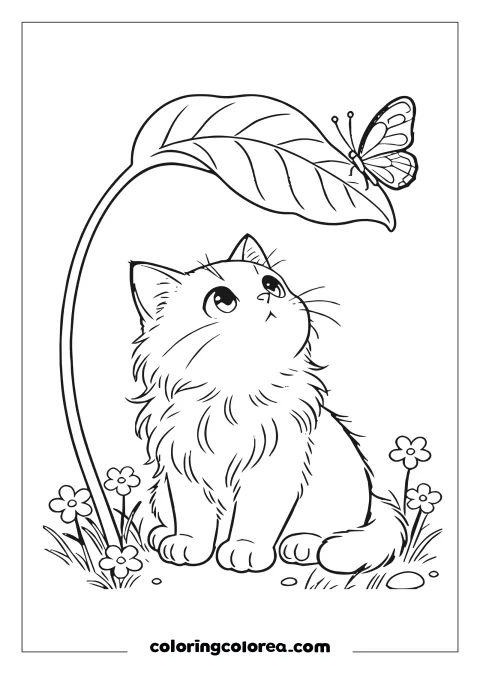
In this drawing of a little wild mouse observing a butterfly, we can practise different techniques with soft colours, work on lights and textures, and learn how to bring an animal to life through colour. It is also an opportunity to learn more about wild mice, their habitat, and behaviour: colouring can also be learning!
How to colour this wild mouse
Fur: Start with a light gray or light brown base. Then use a darker pencil (dark gray or chocolate brown) to add short strokes in the direction of the fur to create texture. Leave some areas white or lightly colored to simulate light — especially on the face, belly, and top of the head.
Ears and Nose: Use soft pink tones inside the ears and on the nose. A light pink blended gently toward the edges works best. If you’re using colored pencils, blend softly with your finger or a cotton swab.
Eyes: Color the iris (if visible) using brown or black and leave a tiny white highlight to make the eye look shiny and alive. You can use a white pencil or correction pen for this effect.
Butterfly: This is your chance to get creative! Use bright, cheerful colors like orange, purple, blue, or yellow. Outline the edges with stronger pressure and try blending shades within the wings for extra effect.
Grass and Flowers: Use a variety of green tones (light green, emerald, olive). Shade the grass using the side of the pencil, then define blades with sharper strokes. Color the flowers in vibrant tones like pink, yellow, or lavender.
Background (optional): Add a soft sky or forest background using light blue or beige. Chalk pastels or watercolor pencils work beautifully to create a light, airy feel.
What skills can you practise by colouring in this picture?
How to create realistic texture by using directional strokes for fur.
Control of pencil pressure and motion, great for developing fine motor skills.
Using light and shadow to give the character depth (darker in curved or shaded areas, lighter in highlights).
Blending warm and cool colors creates contrast and balance between character and environment.
Fun Facts About Wild Mice
Wild mice are nocturnal and have an amazing sense of smell and hearing
They live in burrows, fields, forests, and sometimes near farms.
They are essential for ecosystems: they spread seeds and feed owls, foxes, and other predators.
Their whiskers are incredibly sensitive and help them navigate in the dark.ç
Though often misunderstood, they are curious, smart, and shy animals.