
Printable sheet
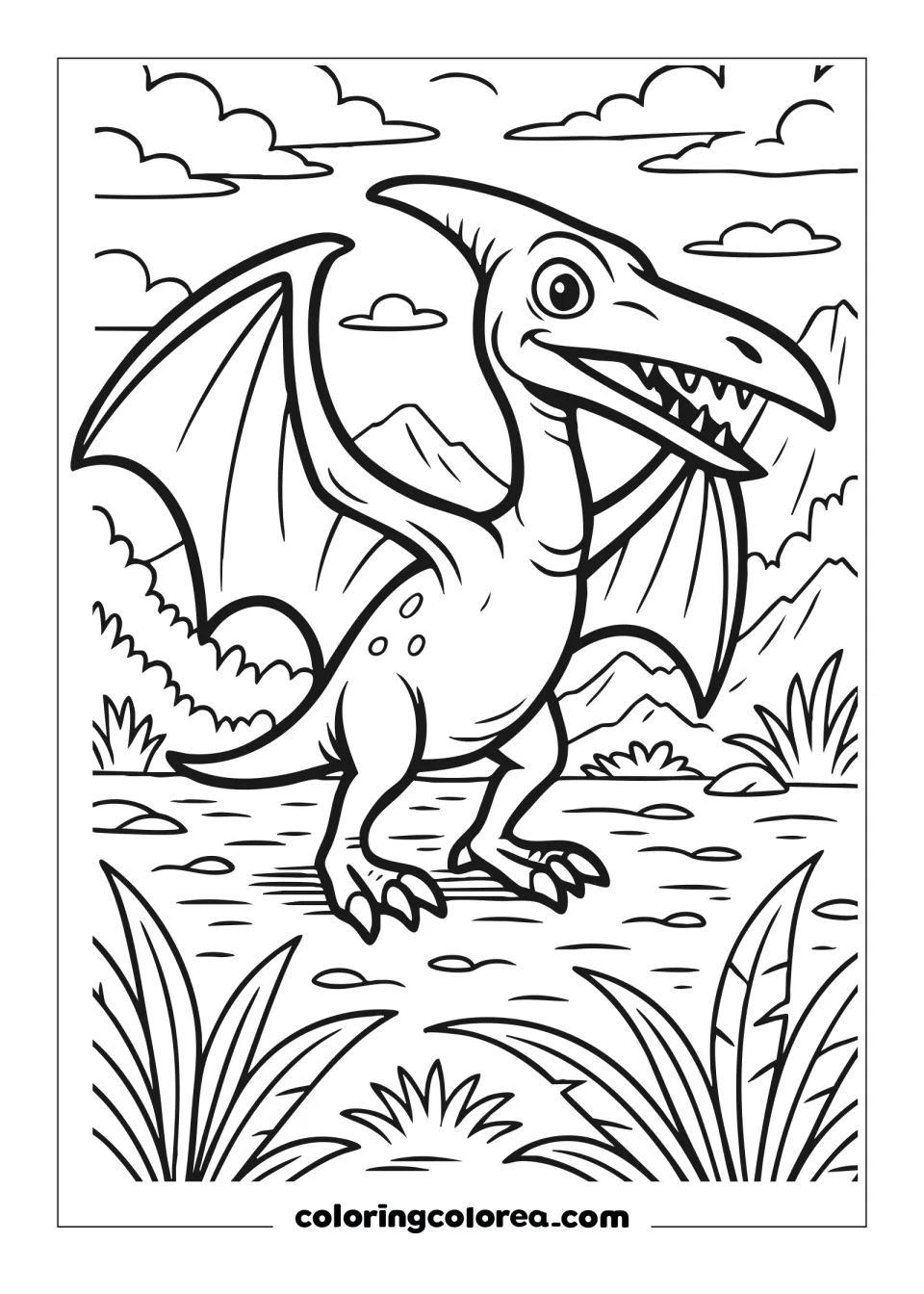
This pterodactyl on the ground spreads its wings among big leaves and mountains. Get the free PDF and print a prehistoric page the whole family can enjoy.
Printable sheet
Free for personal and educational use
Download PDFPrintStanding pterodactyl with open wings, a head crest and a toothy beak among large leaves, clouds and mountains.
Shade the wings lighter toward the middle so they look thin.
Draw a fish this animal might snatch with its long beak.
The first known fossils of this animal came from limestone quarries in Germany.
Here's a fact that wins trivia nights: a pterodactyl on the ground, or anywhere else, was not a dinosaur. It shows up in every box of plastic dinos, sure, but it belonged to the pterosaurs, a separate family of flying reptiles that lived alongside dinosaurs and were closely related to them.
The giveaway is in the bones. Dinosaurs stood with their legs straight under their bodies and had a particular hip design. Pterosaurs went a different way. Their wings were sheets of skin stretched from one incredibly long finger on each hand all the way back to the body.
Pterodactylus itself lived around 150 million years ago, in the Late Jurassic, and it was smaller than most people expect. Adults had a wingspan about like a large crow or gull. It stayed close to coastal lagoons, and it probably used its long, narrow jaws and fine teeth to grab fish and small prey.
On land it walked on all fours with its wings folded up, which we know from fossil trackways. Later relatives got much bigger, and the largest had wings as wide as a small airplane. Every last pterosaur vanished at the same time as the big dinosaurs, about 66 million years ago.
 The Fossil Lost in the WarDinosaurs · Hard
 A Rare and Elegant Plant EaterDinosaurs · Medium
 Myths and Facts About a Crested DinosaurDinosaurs · Medium
 Why Sauropods Grew So HugeDinosaurs · Medium
 A Prehistoric Trumpet by the WaterDinosaurs · Medium
 Two Hunters on the RunDinosaurs · Medium
 A Hunter in the Dense LeavesDinosaurs · Hard
 King of the Tyrant LizardsDinosaurs · Medium