
Printable sheet
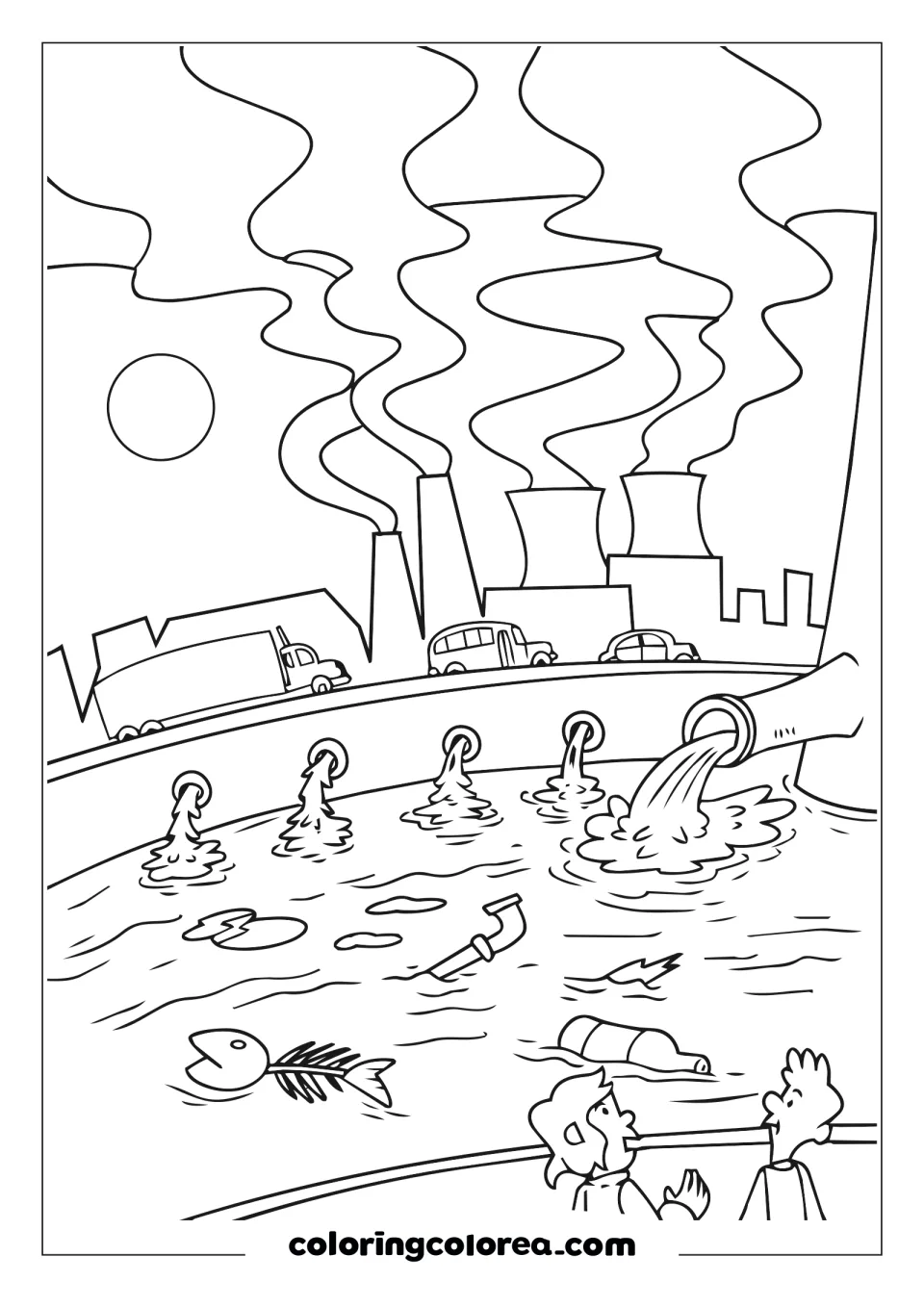
River pollution from factories pouring out of pipes, with a fish skeleton and two shocked kids. A thought-provoking printable; get the free PDF.
Printable sheet
Free for personal and educational use
Download PDFPrintSmokestacks and cooling towers with wavy smoke, a truck and cars on the road, pipes spilling into the river, a fish skeleton, floating trash and two children.
Color the river a fresh blue, then use murky browns and greens where each pipe empties.
Trace where your tap water comes from and where it goes after it swirls down the drain.
Mayfly larvae can only survive in clean water, so scientists count them to check how healthy a stream is.
River pollution from factories happens when wastewater full of chemicals, oils or heat is dumped straight into a stream. Farms and towns can add to the problem with fertilizer runoff and sewage, and together they change how the water looks, smells and feels.
Dirty water holds less dissolved oxygen, which fish need to breathe, so they may get sick or die. Some pollutants are toxic and build up in the food chain, moving from tiny insects to fish to the birds and people who eat them. A single spill can harm a river for miles downstream.
In the United States, the Clean Water Act of 1972 made it illegal to dump pollution into rivers and lakes without a permit, and many waterways have recovered since then. Wastewater treatment plants also help by screening out trash, letting solids settle and using helpful bacteria to break down waste before the water is released.
The worried faces of the two kids in this scene make a natural conversation starter. Ask how they would feel standing on that bank, who should fix the problem and what families can do, like keeping cooking grease and wipes out of the drain.
 Land Without RainEducational · Easy
 Water Drop Over the ForestEducational · Hard
 Two Sides of Our PlanetEducational · Medium
 Park Cleanup CrewEducational · Easy
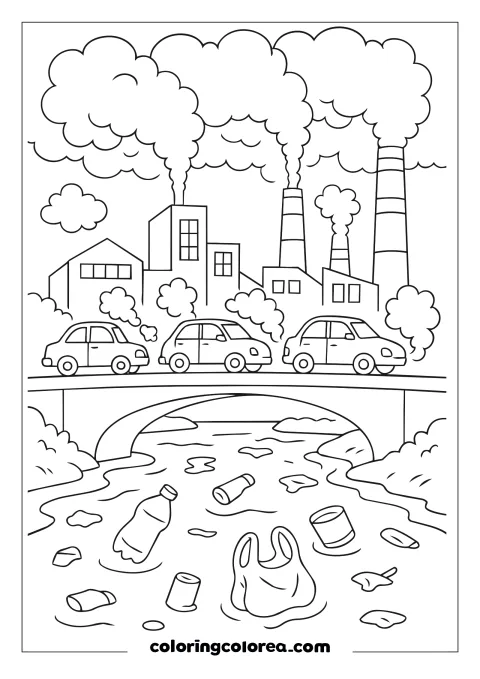 Smoky City, Dirty RiverEducational · Easy
 Playing in AutumnEducational · Medium
 Robot and natureEducational · Easy
 Wings of PeaceEducational · Medium