Use yellow or coral for the body and greens for seaweed.
Activity idea
Compare its body with a real horse.
Did you know?
In seahorses, the male carries the young.
About this coloring page
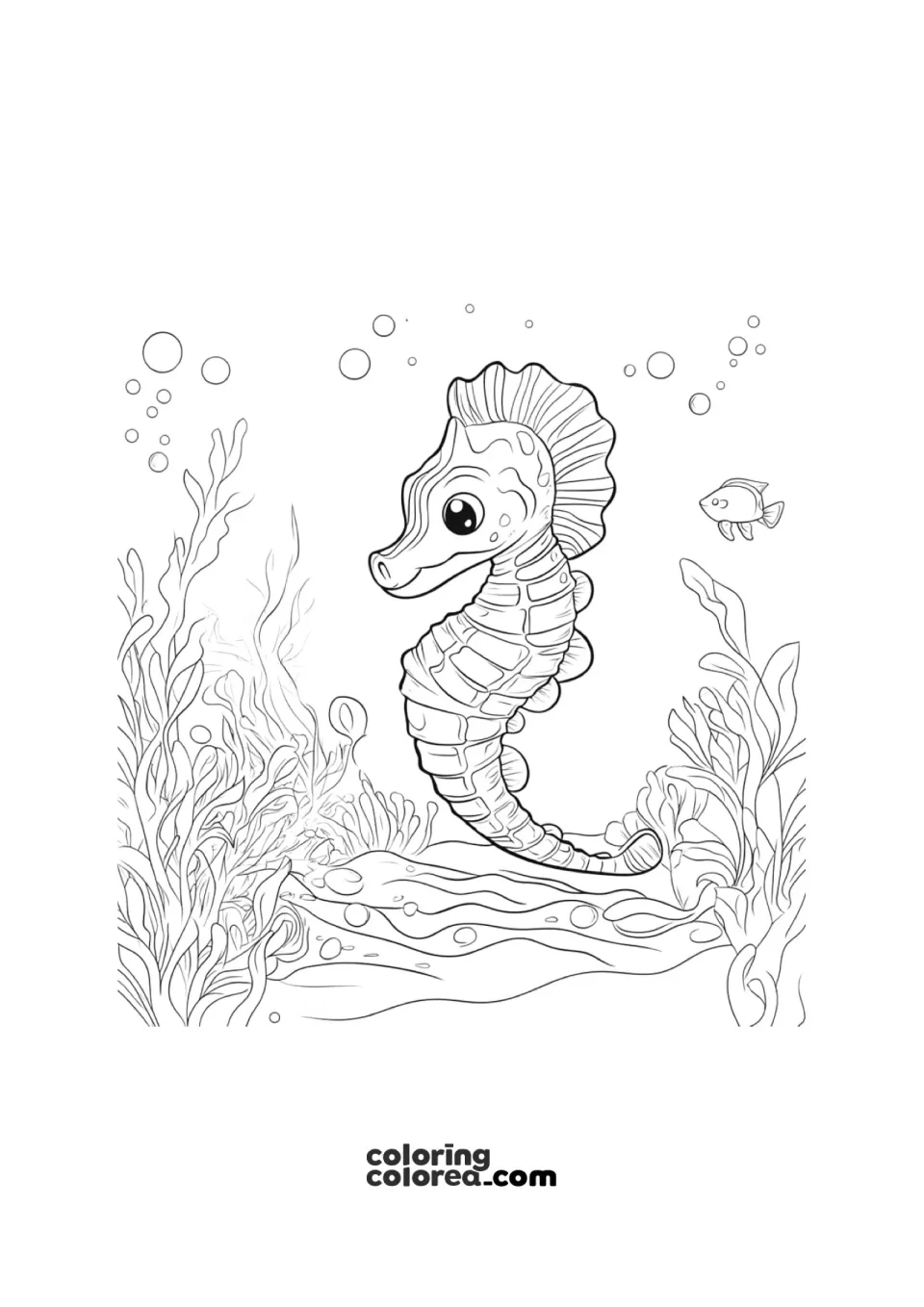
Este caballito de mar parece estar bailando en medio de un bosque submarino lleno de burbujas, algas y secretos del océano. Es una oportunidad perfecta para experimentar con el color y jugar con efectos de profundidad. Al colorearlo, vamos a hacer que parezca que realmente está flotando bajo el agua, entre luces que se filtran desde la superficie y sombras suaves que lo rodean.
Step-by-Step Guide to Coloring the Seahorse
To color this seahorse drawing, choose a base color for its body. Seahorses come in many different colors, so the choice is yours! You can use a solid color or blend several shades to create a unique look.
Coloring the Seahorse
Use warm tones like oranges, yellows, and reds to make it stand out. Combine colored pencils with crayons to add texture.
Shade with a light brown or bluish-gray pencil around the edges or folds of the body to create volume. Areas closer to the center or toward the light source should have lighter tones.
Add small highlights of white (either with a white pencil or acrylic marker) at the top of the body or near the eyes to create a sense of light.
Marine Background and Algae
Color algae closest to the viewer in intense greens (emerald, leaf green), while those farther away can use bluish or pale greens.
Create depth by using darker colors at the base of the algae and gradually lightening toward the tips.
For bubbles, use a very soft blue or leave them white with a subtle outline and a slight gray shadow on one side.
Water and Sand
Color the underwater background in shades of blue, fading from light blue at the top to deeper blue at the bottom.
Add touches of violet or green to mimic reflections from algae.
Mix beige, light brown, and a bit of yellow for the sandy bottom, adding gentle shadows along the ground’s contours.
Interesting Facts About Seahorses
Seahorse dads are the ones who get pregnant! They carry the eggs in a pouch on their belly until they hatch.
Seahorses are masters of camouflage, changing color to blend into their surroundings and hide from predators.
They feed on tiny crustaceans, sucking them up with their tubular snouts—like miniature sea vacuum cleaners!
There are over 40 species of seahorses; some are as small as a fingernail!
Despite being fish, they lack a tail fin (the fin found at the tail end of other fish). Instead, they propel themselves using a rapidly fluttering dorsal fin.