Printable sheet
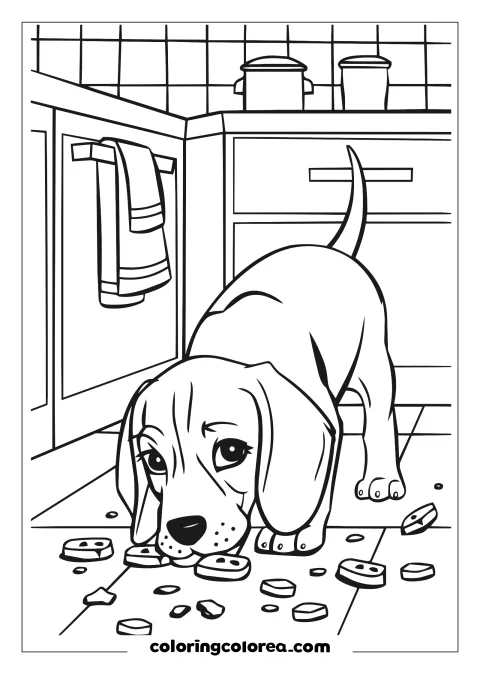
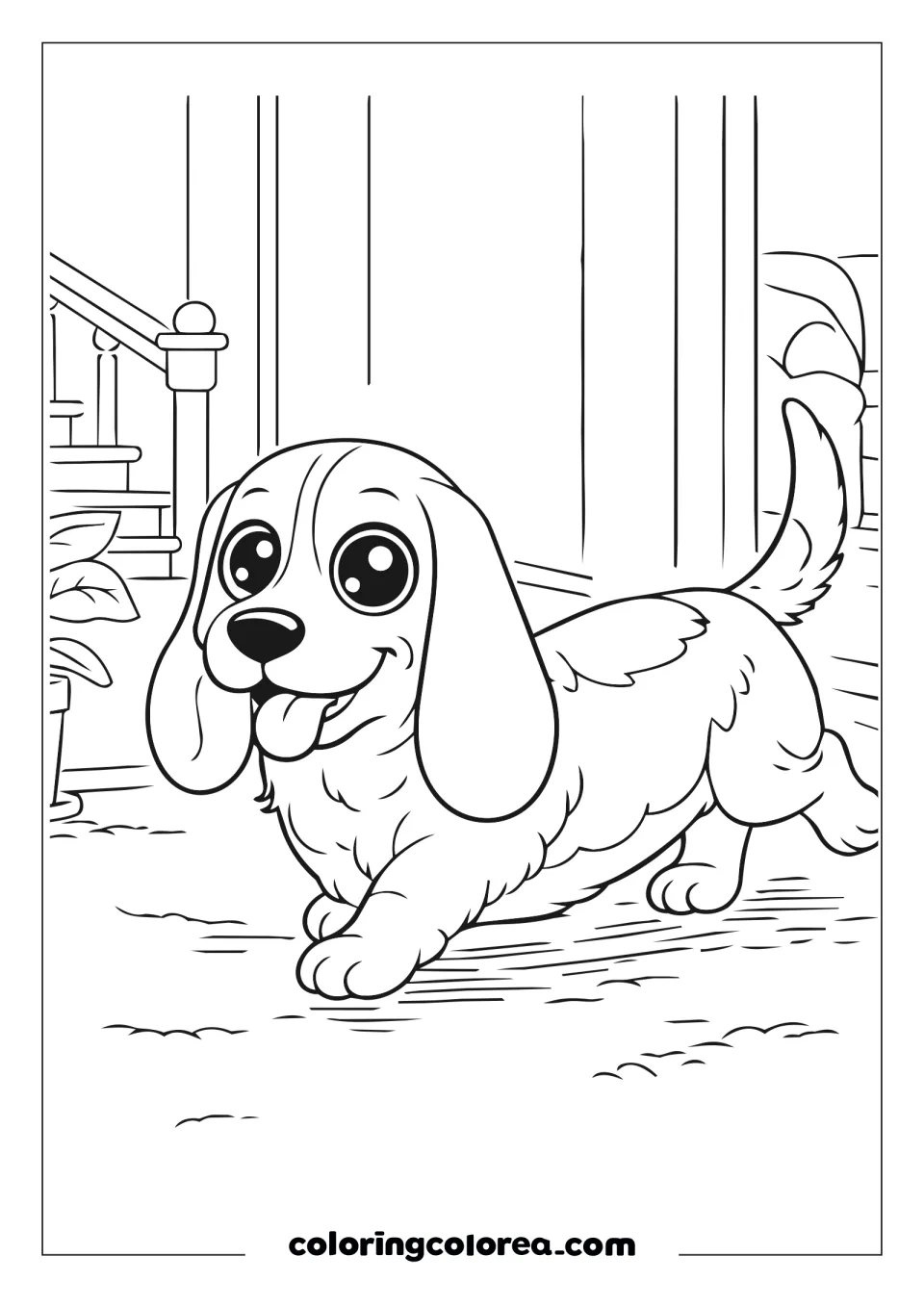
Floppy-eared puppy dashing around the house with ears flying and tongue out. A cheerful, easy printable for toddlers and preschoolers; free PDF.
Printable sheet
Free for personal and educational use
Download PDFPrintA puppy with big floppy ears running across the floor at home, with its tongue out, tail up and furniture behind.
Color the puppy tan and make the ears a slightly darker brown.
Draw the puppy with pointy ears and compare how its face changes.
In a famous Russian experiment, foxes bred to be tame ended up with floppy ears and curly tails.
A floppy-eared puppy racing around the house is pure joy: its ears bounce with every step as if they had a life of their own. But have you ever wondered why so many dogs have droopy ears when their wolf ancestors always have upright ones?
The answer lies in domestication. When people first began living with early dogs, they favored the calmest, friendliest animals. Over many generations, that choice also brought changes in appearance, like floppy ears, shorter snouts, curly tails and patchy coat colors.
Scientists call this group of changes domestication syndrome, and it shows up in many domestic animals, including pigs, sheep, rabbits and cows. So floppy ears are actually a souvenir of thousands of years of friendship between dogs and people.
Long ears need some extra care, though. Because they do not get as much air as upright ears, they should be checked often and cleaned with a dog-safe product when dirty. If a dog keeps scratching its ears or shaking its head, it might have an infection, so a vet visit is a good idea. Gently drying the ears after a bath or a swim also helps keep them healthy.