
Printable sheet
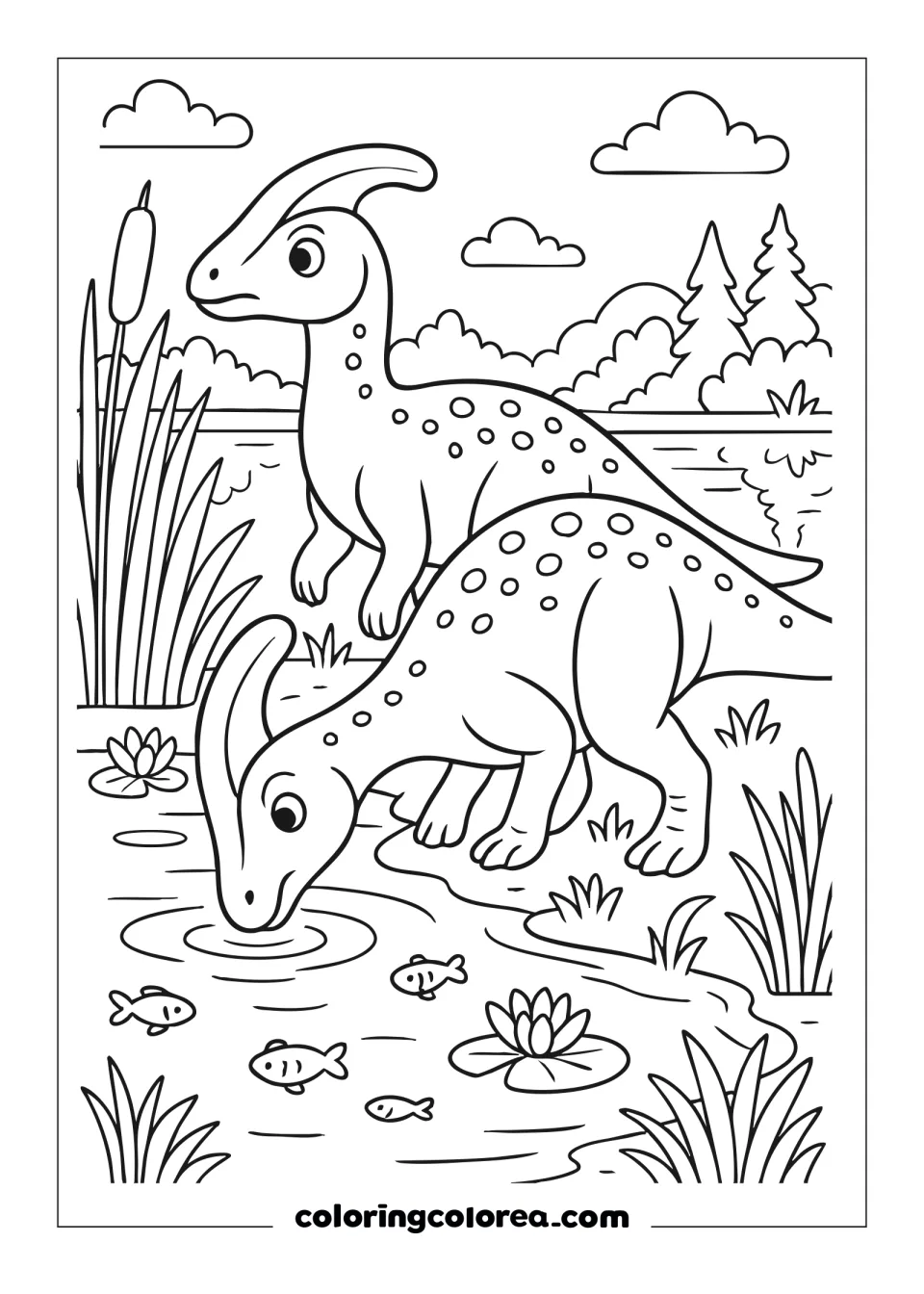
This pair of parasaurolophus at the pond sip among lily pads, fish and cattails. Get the free PDF of this peaceful scene and color it at your own pace.
Printable sheet
Free for personal and educational use
Download PDFPrintTwo spotted parasaurolophus, one drinking and one standing, with lily pads, four fish, cattails, pines and clouds.
Layer several blues on the water and leave the ripples nearly white.
Name both dinosaurs and write down what they are saying to each other.
It could walk on two legs or all four, depending on what it was doing.
A pair of parasaurolophus at the pond fits what we know about these animals, since they probably liked company. They were hadrosaurs, the famous duck-billed dinosaurs, and they were common in western North America around 75 million years ago, especially in places like Utah, New Mexico and Alberta.
Their mouths were basically food processors. A toothless beak up front snipped off plants, while hundreds of teeth packed in the back formed grinding surfaces called dental batteries. When one tooth wore down, another moved in to replace it. That let them chew tough leaves and twigs better than most other dinosaurs.
Fossil sites holding many hadrosaurs together point to herd living. There's safety in numbers, after all, with more eyes watching for trouble. That mattered, because large tyrannosaurs prowled the same plains looking for a meal.
Back then a vast inland sea split North America in two, and these dinosaurs lived on the low, wet land along its shore. Rivers and swamps kept plants growing thick and green. For a long time, experts thought duck-bills spent much of their lives in the water because of those flat bills. Today, we know they were well adapted to life on land, though a drink at the water's edge surely hit the spot.
 The Fossil Lost in the WarDinosaurs · Hard
 A Rare and Elegant Plant EaterDinosaurs · Medium
 Myths and Facts About a Crested DinosaurDinosaurs · Medium
 Why Sauropods Grew So HugeDinosaurs · Medium
 A Prehistoric Trumpet by the WaterDinosaurs · Medium
 Two Hunters on the RunDinosaurs · Medium
 A Hunter in the Dense LeavesDinosaurs · Hard
 King of the Tyrant LizardsDinosaurs · Medium