
Printable coloring page
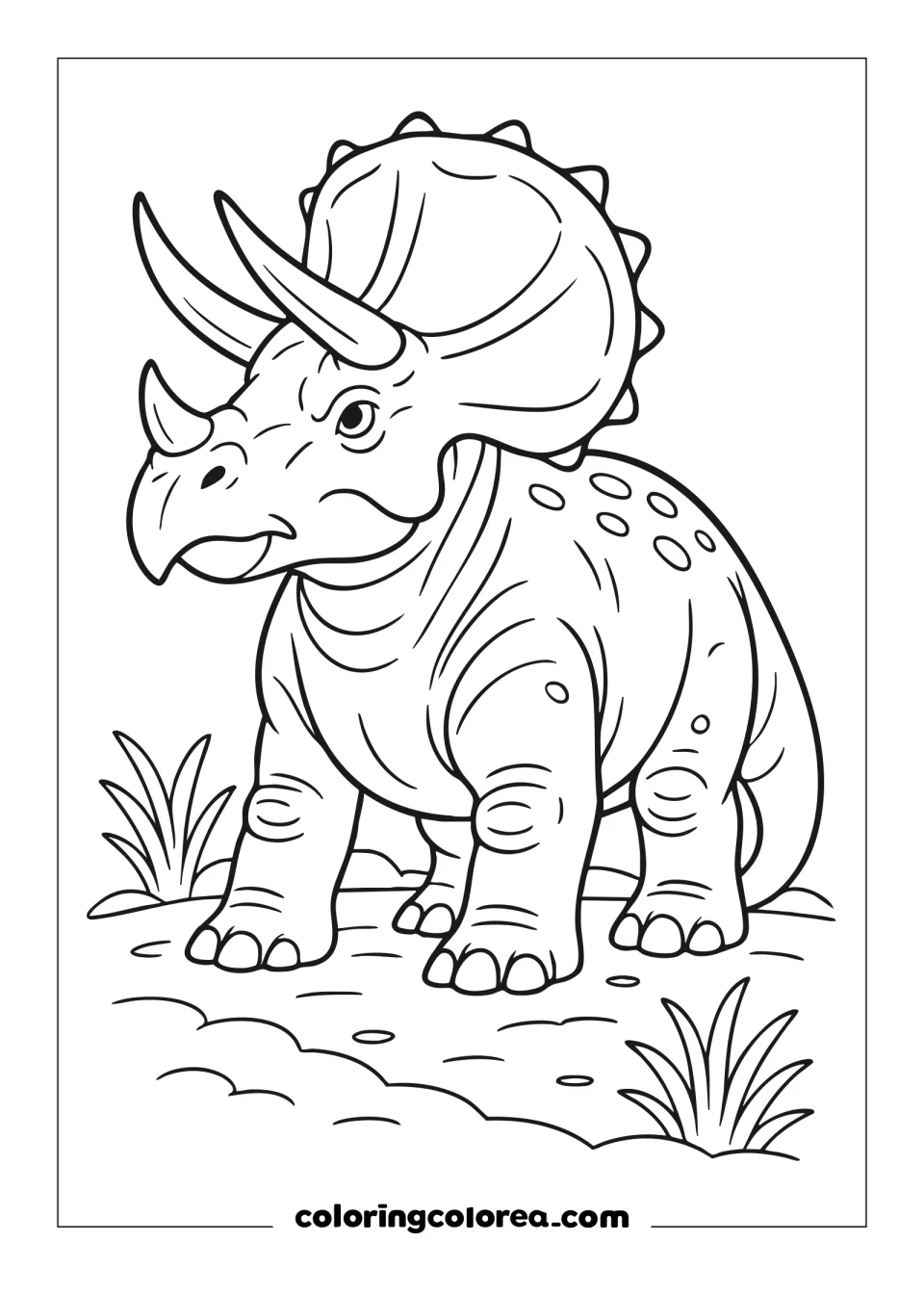
This adult triceratops shows off three horns and a massive frill in rich detail. Get the free PDF of this realistic dinosaur page and shade it your way.
Printable coloring page
Free for personal and educational use
Download coloring page (PDF)PrintColor it in your browser, no sign-up needed. Your progress is saved on this device.
Adult triceratops with two long horns, a short nose horn, a huge frill, skin folds and tufts of grass.
Shade the skin folds a little darker to add volume.
List animals living today that have horns.
Its head was one of the largest of any land animal ever.
The adult triceratops had one of the strangest starts in fossil history. In 1887 a pair of huge horn fossils turned up near Denver, Colorado, and the well-known paleontologist Othniel Marsh figured they came from a giant extinct bison. Fuller skulls came along soon after, and he realized he had gotten it wrong.
In 1889 he gave the animal the name we all know today. Since then, tons of remains have been dug up in Montana, Wyoming and the Dakotas, especially in the rocks of the Hell Creek Formation. It's among the most common dinosaurs found there, so there must have been a lot of them around.
The skull alone could reach more than seven feet long. The nose horn was short, and the two brow horns could stretch to around three feet. Scientists think they served for defense against big predators and for sizing up rivals, since some frills carry wounds that seem to match horn strikes.
For a long time, the frill was seen as nothing more than a shield. Today many experts think it was also for display, a bit like the antlers on a bull elk in the Rockies. At the front of the mouth, a strong beak sliced through tough plants, while hundreds of replaceable teeth in the back did the chopping.
 The Fossil Lost in the WarDinosaurs · Hard
 A Tiny Dino With Big EyesDinosaurs · Easy
 King of the Tyrant LizardsDinosaurs · Medium
 A Rare and Elegant Plant EaterDinosaurs · Medium
 A Rainy Face-OffDinosaurs · Hard
 A Happy Walk Near the VolcanoDinosaurs · Easy
 A Sunny Day With a GiantDinosaurs · Easy
 The Claw Shaped Like a SickleDinosaurs · Medium